Izzeldin Hashim (SOS Sahel), Mohammed Adam (SOS Sahel), Suleman Haroun (SOS Sahel),Farah Eldouma (SOS Sahel) and Redeat Daneil (GOPA Pro)
This blog is part of a dossier on locally-led adaptation, featuring insights and lessons from the Reversing the Flow (RtF) program. RtF empowers communities in Bangladesh, Burkina Faso, Ethiopia, Kenya, and Sudan to build climate resilience through direct funding and a community-driven, landscape approach.
Al-Hamadeya Village, located in the Khor Taqat Administrative Unit of Sheikan Locality in North Kordofan State, Sudan, is one of the communities included in the 2026 expansion of the Community-Led Water Security and Climate Adaptation Project under the Reversing the Flow (RtF) and Locally Led Adaptation (LLA) framework. The village lies within an area highly vulnerable to environmental and climatic shocks. Like many communities across Sudan, Al-Hamadeya has also been affected by the consequences of conflict. During the siege of El Obeid, the capital of North Kordofan, the village experienced occupation by the Rapid Support Forces, adding another layer of hardship to an already fragile situation.

Home to more than 521 households, Al-Hamadeya also receives large numbers of livestock during the summer season, as well as people from neighboring areas who travel to the village in search of water. Despite this growing demand, the entire population depended on a single privately owned water station that could no longer meet community needs.

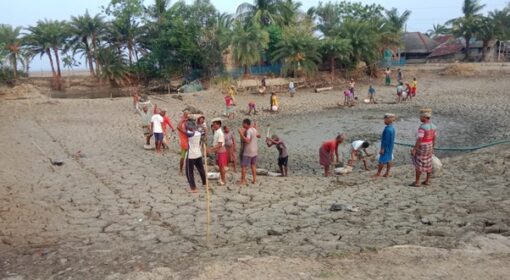
For years, another opportunity remained untapped. A philanthropist had once funded the excavation of a well inside the village mosque compound, but due to funding shortages, the work was never completed. The unfinished well stood as a reminder of an unrealized dream while water scarcity continued to affect daily life and undermine climate resilience. When community members were asked to identify their most pressing challenge, the answer was unanimous: access to water.
Embracing the Locally Led Adaptation Approach
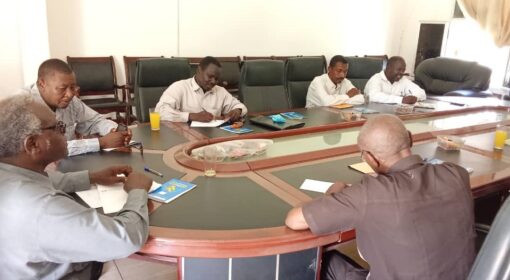
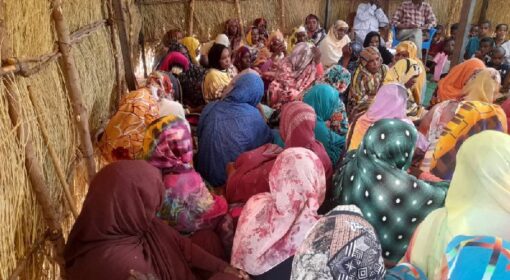
At the end of April 2026, project activities began with community orientation sessions on the principles of LLA. Residents quickly embraced the approach, recognizing the opportunity to lead their own development process. What made this process particularly significant was that community members selected a village committee to represent them and lead the initiative. By entrusting the committee with planning, budgeting, negotiations, and implementation, the project invested directly in local decision-making capacity. Community members did not simply identify a problem; they actively discussed priorities, managed resources, negotiated contracts, and took responsibility for decisions affecting the entire village. Rather than relying solely on external actors, committee members traveled to El Obeid themselves to meet with drilling and water system companies, discuss technical specifications, and obtain cost estimates. To assess the feasibility of rehabilitating the unfinished mosque well, the community hired a private-sector engineer to conduct a technical assessment. The assessment confirmed that the well could be successfully completed and upgraded to provide a reliable water source for the village. This marked the beginning of a community-led process in which local people were at the centre of every major decision.
This approach has created benefits that extend far beyond the construction of a water station. The experience strengthened trust, accountability, and collective action within the community, bringing communities together around a shared goal. The skills, confidence, and governance structures reinforced through this process will continue to serve the village after the project ends, enabling community members to organize, plan, and advocate for future development priorities using the same locally led approach.
Acting Quickly in a Time of Inflation
The initial cost estimate for the rehabilitation was approximately 36 million Sudanese Pounds(53555,91 Euro). However, within just two weeks, Sudan’s rapidly changing economic situation caused prices to rise dramatically. Faced with the risk of escalating costs, community leaders moved quickly to secure a contract with Good Bit Company, one of the state’s reputable firms. Through careful negotiation and an installment-based payment arrangement, the committee ensured that implementation could proceed despite inflationary pressures.
The project’s financing reflected a strong partnership between external support and community contribution:
- SOS Sahel Sudan Contribution: 36,500,000 SDG (53555,91 Euro)
- Al-Hamadeya Community Contribution: 11,555,000 SDG (17189,96 Euro), including the provision of engineering expertise
- Total Budget: 48,055,000 SDG (71489,7 Euro)
The community’s financial commitment demonstrated their determination to invest in their own future and reinforced a strong sense of ownership from the outset. The locally led funding approach enabled community members to identify, prioritize, and manage an investment that they genuinely considered valuable. Because the community was responsible for making key decisions and controlling the process, communities became willing to contribute their own resources to improve the final outcome.
A Water Crisis Prevented Just in Time
At a critical moment during the installation process, the village’s only existing private water station suffered a complete breakdown. The timing could not have been more significant. So without the new water station, more than 521 households, seasonal visitors, and livestock owners would have faced a severe water crisis. Instead, the newly rehabilitated system became operational and absorbed the shock of the breakdown.

Thinking Beyond Immediate Needs
One of the most remarkable aspects of the Al-Hamadeya experience was the community’s willingness to think beyond short-term solutions. The original contract with Good Bit Company included the installation of a 3,000-liter storage tank at a cost of 22,055,000 SDG. While this would have improved water availability, community members quickly realized that such capacity would be insufficient for a village of over 521 households and the large livestock population it serves.
After extensive discussions, the committee made a bold and forward-looking decision. The community chose to amend the contract and invest in a much larger storage facility, adding a massive tank with a capacity exceeding 100,000 barrels. This second phase of investment had a value of 26,000,000 SDG.
Rather than seeking additional project funding, community members agreed to cover the extra cost themselves. The larger tank is now being procured and will significantly strengthen the village’s long-term water security. This decision demonstrated not only ownership but also strategic thinking and confidence in planning for future needs rather than settling for minimum requirements.
Sustainability Rooted in Ownership
Today, the water station is fully managed by the Al-Hamadeya village committee and the wider community. The substantial local contribution of more than 11.5 million SDG, combined with technical support from community members, has created a strong foundation for long-term operation and maintenance. Because residents were actively involved in planning, financing, negotiating, and implementing the project, they view the water station as their own asset rather than an externally provided facility.
This level of ownership greatly increases the likelihood that the system will continue functioning effectively long after project support has ended.
Stronger Relationships and Community Confidence
Beyond infrastructure improvements, the process also strengthened relationships within the community. The collective effort required to mobilize resources, raise funds, and invest in a larger storage tank brought people together around a shared goal. Community members gained confidence in their ability to solve problems and shape their own future.
At the institutional level, relationships between the village and private sector actors evolved into genuine partnerships. Rather than acting as passive beneficiaries, community members defined specifications, negotiated contracts, managed implementation processes, and financed additional improvements. The experience demonstrated that communities can be effective partners when they are trusted with decision-making authority.
Creating Ripple Effects Beyond the Village
The new water station successfully compensated for the complete shutdown of the area’s only private water source and ensured uninterrupted access to water for residents and travellers.At the same time, the experience has become a practical example for neighboring villages. The transformation of an abandoned mosque well into a strategic water source serving hundreds of families, livestock owners, and travellers has shown what can be achieved when local resources are combined with community leadership. The project now serves as a living model of locally led adaptation in action.
Lessons Learned for Future
- Existing community assets should be explored first. Rehabilitating an unfinished well proved faster and more cost-effective than starting from scratch.
- Communities understand their future needs. The decision to replace the planned 3,000-liter tank with a much larger storage system demonstrates the value of trusting local knowledge and decision-making.
- Local contributions strengthen sustainability. Financial, technical, and organizational investments by community members create ownership and long-term commitment.
- Flexible funding and decision-making are essential in volatile contexts. The ability to adjust plans in response to inflation and changing circumstances was critical to success