The Story of a Community-Built School
By Shaira Rahman ( Friendship NGO) and Mst Jannatul Naim (GOPA MetaMeta)
This blog is part of a dossier on locally-led adaptation, featuring insights and lessons from the Reversing the Flow (RtF) program. RtF empowers communities in Bangladesh, Burkina Faso, Ethiopia, Kenya, and Sudan to build climate resilience through direct funding and a community-driven, landscape approach.
In the heart of the Brahmaputra River in Kurigram, northern Bangladesh, lies Char Gendar Alga: a remote char shaped by water and uncertainty. This fragile, flood-prone landscape constantly threatens the lives and livelihoods of its 310 families. River erosion, seasonal flooding, and isolation are part of everyday reality. Yet they continue farming, fishing, and rebuilding, accepting the river as part of life. What they could not accept, however, was a future without education for their children.
A Dream Interrupted by the River
For years, no school existed in Char Gendar Alga. Children had to travel by boat to another char to attend primary school. During floods or the rainy season, boat journeys remain dangerous. Classes were cancelled. Mothers were afraid to send their children across the river. Dropout rates increased.
River erosion eventually detached the char from the mainland, where the nearest school was located. Government support to establish a new school became nearly impossible. Officials were reluctant to invest in a fragile, flood-prone island where teacher placement and infrastructure sustainability were constant challenges.
A Community Organizes
Since last year, the community has been part of the RtF programme, facilitated through the local NGO Friendship. Through a locally led approach, a Community Implementing Committee (CIC) was formed, and the community began restoring its landscape and strengthening resilience. They built raised roads, improved market plinths, developed community facilities, and supported vulnerable households with livelihood initiatives.
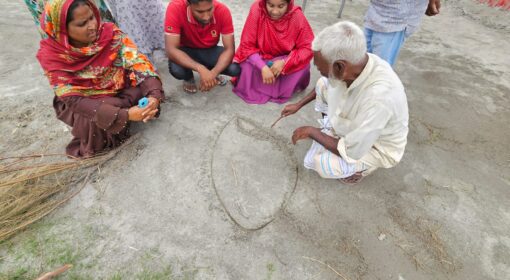
As part of the RtF process, the community drew a “rich picture” of their own landscape: mapping their vulnerabilities, resources, and development priorities. On that hand-drawn map, they placed a small green symbol with a flag to represent their dream: a primary school in Char Gendar Alga as a collective commitment.
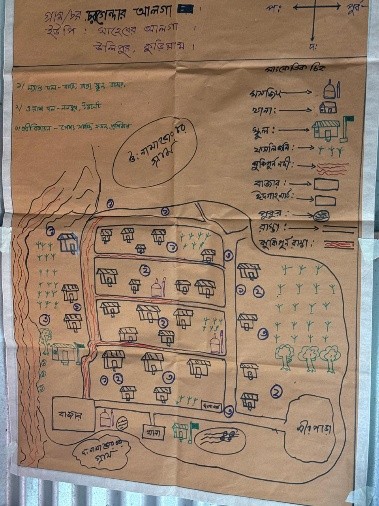
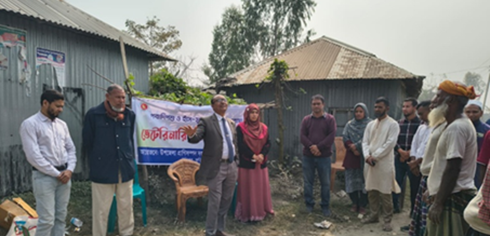
During one regular meeting, the committee decided to formally raise the issue with Friendship. They knew Friendship was running education programmes in other areas under Luxembourg-funded support. Rather than waiting passively, they requested the extension of that support to their small, isolated char. Importantly, they not only asked for assistance, but also proposed contributing part of their RtF regrant to raise the school plinth so that it could withstand floods and continue operating during the rainy season, and also serve as an emergency shelter during flood time.
This is what locally led adaptation looks like in practice. The community identified the need, visualized it in their own development plan, mobilized resources, and advocated for change.
Inspired by this ownership, Friendship supported the establishment of Char Gendar Alga Primary School. Local teachers from the community were selected and received training through Friendship’s education programme. Today, children learn in a safe and accessible environment close to home. Dropout has decreased, and parents speak of renewed hope.
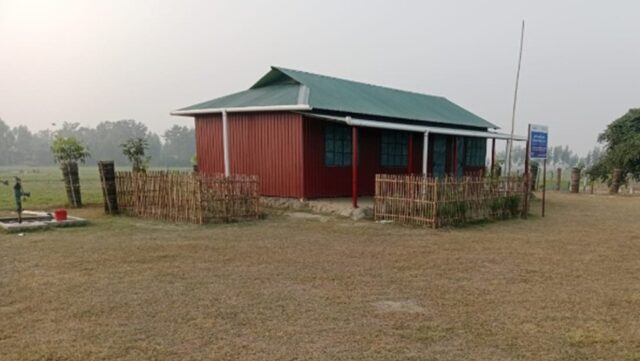
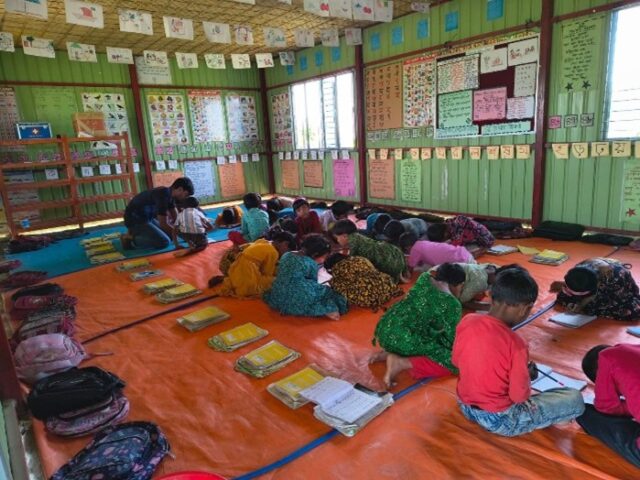
The community offered to contribute part of their RtF regrant to raise the school plinth. They wanted the structure to withstand floods and remain operational during the rainy season. If necessary, it could also serve as a temporary flood shelter for families. This is what locally led adaptation looks like in practice. The hub did not just “deliver” a school. The community advocated, co-designed, and invested.
Today:
- A primary school stands in Char Gendar Alga.
- 64 students are enrolled.
- Children now learn in a safe and accessible environment.
- Dropout rates have significantly reduced.
- Parents express relief and gratitude to the Rtf program and Friendship.
What was once impossible became reality.
Beyond a School: A Shift in Power
This story is not only about education infrastructure.
It is about what happens when climate-vulnerable communities, often considered “too remote” or “too fragile” for investment, are trusted with resources and decision-making power.
The river may continue to erode land, and floods may still reshape the char. But the green flag they once drew on paper now stands in reality: a school built through collective vision, shared investment, and the power of a community leading its own future.
Education is a long-term investment — one that will shape the next generation to better restore, manage, and protect their own landscape. In a landscape where climate vulnerability often limits eligibility for formal assistance, the locally led approach created space for community agency.