By APIL, supported by Aida Zare, and Femke van Woesik
This blog is part of a dossier on locally-led adaptation, featuring insights and lessons from the Reversing the Flow (RtF) program. RtF empowers communities in Bangladesh, Burkina Faso, Ethiopia, Kenya, and Sudan to build climate resilience through direct funding and a community-driven, landscape approach.
The 7th principle of Locally Led Adaptation calls for making financing, design, and delivery more transparent and accountable downward to local stakeholders.
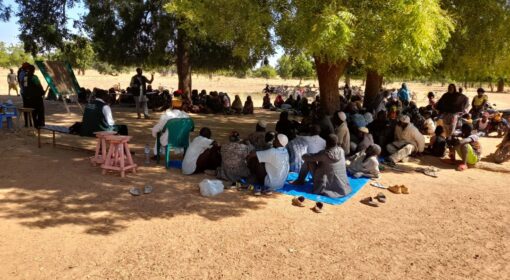
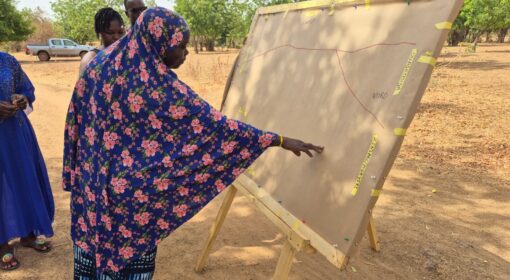
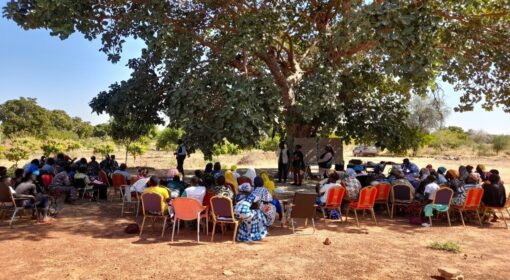
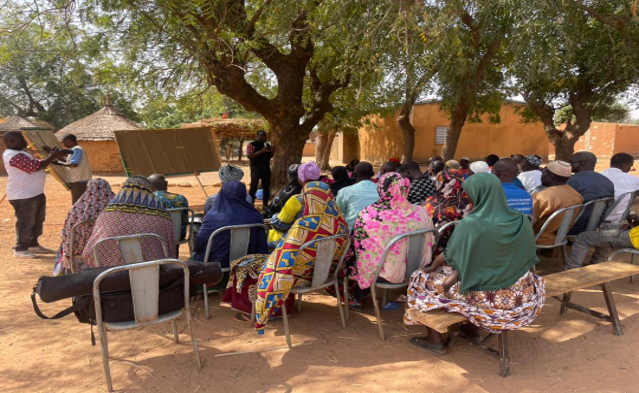
In Burkina Faso, APIL is taking this seriously by working with Procurement and Contract Validation Committees, known by their French acronym CVAM. This governance structure places communities at the centre of decisions about their own development, reviewing proposals, negotiating terms, and selecting who delivers what.
A model with roots
The CVAM is not new. Between 2002 and 2006, the Sanmatenga Local Development Program, a product of Burkina Faso-Netherlands cooperation, piloted community-level contract award committees in several intervention areas. These village committees reviewed offers, negotiated with providers, and made final selections. Members were drawn from across social groups, with explicit criteria around representation, voluntary participation, and the avoidance of power concentration.
Within the RTF program, this experience was renewed because the communities supported by APIL identified as priorities activities (among others) the construction of boreholes, the development of market gardening sites, and the provision of equipment or materials. These actions often require the support of specialized companies or external suppliers. The CVD office then carries out a price survey and prepares the project documents, including the budgets, which it submits to APIL. When the project document is validated by APIL on the basis of the budget envelope available for the communities, the CVD office contacts the CVAM for the selection of service providers. Thus, the CVAM launches the call for tenders, analyzes the proposals received, and selects the provider. It may also decide not to launch a call for tenders and directly choose the provider. The decision is then transmitted to the CVD office, which conveys the information to the community through a general assembly. If there is no opposition, the CVD office continues the process with the formalization and monitoring of implementation.
What accountability looks like in practice
Former committee members described a significant shift in posture. Before the program, they said, decisions arrived ready-made. The program changed that: they learned to compare offers, negotiate prices, and demand quality. This is what downward accountability produces when it is genuine: not just informed communities, but communities with the skills and standing to push back.
The difficulties were also documented. Early committees lacked clarity on post-delivery responsibilities. Some companies were not formally registered, making warranty enforcement difficult. Illiteracy among some members complicated record-keeping. These are structural challenges, not reasons to abandon the model.
Within RtF, APIL has built on these lessons. CVAMs now comprise five to seven members, with representation across neighbourhoods, genders, and age groups. Contracts with selected providers include explicit liability clauses, with a one-year warranty period before liability is waived. Local service providers are given priority to ensure better after-sales accountability. The communities themselves manage the full procurement cycle. APIL’s internal procurement department does not intervene unless communities request it.
Why this matters for accountability
Under APIL’s traditional model, decisions are centralised, governed by a procedures manual, and managed by a dedicated internal department.
The CVAM inverts this. Because communities have chosen their providers and negotiated their contracts and procurement, they have both the information and the standing to hold those providers accountable over time. Accountability is not something done to communities. It is something communities exercise.
This is what Principle 7 looks like when it moves from principle to practice: not a reporting framework, but a governance structure in which local actors have the authority, the knowledge, and the tools to demand what they were promised.