By Frank van Steenbergen
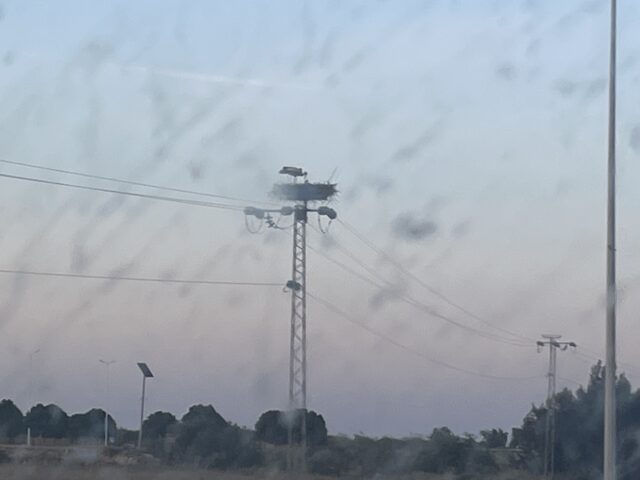
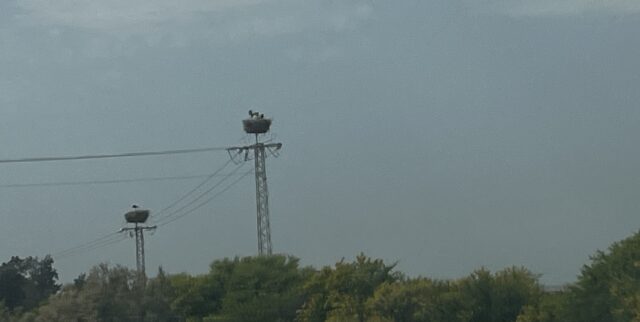
Postcard from Rafraf, Tunisia, and an unusual sight: a stork is nesting above transmission lines, taking care of its offspring – high and dry.
It is not what one expects and raises the question – can power grids be nature-positive? There is a balance. Power grids are associated with disturbed habitats and bird-kills by collision and electrocution and the possible effect of electromagnetic fields. But there is another side to this as well: where power grids provide safe space for nesting birds and bats. As with the stork nest, it requires some adjustment – creating a special perch high above the high-tension lines, creating a safe space. The costs are minimal, but for ospreys, storks, or raptors, they make a huge difference. Lower on the transmission poles, other habitats can be facilitated, directing birds and bats into safe flying routes.
Another biodiversity measure is to make use of the mandatory open space underneath the power lines. By planting low-growing native vegetation and not using herbicides, biodiverse corridors can be created that support butterflies, bees and other pollinating insects. For certain species, the open space can also support migration routes.
In short, biodiversity-friendly practices on energy lines include:
- Routing lines away from sensitive habitats and migration pathways.
- Installing bird-flight diverters and visibility markers on wires.
- Designing and insulating poles to prevent bird electrocution.
- Creating special habitats on the transmission line poles
- Managing the vegetation underneath the power line to create biodiverse habitats and safe movement pathways.