By Mst Jannatul Naim, Uttaran team and Friendship team
This blog is part of a dossier on locally-led adaptation, featuring insights and lessons from the Reversing the Flow (RtF) program. RtF empowers communities in Bangladesh, Burkina Faso, Ethiopia, Kenya, and Sudan to build climate resilience through direct funding and a community-driven, landscape approach.
Background: foreign grants, local responsibilities
In Bangladesh, foreign grants cannot simply be transferred straight into community hands. They move through a strict legal framework: NGOs receiving foreign funds must comply with the Foreign Donations (Voluntary Activities) Regulation Act and operate under the NGO Affairs Bureau in the Prime Minister’s Office. NGOs hold a single ‘Mother Account’ for foreign donations, act as trustees for all project funds, and are responsible for deducting and paying VAT and income tax when they procure goods and services with grant money.
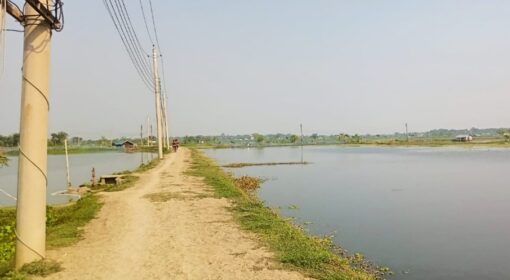
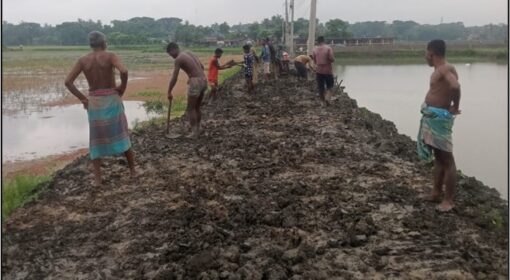
Within the RtF program, hubs such as Friendship and Uttaran receive regranting funds from the Netherlands Enterprise Agency (RVO) and channel part of these funds to community-level landscape groups. These include landscape management committees and Community Implementing Committees (CICs) who lead activities like road construction, water infrastructure, and small-scale climate-resilient investments in their own localities. Although these community groups are informal and not yet registered as groups with TINs or trade licenses, they are now directly involved in procurement and must navigate Bangladesh’s VAT and tax rules in partnership with the hubs.1
Why VAT and tax matter for locally led adaptation
For marginal and climate‑vulnerable communities, this is both an opportunity and a challenge. Grassroots organizations are generally exempt from corporate income tax on core welfare and non‑commercial grant activities, but VAT on goods, services and contractor payments still applies, along with withholding tax on certain suppliers. At first, the language of ‘VAT’, ‘tax’, ‘audit’ and ‘NGOAB’ sounded distant and technical to committee members whose lives are shaped more by salinity, floods, and food insecurity than by tax codes. Yet legally, every bill they pay through RtF funds must respect national regulations.2
First challenge: “we had zero knowledge”
When RtF started channelling regranting funds to community groups, the first barrier was simple but profound: most committee members had never dealt with formal procurement, VAT, or tax.
Joynob Khatun from the Godaibeel landscape committee in Satkhira recalls, “Initially when we started our activities like road construction, we had no idea how to do the procurement process, what is VAT and tax and how to pay. What do we need to see when purchasing goods? We had zero knowledge of that.”
For marginal and highly vulnerable households, the language of tax, VAT, trade licenses, and TIN numbers felt distant from daily survival concerns, even though every project purchase required these concepts in practice. This lack of awareness carried real risks: incorrect deductions could expose hubs to audit findings, while communities might lose trust in the process if money movements were not clearly explained.
Hub support: Building the capacity of the community
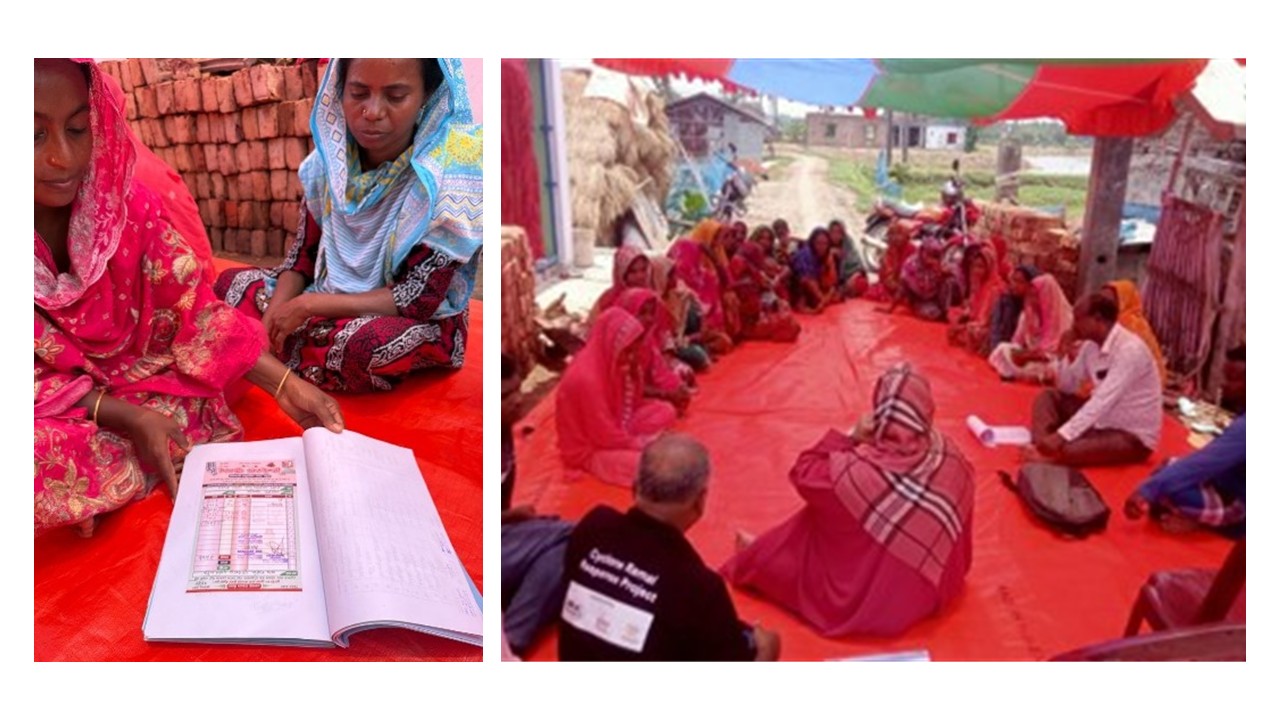
Hubs responded by turning this “zero knowledge” moment into a learning opportunity as per most demanded by community. Uttaran, for example, organized capacity‑building workshops on local procurement, VAT and tax deductions, and simple documentation tools. Training by Friendship focused on real RtF cases: how to read a supplier’s invoice for road construction materials; how to identify the VAT and withholding tax components; and how to record these amounts in notebooks or ledgers that communities themselves can understand and use. Uttaran also appointed a focal staff member to facilitate communities through each purchase, helping them calculate VAT and tax, verify authorized dealers, and keep all documents for NGOAB-regulated audits.
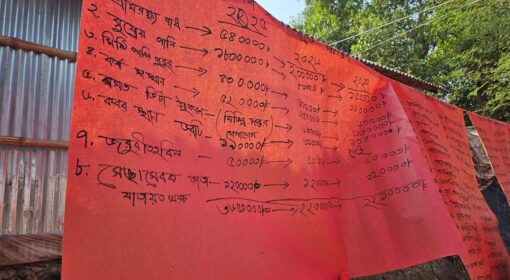
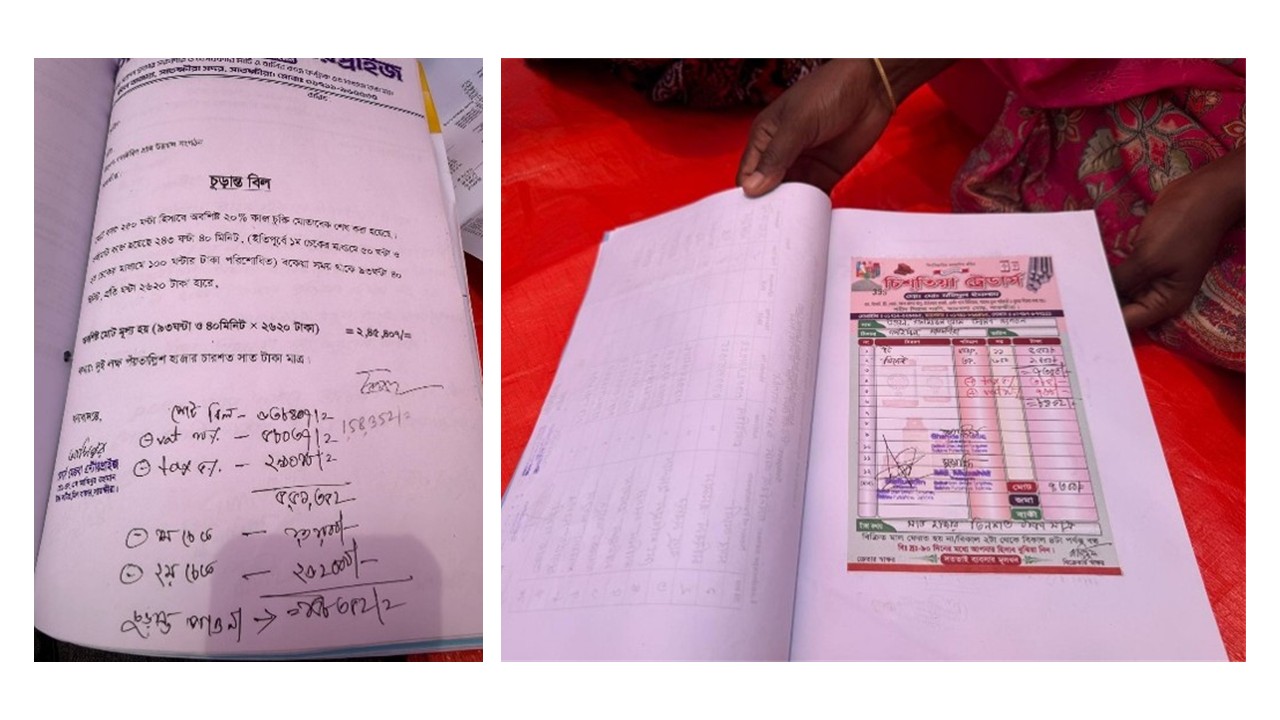
Because the committees are still informal, the hubs remain responsible for paying VAT and tax to the government via online systems under their own registration and TIN. However, the communities now perform the crucial first step: they separate VAT and tax from total bills and hand those amounts to the hub with clear record-keeping in their style of attached committee bill register book.
Practice in the field: Rtf communities deal with vat and tax
During a field visit to Godaibeel, Shatkhira community members proudly showed how they buy goods from authorized dealers, calculate 10 percent VAT and 5 percent tax from the total, and deduct these from the amount paid to suppliers. The hub then uses these collected sums to complete the official payments.
This joint process serves two kinds of accountability at once. For the hub, it satisfies external auditors and NGOAB requirements, showing that foreign grants are used transparently and in line with national law. For the community, it builds internal accountability and trust. Committee members can explain to neighbors why some money is set aside, show vouchers and invoices, and feel confident that their locally led projects could withstand scrutiny from outside actors.
Importantly, VAT and tax literacy is already shaping future visions beyond the project cycle. In Puijala landscape, the community committee has established a reverse osmosis (RO) plant to supply safe drinking water at a token price of 0.50 BDT per litre. In just six months, this service has generated around 70,000 BDT, proving that community‑managed services can be both socially valuable and financially viable. Committee members now aspire to expand into a more commercial RO service with formal registration as a cooperative‑type entity.
Looking ahead: from sub‑recipient to tax‑paying institution
Across RtF landscapes, at least three communities have begun savings schemes through a Village Savings and Loan Association (VSLA) approach, accumulating small capital that can later eligible for Department of Cooperative registration, trade licenses, and TIN applications. In Godaibeel, the committee has set a goal for 2026 to start a community business (Local food processing factory). They recognize that to do this, they will need official committee registration, trade licenses and their own TIN numbers, so that when their annual income crosses the relevant thresholds, they will be ready to pay tax directly to the government.
What started as confusion around VAT and tax is now moving towards a pathway to formal economic participation. Communities are moving from being sub‑recipients who rely on hubs for compliance, to aspiring local institutions that want to “pay our own tax” and stand as credible actors in Bangladesh’s economy. For locally led adaptation, this journey matters as much as any physical infrastructure: it shows that when communities are trusted with funds and supported with practical fiscal literacy, they can reverse not only the flow of money but also the flow of power and responsibility in climate‑affected landscapes.