Hosea Kandagor (MIDP), Sandra Cats (RVO), Theo Kioko, Femke van Woesik, Maud Vink (GOPA MetaMeta)
This blog is part of a dossier on locally-led adaptation, featuring insights and lessons from the Reversing the Flow (RtF) program. RtF empowers communities in Bangladesh, Burkina Faso, Ethiopia, Kenya, and Sudan to build climate resilience through direct funding and a community-driven, landscape approach.
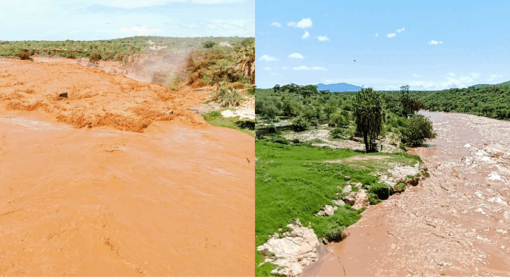
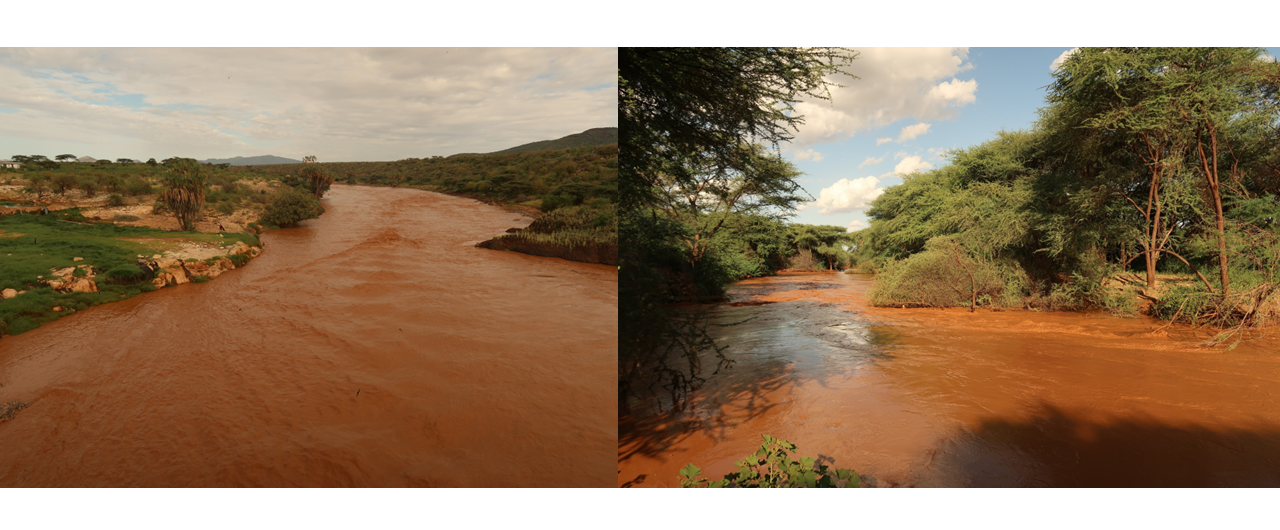
When the Ewaso Nyiro River burst its banks in April 2024, it displaced 763 families in Merti Sub-County, cut off entire villages, and blocked livestock from reaching the river, destroying pastureland that pastoral communities depend on. In response, community members organised themselves, raised funds, and intervened in the river. But the flooding returned in 2025. This blog traces what happened, what it achieved, and what it continues to raise about the possibilities and limits of community-led adaptation when the problem is bigger than a single community.
What the community did
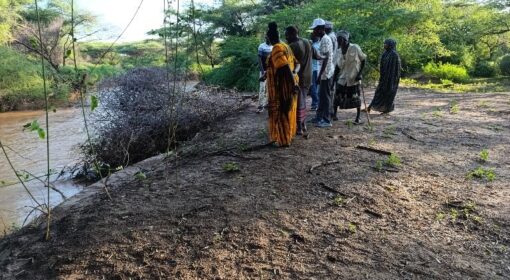
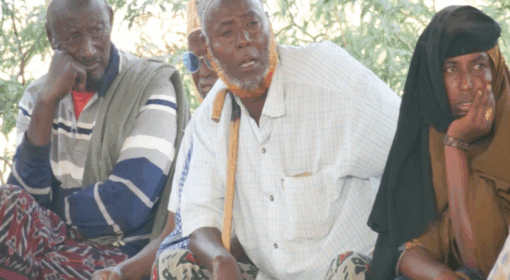
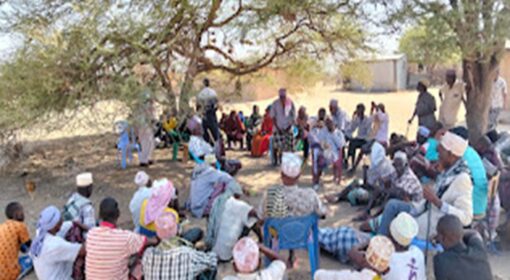
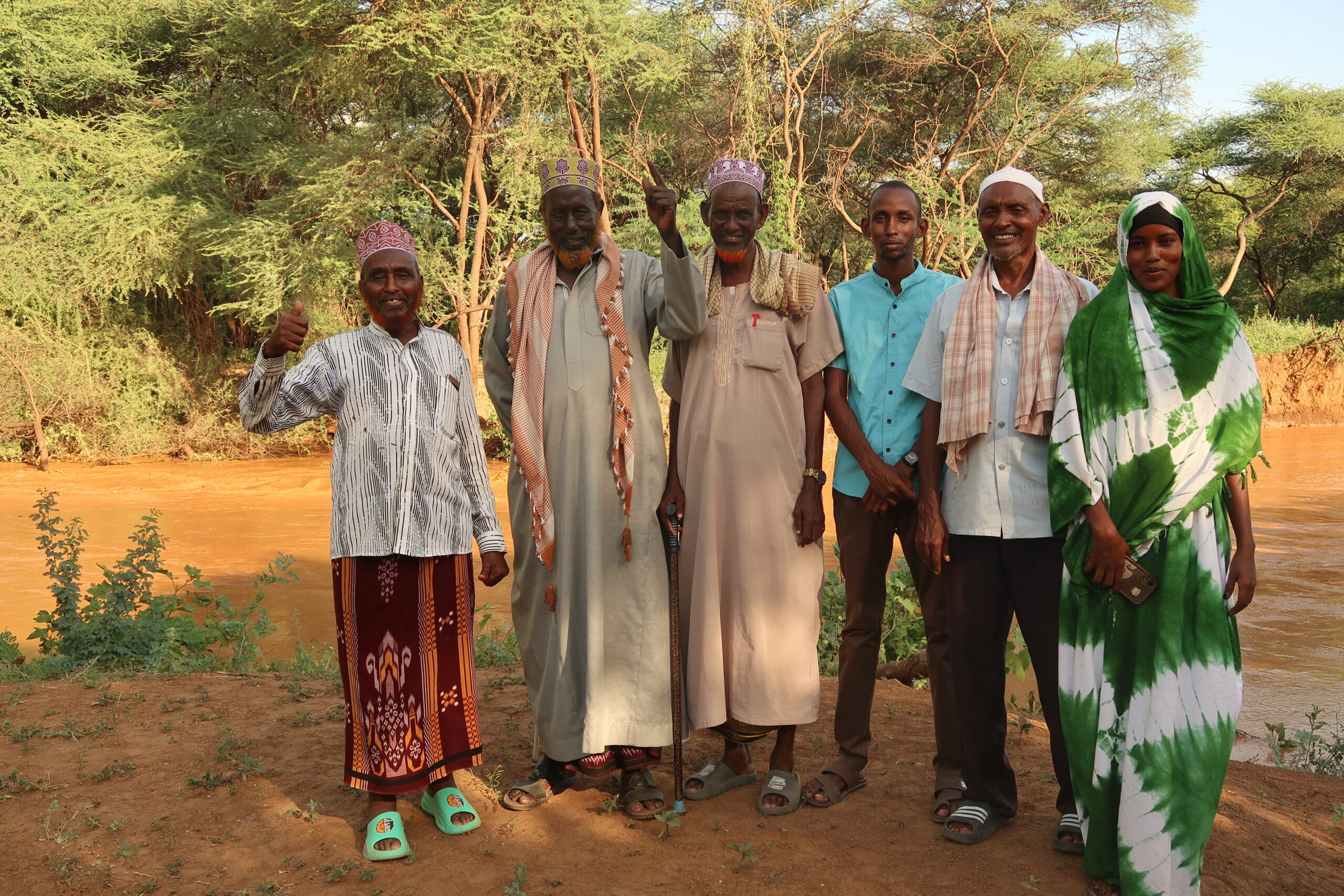
A flood response committee of 12 people conducted surveillance along the river, identified three urgent intervention points, and mobilised community members to raise KES 400,000 (around EUR 2,600) in household contributions and donations. They blocked intake points at Godh Rupa, constructed a diversion channel at Malka Funan, and rehabilitated a key canal. A feedback ‘baraza’ (village meeting) was held to account transparently for every shilling spent, with the committee presenting cash books and activity records openly to the community. Social media reinforced this: community members asked publicly about disbursements and committee decisions, which created further pressure for transparency. This community accountability also built strong shared ownership over the process.
But that transparency also created unexpected pressure. As the committee became visible, more community members began to weigh in on decisions, and the committee found itself struggling to function under the weight of competing expectations. Suddenly, as one observer put it, everyone was an expert. Strong local accountability and wide community participation are assets, but they require structures that can absorb the pressure they generate.
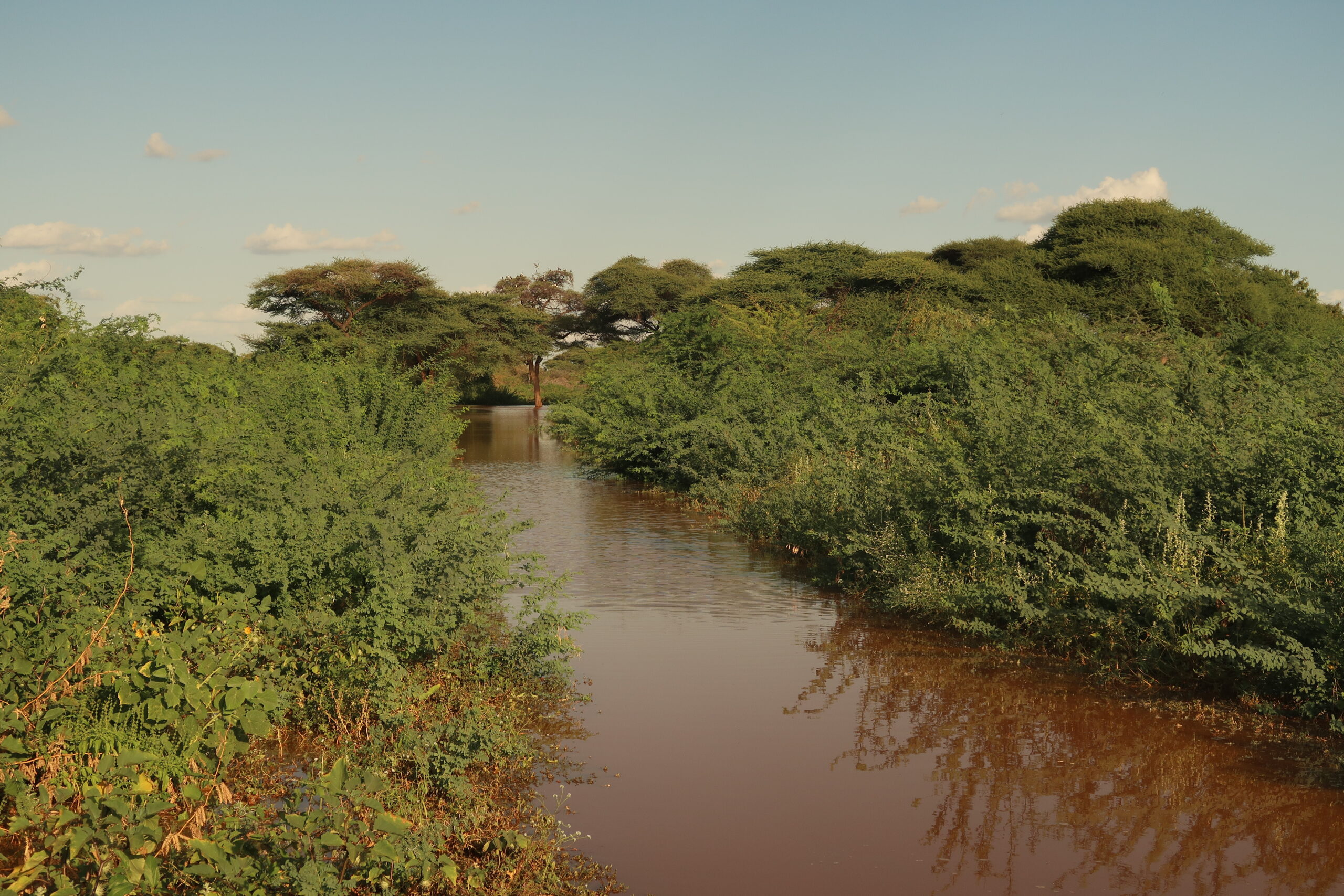
Despite these efforts, the Ewaso Nyiro flooded again in April 2025. The community’s own assessment was clear: “The work was done, and it did help to an extent. But because the community still experienced flooding in April 2025, it feels like nothing changed.” The community moved fast and legitimately, but the challenge may have exceeded what the available knowledge and resources could address.
A challenge bigger than the community
The Ewaso Nyiro‘s flooding is not a local problem. Heavy rainfall upstream, invasive Prosopis clogging the riverbed, and flat terrain that offers no natural containment are drivers that operate at the basin-wide scale. The flood hazard has intensified through the river’s own dynamics, a sandy riverbed prone to shifting during high flows, compounded by irrigation channel digging and prosopis overgrowth. A task force of 12, however capable, cannot resolve these underlying causes.
County and national governments hold the budgets, the regulatory authority over upstream land use, and the mandate for larger infrastructure. A Dutch Disaster Risk Reduction and Surge Support (DRRS) scoping report from March 2026 confirms that solutions require a holistic, river-basin-wide approach, and advises the county to implement any strategy in close cooperation with the Merti community through MID-P, drawing on local knowledge of the river and its behaviour. That local knowledge is real and should not be dismissed, but it is also under pressure: community members note that traditional understanding of how the river flows and when it floods is becoming less reliable as climate patterns shift. Local knowledge and external technical expertise are both necessary here, and neither is sufficient alone.
The county has budgeted KES 20 million (Around EUR 131,500) for a dyke near Merti. The DRRS team cannot yet advise on its effectiveness until the planned upstream interventions have been properly assessed. There is a deeper concern, too. A dyke perceived politically as “solving” the Merti problem could reduce pressure to pursue the upstream interventions that would do more, over the long term, to reduce flood risk across the basin. A well-intentioned local fix might inadvertently weaken the case for the systemic response the river actually requires.
The knowledge and technical capacity to address this largely exist, locally and regionally. What is missing are the institutional connections that would bring that capacity to bear. Strengthening those links, from community to sub-county to county to national government, is where the work needs to go.
What community-led adaptation does, and does not, do
The community mobilised quickly, raised real money, maintained transparent accountability, and built a structure that has outlasted the initial crisis. These are qualities that externally managed programmes consistently struggle to replicate. Local embeddedness produces legitimacy, speed, and continuity that no outside actor can simply transfer.
There are early signs of impact. Some villages downstream are reportedly seeing river water reach them again after years of absence, suggesting the channel rehabilitation is affecting water distribution. The situation in 2026 is described as meaningfully better, though with caution: more work is needed, and an El Niño forecast for October is sharpening urgency.
But community fundraising and manual labour cannot reach the scale this river system demands. There is a risk that programme support, however well-intentioned, reinforces the impression among communities and governments alike that local action is sufficient. The community’s organisation should be the entry point into a much larger, better-resourced response, not a substitute for one. Communities in Merti understand this. The interventions they carried out were emergency measures, and the people carrying them out knew it.
What comes next
The DRRS report now gives the community and its partners a technical foundation to stand on. It names the causes, sets out what scale of response the river requires, and identifies where county and national responsibility needs to be applied. The immediate task is to use that foundation to make demands upward: to bring county and national government into active partnership with the Merti community, not into a parallel process that bypasses them. MID-P has a role here in connecting the community’s demonstrated capability to the institutional actors who need to act.
Reflections
Several questions remain open. The community acted fast and with accountability, but was the right technical expertise available when designing the interventions? Blocking intake points and constructing a diversion channel are consequential decisions. How local experience was combined with engineering knowledge, and whether the balance was right, is worth examining honestly. Ownership of a process does not automatically guarantee its technical adequacy.
Starting with flood management in a large, complex landscape was also, in retrospect, one of the harder entry points for a new locally-led approach. MID-P reflects that beginning with simpler interventions, to test the locally-led model and build shared confidence before taking on a challenge of this scale, might have produced a stronger foundation.
At the scale this challenge demands, are the right actors mobilised? If the institutional lines between community, county, and national government remain weak, technical analysis will not, on its own, move money or political will. How do we support communities to make demands upward, rather than absorbing responsibilities that should sit with the government?
There is also a boundary question about external support. At what point does technical guidance from outside shift from supporting a locally led process to steering it, and how is that managed in practice?
Finally, what does success look like in Merti in five years? The most plausible version is a community that has used its track record to attract the government investment the river needs, upstream interventions, sound infrastructure, sustained institutional attention. Getting there requires not just a capable community, but county and national actors who show up. If local people have done this much with this little, what becomes possible when government genuinely steps up alongside them?