By Valerie Browning (APDA), Nardos Masresha
This blog is part of a dossier on locally-led adaptation, featuring insights and lessons from the Reversing the Flow (RtF) program. RtF empowers communities in Bangladesh, Burkina Faso, Ethiopia, Kenya, and Sudan to build climate resilience through direct funding and a community-driven, landscape approach.
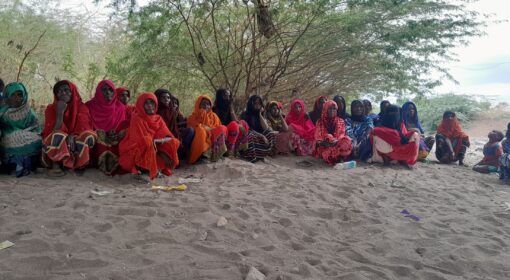
In the dry and fragile landscapes of Afar, particularly in Sifra, Ada’ar, and Yangudi, community-led landscape restoration under the Reversing the Flow (RtF) program is beginning to show early signs of progress toward strengthening resilience. Communities are organizing themselves, protecting their landscapes, and testing new livelihood strategies in environments shaped by water scarcity and climate uncertainty.
Where water is available, pastoralists are gradually integrating crop production. At the same time, degraded lands are being rehabilitated to restore natural vegetation for grazing, while community-based organizations are steadily strengthening and becoming more established.
These are important achievements. At the same time, the experience from Afar offers a valuable lesson for practitioners working across different contexts: even well-intended interventions can produce unintended risks if they are not carefully adapted to local realities. As restoration efforts expand across countries and landscapes, a critical question emerges: What happens when efforts to build resilience unintentionally increase vulnerability and inefficient use of resources?
This is where the concept of maladaptation becomes relevant. In community-led programs like RtF, this does not arise from a lack of commitment. Rather, it reflects the complexity of applying ideas across diverse ecological, social, and institutional settings.
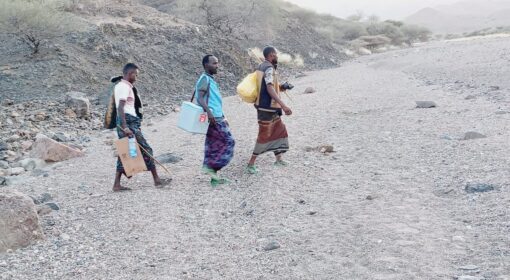
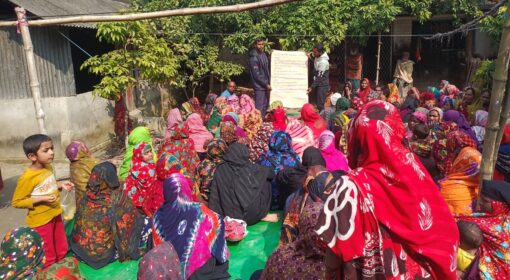
One of the key drivers of progress in Afar is peer-to-peer learning, shaped by the local cultural context. The community relies on a strong traditional oral communication system known as Dagu, which enables rapid information sharing, alongside a well-established culture of learning from peers. Exchange visits between communities inspire new ideas, build confidence, and expand what feels possible. Communities see what has worked elsewhere and are motivated to try similar practices. This energy is essential for scaling restoration.
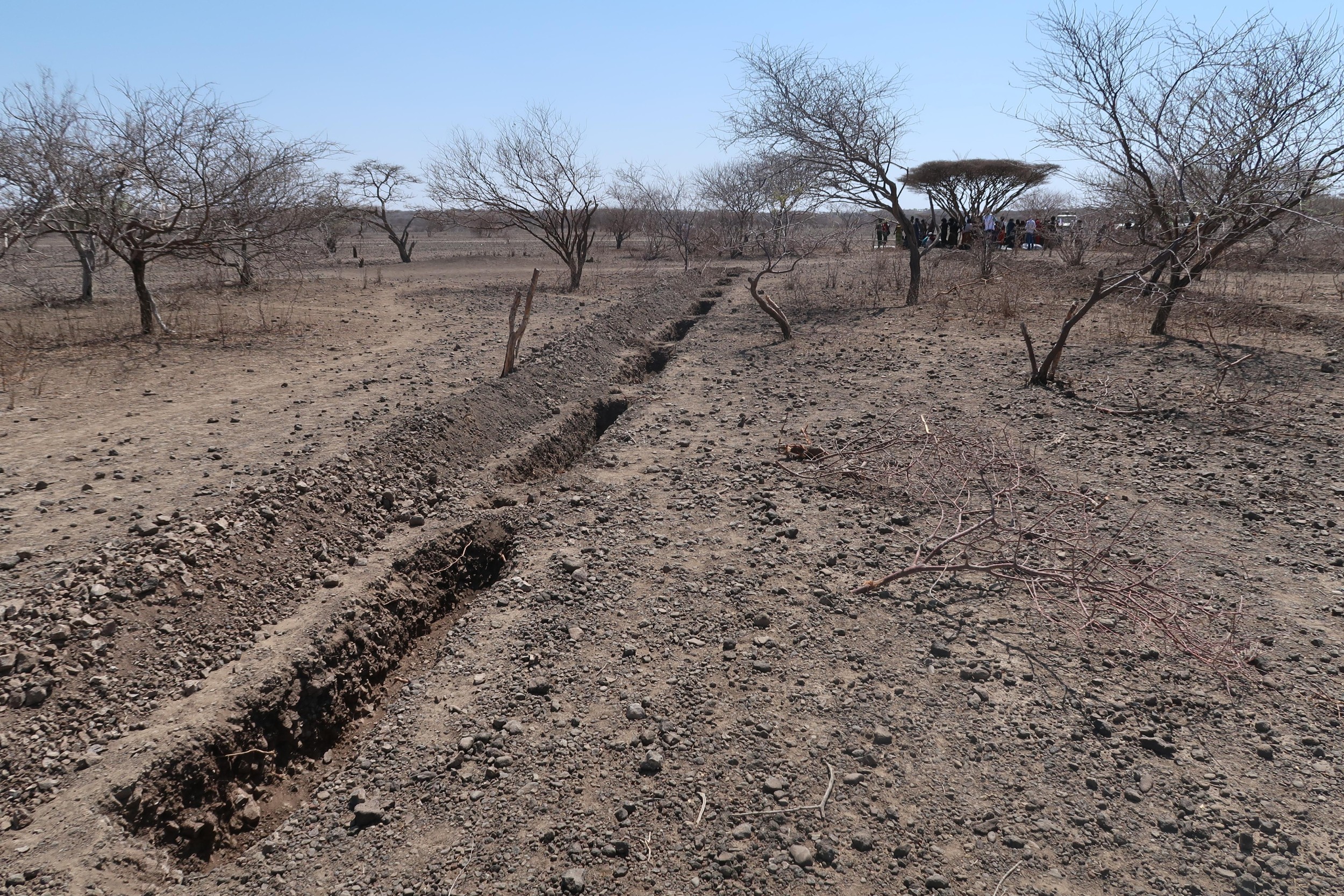
However, experience from Afar shows that learning across landscapes requires careful contextualization. In Ada’ar and Yangudi, soil and water conservation measures such as trenches were inspired by practices observed in other regions, such as Oromia and Amhara, where restoration practices are already well established.
While the intention is constructive, their effectiveness ultimately depends on local conditions such as soil type, rainfall patterns, and slope type in the landscape, as well as the community’s understanding of what to implement, where and why to implement it, and their capacity to maintain it over time. Without sufficient adaptation, such measures may underperform or require effort that is difficult to sustain.
Learning exchanges can also shape expectations. Exposure to successful interventions elsewhere can create assumptions about what is feasible and how quickly results can be achieved. In Ada’ar, for example, initial plans for irrigation had to be reconsidered when the river dried up completely. This shift was not a failure, but a response to changing environmental conditions. Still, when expectations are not continuously aligned with such realities, there is a risk that motivation declines or confidence in interventions weakens.
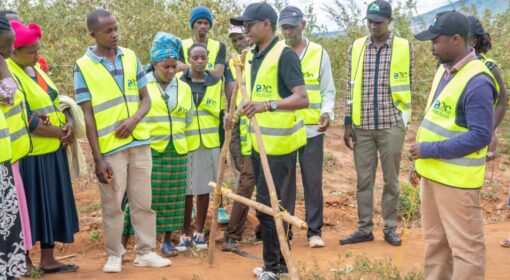
Technical quality is another important factor. Field observations suggest that some soil and water conservation measures are implemented with varying levels of precision. This is understandable where communities and local actors are applying new techniques for constructing physical soil and water conservation structures for the first time. It also highlights a broader lesson: technical support must be continuous. Providing guidance only at the design stage is not enough. Ongoing follow-up, practical coaching, and collaboration with extension services, including Natural Resource Management (NRM) Development Agents, Pastoral Development Agents, and Livestock Extension Workers, are essential to ensure that interventions are effective and sustainable.
These experiences also highlight the evolving role of local NGOs. In RtF, local NGOs, or hubs, act as connectors, facilitating learning between communities, linking local practice with technical expertise, and bridging indigenous and scientific knowledge systems. In Afar, traditional weather forecasting remains an important resource. When combined with scientific insights, it can support more informed and locally grounded decision-making.
At the same time, this role requires careful balance. As programs expand, there can be pressure to demonstrate results or scale promising practices quickly. The Afar experience suggests that pacing matters. Interventions need to be technically sound, socially accepted, and environmentally appropriate before they are scaled. This is not about slowing progress, but about strengthening its foundation.
Flexibility emerges as one of the most important safeguards against maladaptation. When irrigation became unfeasible in Ada’ar, the community shifted towards goat fattening as an alternative livelihood strategy. This adaptive decision allowed them to maintain momentum while responding to environmental constraints. Such responsiveness reflects a core strength of community-led approaches and should be actively supported.
For practitioners working across different contexts, these insights translate into several practical implications:
- Learning exchanges should go beyond sharing experiences and deliberately incorporate structured reflection on how approaches need to be adapted to different contexts, rather than directly replicated.
- Managing expectations should be treated as an ongoing process, grounded in transparent dialogue about uncertainties, trade-offs, and resource limitations.
- Technical support needs to be continuous, flexible, and responsive to evolving needs, rather than delivered as one-off interventions.
- Local NGOs or hubs are facilitators and should intentionally integrate multiple knowledge systems, valuing both community-based experience and technical expertise to ensure solutions are relevant and context-sensitive.
This means shifting from a delivery-oriented model to one that prioritizes facilitation, co-creation, and long-term accompaniment. Communities should not only participate but actively shape decisions, with their knowledge, priorities, and feedback influencing program design and implementation at every stage. This also implies investing in local capacities and allowing sufficient time for trust-building and learning.
The experience from Afar is not an exception, but a valuable example within a broader global effort. It shows that even in well-designed, community-driven programs, the path to resilience is not linear. It requires continuous learning, adjustment, and collaboration.
Ultimately, resilience is not built by replicating solutions or accelerating implementation alone. It depends on whether interventions truly fit the context, can be sustained by communities, and respond to changing realities over time. Communities across RtF landscapes are already demonstrating strong capacity to adapt and innovate. The role of supporting programs is to strengthen this capacity carefully, respectfully, and with attention to what works best in each place.
Because progress is not only about doing more. It is about doing what fits and doing it well.