Guta Eshetu, Girma Senbeta, Redeat Daniel, Nardos Masresha
A Growing Dependence on Imported Inputs
Many farming communities in developing countries, including Ethiopia, depend on manufactured agricultural inputs such as fertilizers, pesticides, fungicides, and herbicides to boost production and secure food supplies for their families. Yet many of these countries lack the capacity to manufacture such inputs domestically, and others rely on raw materials imported from abroad (Tamene, E. 2026)
This dependency requires foreign currency, which can only be earned through exports. Unfortunately, agricultural output in these regions is often too low to generate the surplus production needed for exportation, let alone meet local consumption needs. Finding alternative, locally sourced inputs has therefore become essential to improving production and building more sustainable agricultural systems.
The High Cost of Synthetic and other Commercial Fertilizers
Fertilizers play a vital role in sustaining agriculture and ensuring food security. Ethiopia currently sources its fertilizers from abroad, and the foreign currency required for these imports is difficult for a country with a limited export base to secure. The challenge is not limited to supply adequacy alone; affordability is also a major concern due to the high costs associated with importing it. For instance, in this year (2026) to buy 100kg of synthetic fertilizer (NBS, NPSB, NPSZn), farmers have to sell about 200kg of barley or wheat. On the other hand, other fertilizers such as Eco-green, which are partially dependent on foreign raw materials, are also very expensive. This leads the communities to use less than the recommended rate, which results in low productivity and, in turn, threats to food security.
The affordability of homemade liquid biofertilizer is significantly better than that of other liquid biofertilizers available on the market. Based on current ingredient prices, producing 20 liters of homemade liquid biofertilizer requires an investment of only €0.50. In contrast, commercial options like Ecogreen and Mela cost approximately €56 for the same quantity. This means that a farmer would need to sell around 150 kilograms of barley—based on the current price of barley and these products to afford 20 liters of these commercial fertilizers. This highlights the importance of focusing on locally produced organic fertilizers for farming communities in the country.
The Limited Nutrient Contents of Synthetic Fertilizers
Most synthetic fertilizers contain only a limited range of nutrients. For example, DAP (Diammonium Phosphate), previously used in Ethiopia, contains only 18% nitrogen and 46% phosphorus, while UREA comprises 46% nitrogen. This highlights the necessity for supplementary fertilizers to enhance production and ensure the cultivation of healthy foods. Essential trace elements and other macronutrients are often missing, prompting Ethiopia to begin utilizing need-based blended fertilizers such as NPS (18-38-7), NPSB (18.9-37.7-7), and NBSZn (17.7-35.3-6.5-2.5). However, many farming communities and agricultural stakeholders, including research institutes and extension experts, have raised concerns about the effectiveness of these newly imported and formulated blended fertilizers, citing a need for further study to tailor them to the specific soil types in their regions. This presents a significant challenge for Ethiopian agriculture.
Turning to Organic Alternatives
Fortunately, there are many alternative fertilizers that can bridge the gap created by synthetic fertilizers. Among these, organic fertilizers such as farmyard manure (FYM), vermicompost, compost tea, biogas slurry, and homemade liquid biofertilizers are exceptional and ideal sources of nutrients for producing healthy foods. While the concentration of macro- and micronutrients in organic fertilizers may be modest, they offer remarkable diversity.
This post highlights one of these underused natural products in particular: homemade liquid biofertilizer, and the value it can bring to farming communities and soil health not only in Ethiopia, but around the world.
What Is Homemade Liquid Biofertilizer?
Liquid biofertilizer is produced by fermenting locally available materials: cow dung, wood ash, rock dust, sugar, yeast, and milk. It is a genuinely homemade product that any interested farming community can prepare and use (https://metameta.nl/resources/making-bio-fertilizer)
Several types of liquid organic fertilizers and biofertilizers are already in use across Ethiopia. Some are produced locally; others rely on imported raw materials, and a few are manufactured entirely overseas. Because so many depend on imported inputs, their prices are tied to the availability of foreign currency, placing them out of reach for some farming communities.

A Genuinely Local, Affordable Solution
Homemade liquid biofertilizer requires no imported raw materials and no foreign currency to produce. As a result, it is far more affordable than commercial liquid fertilizers; a critical advantage for farming communities that otherwise cannot produce their own inputs and must purchase them at high cost.
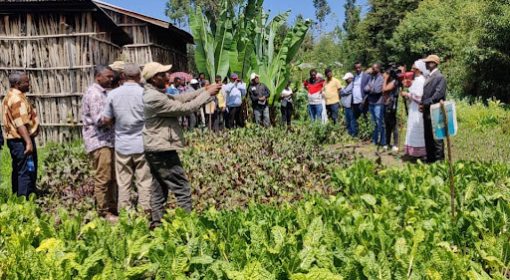
GOPA MetaMeta is the only organization offering free guidance on producing liquid biofertilizer to farming communities. Many farmers have been hesitant to adopt the method at the beginning, underestimating its effectiveness because the process and materials seem so ordinary. That hesitation tends to fade quickly: after testing it on small plots, farmers have consistently been won over by the results.
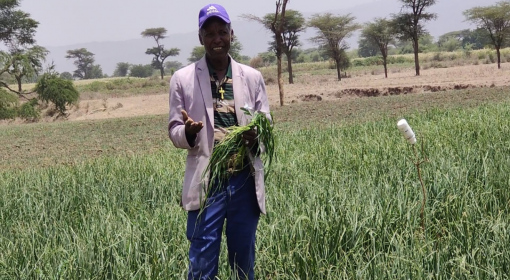
During a training organized for soil fertility experts, one farmer who had used the fertilizer for onion production at the beginning shared the following reflection:
“As far as I know, cow dung, wood ash, and rock dust are considered useless materials in our area. The only valuable materials we have are sugar, yeast, and milk. I am surprised by how the innovator was able to transform these seemingly useless raw materials into a valuable liquid biofertilizer. We farmers are hesitant to use it and to trust that it will enhance our production because we are familiar with the mixed materials used to make it. I am truly astonished by what I have observed in my field.”
Gemechu Negash, Onion Farmer — Jeju Woreda, Arsi Zone
Chemical Properties Analysis: Laboratory Results
As adoption grew supported by horizontal learning approaches such as field days; stakeholders began asking the secret behind the effectiveness of Homemade liquid biofertilizer in boosting crop production. To answer that question (curiosity to know the chemical content of the Homemade liquid biofertilizer), GOPA MetaMeta collected samples from farming communities and prepared additional samples in-house for chemical analysis, which was carried out at a recognized laboratory called Horticoop Laboratory in Bishoftu.

The analysis confirmed that every homemade liquid biofertilizer sample contained a full spectrum of essential plant nutrients:
- Major nutrients: organic carbon, total nitrogen, and available phosphorus
- Exchangeable bases: calcium, magnesium, potassium, sodium, sulfur, chlorine, and silicon
- Micronutrients: iron, manganese, copper, zinc, boron, and molybdenum
Of course, nutrient levels varied depending on the type of rock dust used, other raw materials (the types of cow dung and wood ash), the fermentation age which is affected by agroecological conditions, mainly temperature. The results show that homemade liquid biofertilizer outperformed other commercial liquid fertilizers such as Eco-green and Mela, particularly in some trace-element content and the overall diversity of essential elements and, above all, remaining more affordable. Most samples also had acidity levels well suited to crops, although a few fell below the ideal pH range for microbial activity.
Nutrient Comparison
The table below summarizes nutrient content (mg/litre) in homemade liquid biofertilizer compared with two commercial liquid fertilizers available in Ethiopia.
| Parameter | HML-Biofertilizer in mg/liter | Eco-green in mg/Litre | Mela in mg/Litre |
| Organic carbon | 19.73 – 31.63 | 60 | – |
| Total Nitrogen (N) | 32-144 | 1400 | 591 |
| Potassium (K) | 216.74 – 1203.72 | 850 | 1367.07 |
| Phosphorus (P) | 32 – 166 | 562.8 | 255.69 |
| Sulfur (S) | 24.29 – 219.02 | 2337.49 | 641.99 |
| Calcium | 185.05 – 1424.9 | 303.45 | 1720.42 |
| Magnesium (Mg) | 54.26 – 237.21 | 269.31 | 329.99 |
| Sodium (Na) | 18.05 – 166.45 | 190 | 233.18 |
| Boron (B) | 0.34 – 1.83 | 17.40 | 2.92 |
| Iron (Fe) | 28.79 – 244.27 | 1015 | 11.9 |
| Manganese (Mn) | 6.61 – 42.46 | 5.4 | 7.74 |
| Zinc (Zn) | 0.53 – 1.84 | NA | 2.56 |
| EC (dS/m) | 1.6 – 8.35 | 7.08 | 6.22 ms/cm |
| pH | 4.62 – 6.93 | 7.11 | 6.59 |
Source: Horticoop Laboratory analysis, Bishoftu, Ethiopia and (Ateka et al., 2024; Adugna et al., 2024)
- Note: We used these fertilizers because they are widely available in the Ethiopian fertilizer market

Conclusion
Homemade liquid biofertilizer offers a practical, low-cost, and nutrient-diverse alternative to imported synthetic fertilizers one that farming communities can produce entirely with local materials and without dependence on scarce foreign currency. Using homemade liquid Biofertilizer is not only reduces the production cost of individual farmers but also enables the country to save a huge investment budget on importing these commercial fertilizers. The laboratory evidence, paired with growing farmer testimony, makes a compelling case for wider adoption: not only across Ethiopia, but in farming communities facing similar constraints worldwide.
References
- Ateka, B., Alemayehu, M., Adgo, E., Assefa, F., & Mengist, Y. (2024). Effects of eco-green and inorganic nitrogen fertilizer rates on growth and green pod yield of hot pepper (Capsicum annum L.) in Bahir Dar Zuria District of Amhara Region, Ethiopia. Discover Sustainability, 5(1). https://doi.org/10.1007/s43621-024-00311-5
- Adugna, G., Abera, D., Hundessa, M., Bekele, I., & Gudeta, G. (2024). Effects of Mela Organics’ new liquid fertilizer on tomato yield in Semi-Arid areas of Ethiopia. International Journal of Applied Agricultural Sciences, 10(5), 234–241. https://doi.org/10.11648/j.ijaas.20241005.15.
- Tamene, E. (2026). Structural dependency and acute vulnerability: Ethiopia’s chemical fertilizer import system under the 2025/2026 global price shock [Working paper]. Independent Researcher. https://orcid.org/0009-0007-7533-1954