By Frank van Steenbergen, May, 2018
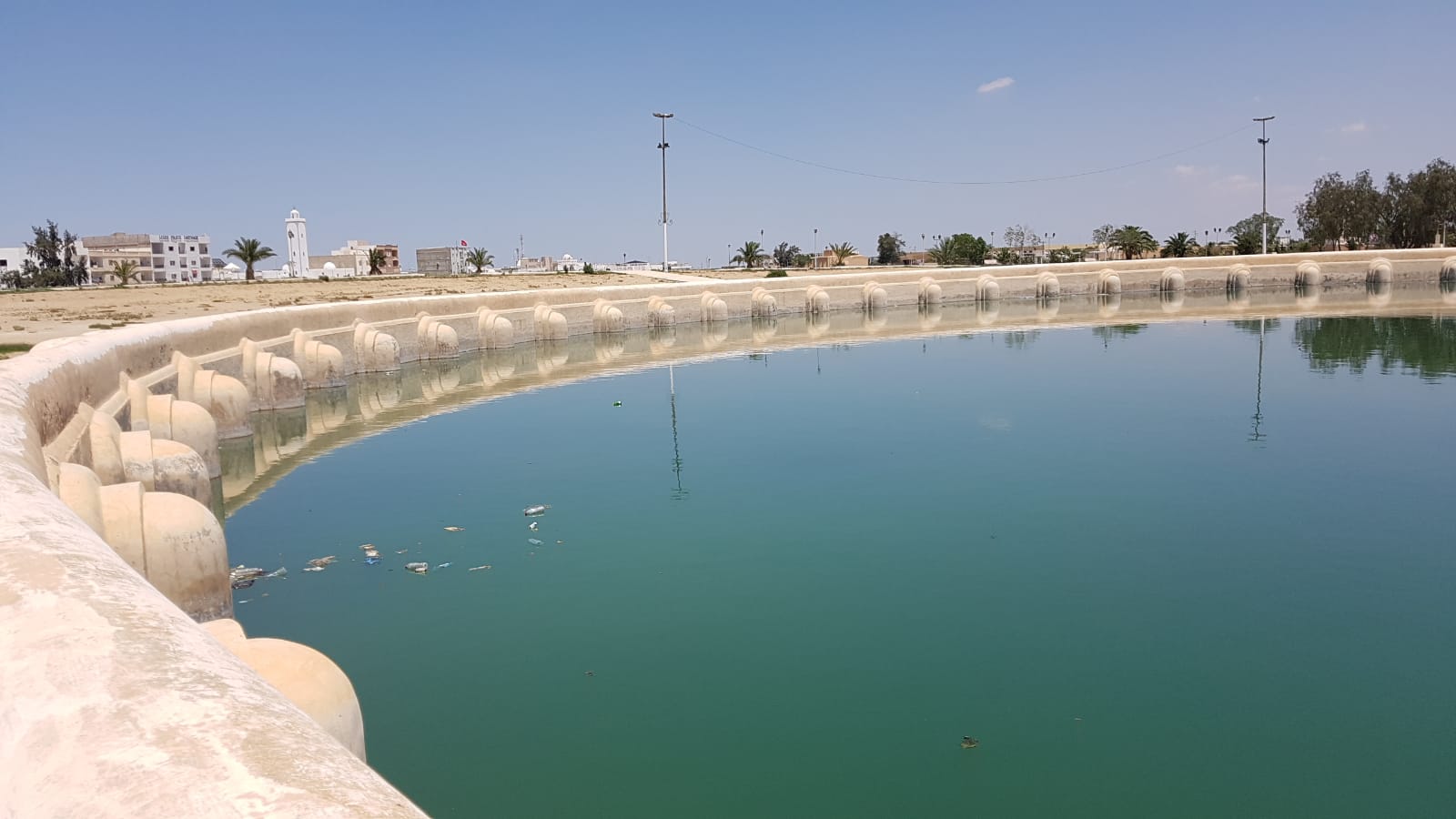
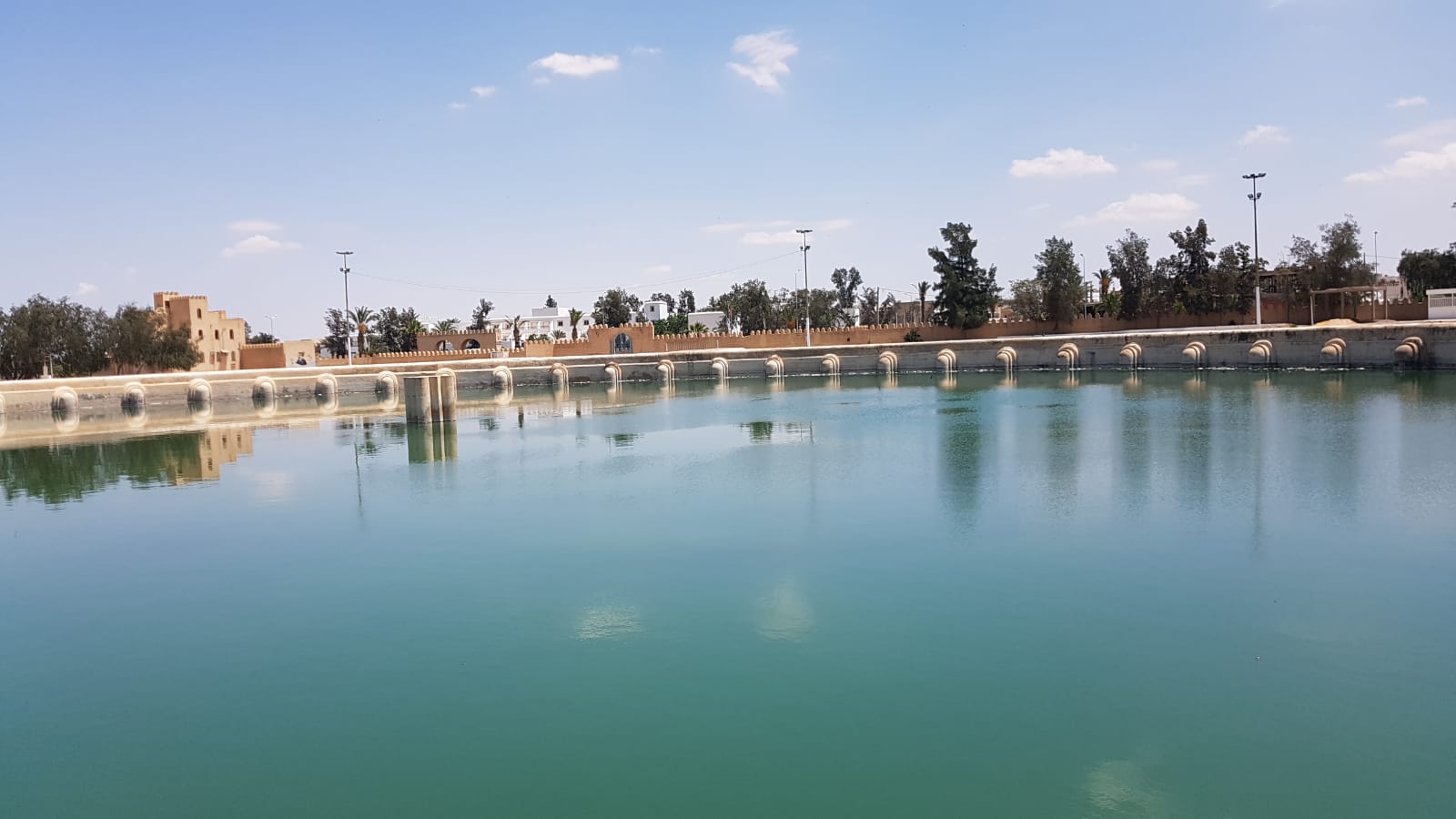
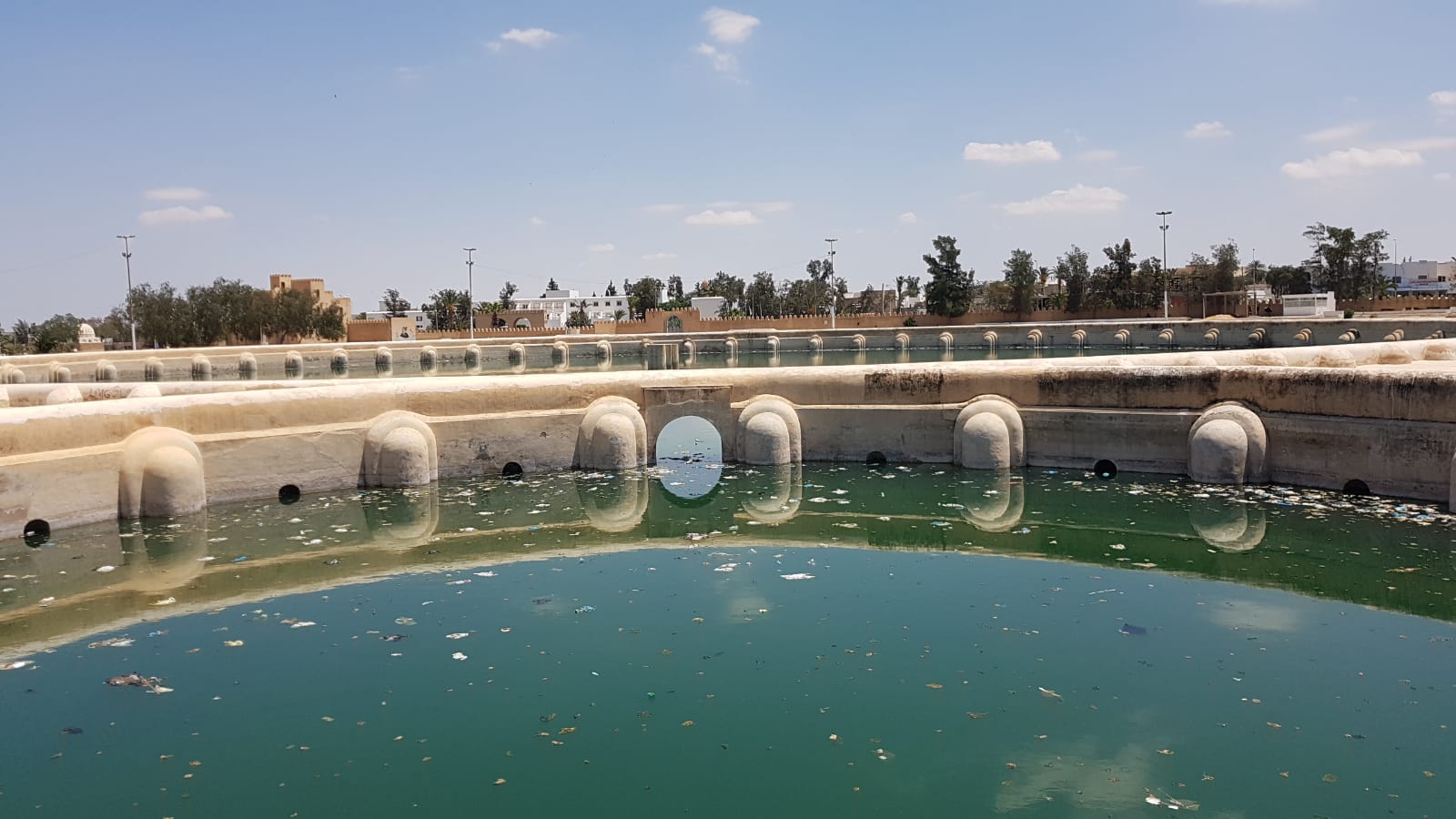
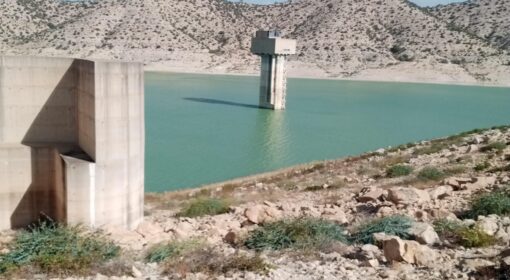
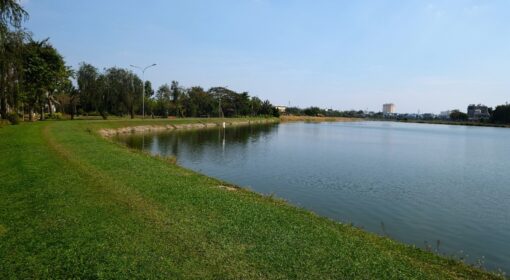
Picture from the Aghlabid Pools and small intake pond.
Postcard from Kairouan, Tunisia – from the Aghlabid Pools, among the world’s wonders of hydraulic engineering. The pools were built in the 9th century under orders of Prince Abu Ibrahim Ahmad of the relatively short-lived but powerful Aghlabid Dynasty (800 to 909). The brilliant freed slave Khalaf al-Fata acted as resident engineer. The Aghlabid Pools that are still in place consist of a small reservoir pool called al-Fisqiya. It looks circular but is in the shape of a 17-sided polygon. The al-Fisqiya connects to a much larger reservoir that is 4.8 meters deep and 126 meters in diameter. The purpose of the small pool was to improve water quality: sediments were allowed to settle, and then the cleaner water was made to overflow into the large main reservoir. In the centre of the large pool, there was a small pavilion for the Aghlabid elite to relax.
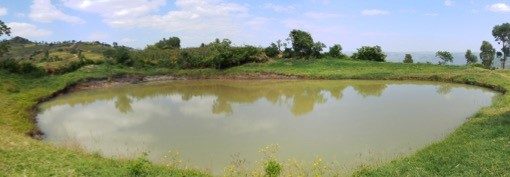
At the time, there were 16 such pools around Kairouan – but the other fourteen have disappeared over time. One such small Aghlabid pool, however, is still in place close to Sousse, now largely forgotten in a waste field.

Picture from a small forgotten Sousse Aghlabid pool
The water for the pools comes from rain and the Wadi Merguell by a cascade of small dams. The other main source was the long aqueduct taking water from the Djebel Cherichera hills, 36 kilometers away. A man-made oasis was created out of ingenuity and persistence. It served to build up the desert city of Kairouan, a spiritual center and the first major seat of government in North Africa. Located at the crossroads of two caravan trails, the town prospered and soon became a major commercial hub connecting the East and West, Christian Europe and Sub-Saharan Africa. The pools ensured that, even during long dry spells, fields around Kairouan could supply enough grain and that water for the town was secured. Nowadays, Kairouran is still a city of holiness with the everlasting Grand Mosque and the marvelous Oma Mosque. The area around the city, however, has become drier and emptier. Though the desert no longer rejoices, the magnificent pools remain testimony to the wonders that we can achieve.