By MID-P, the hub in the Reversing the Flow program
This blog is part of a dossier on locally-led adaptation, featuring insights and lessons from the Reversing the Flow (RtF) program. RtF empowers communities in Bangladesh, Burkina Faso, Ethiopia, Kenya, and Sudan to build climate resilience through direct funding and a community-driven, landscape approach.
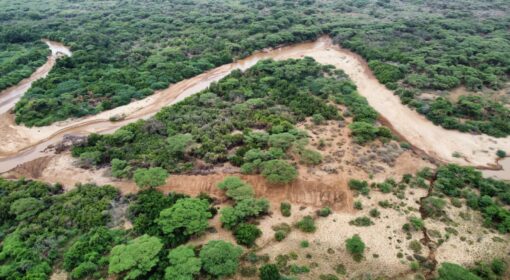
Merti Integrated Development Programme (MID-P) localization approach is reflected in the partnership with Oxfam through the ASAL Humanitarian Network (AHN), a network of over 30 local Civil Society Organizations (CSO) in Arid North. Through AHN MID-P secured funding from the Scottish Government under the auspices of the Loss and Damage project. The support from the Scottish government is in response to flash floods following the October – November 2023 heavy rains experienced in Kenya particularly in the Arid North.
The Loss and Damage project
MID-P engaged the Isiolo County Steering Group (CSG), a platform for coordinating Humanitarian and Development efforts in the County hosted by the National Drought Management Authority (NDMA). MID-P presented the project and sought targeting of the locations and approval for project implementation. Based on the NDMA and the Kenya Red Cross Society (KRCS) assessment of floods, Sericho and Cherab Ward were targeted. 10 community groups were identified through community engagement (5 in each Ward).
Project Components
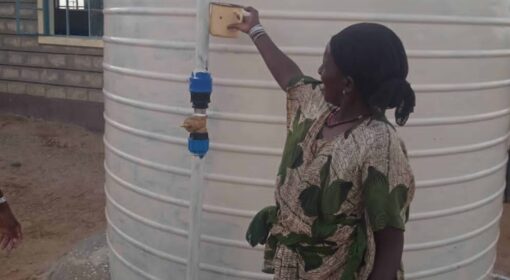
Key components of the loss and damage project include Water, Sanitation and Hygiene (WASH) and the Group Cash Transfer (GCT). The WASH component involved rehabilitation of three (3) boreholes and water piping systems while the GCT component involved using the Supporting Community-Led Response (SCLR) approach during crisis.
Project implementation: Methodology and Approaches
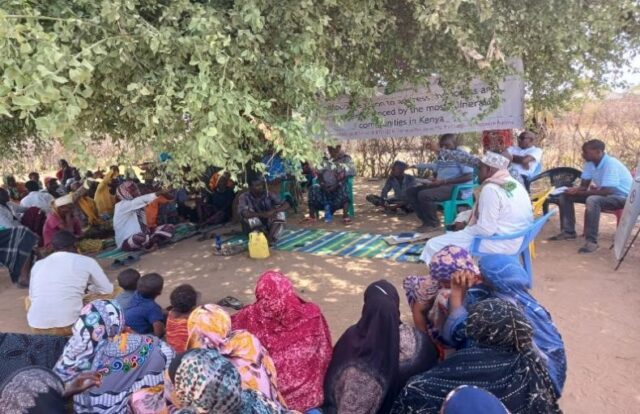
Adopting SCLR approach during the crisis, MID-P placed a call for proposals – micro-grant funding for community groups to implement the Loss and Damage project in Sericho and Cherab Ward. Out of 84 applicants, 10 community groups were selected following evaluation and validation of their proposals. The objective of the micro-grant was to support community groups in undertaking community projects identified through a participatory approach to address climate change-induced loss and damage from flooding. The project implementation approach adopted was the group cash transfer, a modality that seeks to transfer power and resources to crisis-affected populations by providing unrestricted, unconditional cash transfers to groups to implement community-led initiatives. In this approach, grants were awarded to groups for crisis response initiatives, who then utilized local markets and capacity to design, implement, and monitor community-led initiatives. Key steps in the Group cash transfer granting process include staff onboarding and volunteer selection and training, mapping and targeting of locations, an inception meeting to sensitize the community on the SCLR approach, and mapping of existing community structures, as well as placing an advert for expression of interest/call for proposals. With support from Community Facilitators, community groups are guided on proposal development and submission. The proposals are then evaluated by the technical team from MID-P and the County Government before it is validated and approved at the community level. The selected groups were trained by community facilitators and County government officials from the Department of Social Development on basic financial and record keeping, group dynamics and leadership, and governance. Before the disbursement of funds to the community group, a Memorandum of Understanding (MoU) was developed and signed between MID-P and the selected group through their officials. The groups were closely monitored by the Community Facilitators, who provided necessary technical support as they implemented the project. The project implementation report is prepared and shared with MID-P and local administration/Ward Administrators by the community groups. The project culminated in experience-sharing, confidence-building, and collaboration among groups. Lessons learned were shared to foster collective action to strengthen resilience.
Challenges, Opportunities, and Lessons
- The timelines for project development were very tight, and this inevitably limited the level of community participation in the development of the proposals. However, the project was collaboratively designed by Oxfam and AHN members through a risk and needs-based approach.
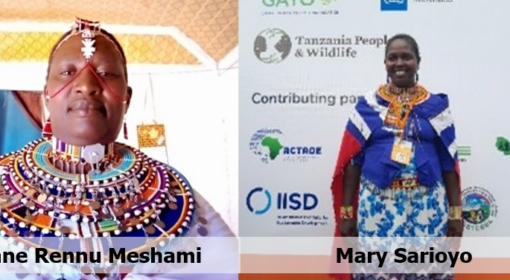
- There was an initial low opinion by community members on the capacity and capability of women to implement community projects. The seven women groups managed to successfully implement the project and earned trust and support from the community.
- The community has embraced the Community-led approach to the implementation of the project by easily organizing themselves and quickly responding to a crisis if supported with resources and some technical expertise.
- Empowering community members to take ownership of the grant process fosters a sense of responsibility and commitment, which ensures the success of the community project.
- Engagement of the Community Facilitators to provide support and regular monitoring allowed for timely course corrections and ensured that the community grant interventions remain on track.
- Transparent decision-making processes during the selection and awarding of the groups fostered trust and accountability within the community.
Conclusion
From the implementation of the Group cash transfer using the SCLR approach, it was evident that communities are able to unpack development challenges by identifying them, analysing and developing a home-grown solution even during a crisis. There exist community structures that, if facilitated with technical expertise and resources, can implement projects that will have a great impact and efficiency, and develop ownership in the process. There exist community resource persons who can be engaged in the implementation of a community project. The community resource persons understand the community context and are readily available. The key lesson is that more funds are utilized in project implementation without incurring unnecessary project overhead costs. Walking with the County and National Government from project design, inception, implementation, and exit is key. There was a lot of interest from community groups in the call for proposals. There is a need to manage community expectation by linking community groups with other development partners interested in adopting SCLR approach.