By Frank van Steenbergen, Femke van Woesik, Sunyoung Suh, and Samy Costin Osan
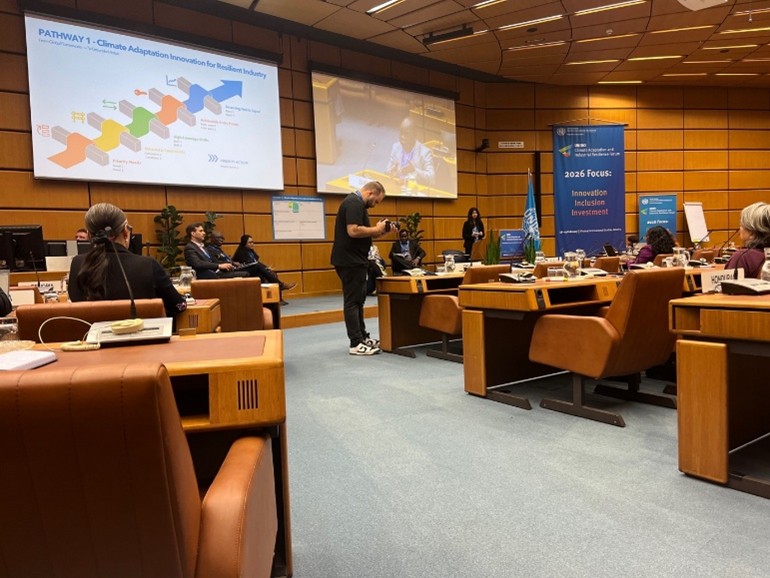
Postcard from Vienna, from the first UNIDO Climate Adaptation and Industrial Resilience Forum (18-19 February 2026). What was discussed was the role of small and medium enterprises (SMEs), including local micro enterprises, in climate adaptation: particularly in locally-led adaptation, with local businesses driving adaptation efforts from the ground up.
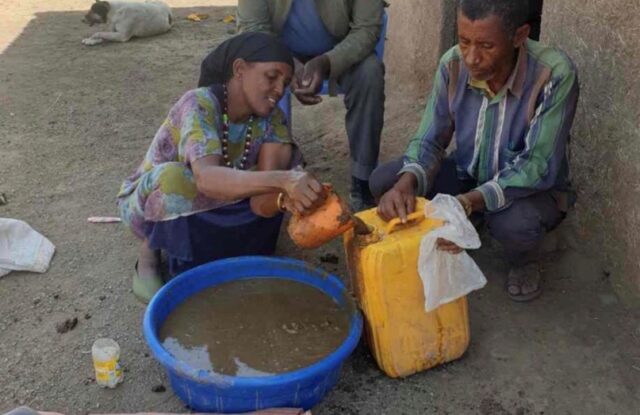
The conversation went beyond SMEs simply adapting their own operations. It positioned them as active providers of adaptation services to communities and value chains. There are plenty of examples: passive cooling and climate-proofing in construction; drought-resistant seeds, water-retaining biofertilizers, and efficient irrigation for agriculture; processing of bamboo or vetiver to stabilize flood-prone hills; climate and weather insurance services; and reliable cold storage to buffer harvests through extreme events. And much more.
This befits the role of small businesses as providers of public goods: facilitating adaptation while creating jobs, adding value, and delivering vital services. Adaptation is not merely about survival or risk management. It is dealing (creatively) with a new set of challenges and hence becomes a pathway to dynamic local economies that is problem-solving – one where enterprises see local challenges, build solutions around them, and generate livelihoods in the process. When climate adaptation and economic opportunity align, communities become active participants in productive systems that generate and circulate value.
UNEP[1] has estimated that 310-365 B USD is required in adaptation finance, yet the funding committed is only 26-28 B USD annually – a staggering gap. But the answer is not to fill it with donor grants. Instead, we should use strategic, catalytic investments to unlock local systems: strengthening sectors, enabling conducive policies, facilitating right investments, and bringing in innovations and trailblazers. This strengthens local economies and triggers private-sector participation and community/household contributions that help fill the financing gap.
There is a need for a reorientation in adaptation funding. Not much is spent locally – at best 10% locally implemented, and far less is locally-led. Local enterprises, and what they could deliver, remain largely invisible in the equation.
There is a need to get going – to start with promising enterprises in promising sectors in different local communities and settings. We may want to work on a taxonomy to understand better what these adaptation SMEs are.
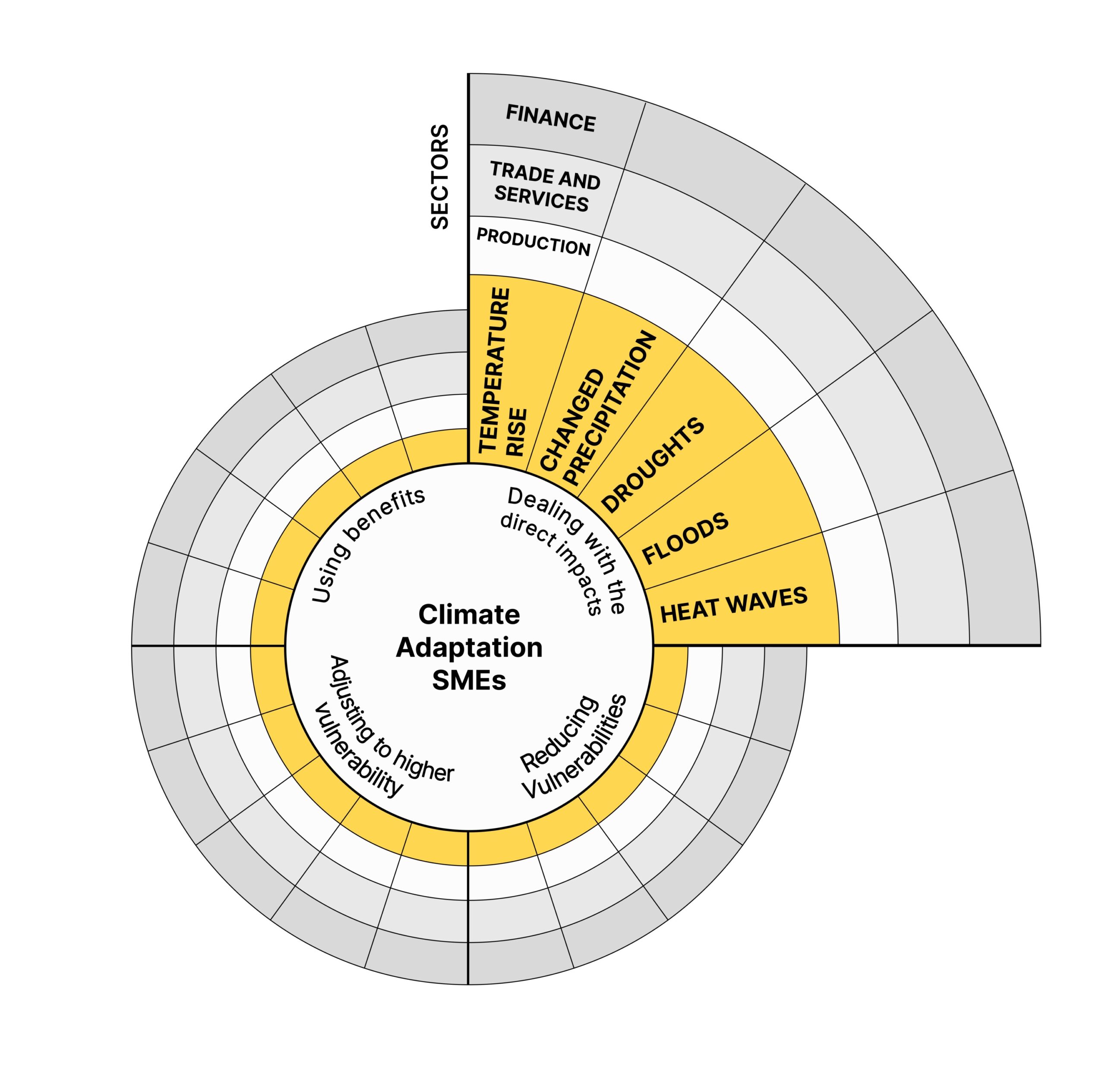
The figure below is an effort to identify the type of SMEs that work on dealing with the direct effects of climate change; to help reduce vulnerabilities triggered by climate change or to deal with the same enhanced vulnerabilities; or even to take advantage of changed climate scenarios – across sectors such as production and processing, trade and services, and finance.
What matters is not enhancing the contribution of a limited few individual enterprises, but to work at scale – and from the starting points, strengthen either the entire sector or energize the entire local economy, the local circulation of useful goods and services.
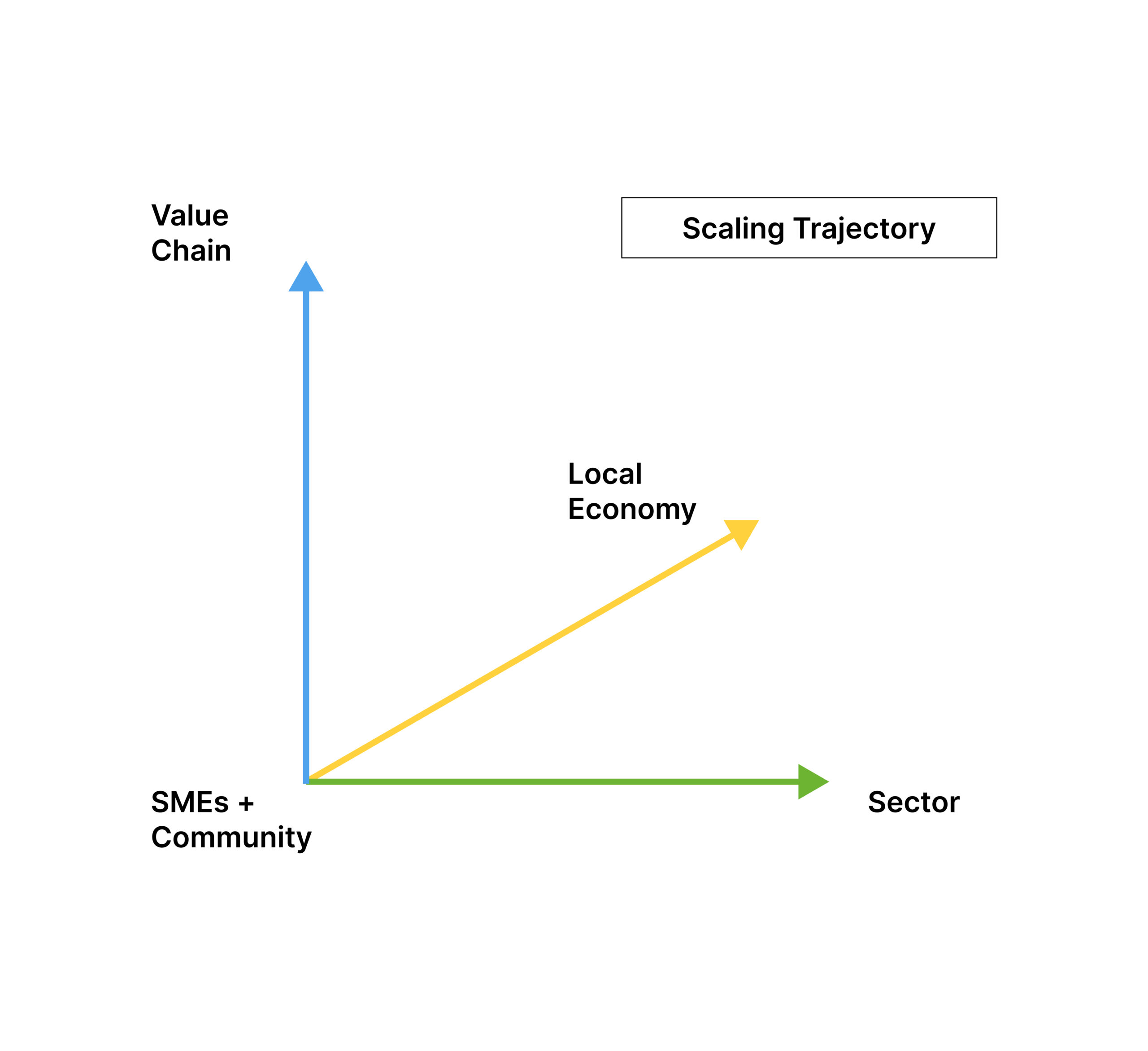
The way supporting locally led adaptation through local business could work is to use a path-finding mode: communities to identify climate challenges, entrepreneurs to highlight the business opportunities for adaptation solutions, financers to support, obstacles in regulation, facilitation, capacity support, public procurement to boost, and infrastructure to align.
[1] UNEP (2025), Running on empty. The world is gearing up for climate resilience — without the money to get there. Adaptation Gap Report.