By Frank van Steenbergen and John Marandy
It is loose but also gains. Bangladesh loses every year 34 square kilometers of land, something that may increase with sea level rise. Yet against the loss, there is a gain too: on average, every year, 54 square kilometers of land emerges too. The sum is positive, but it comes at the cost of the huge tragedy of those whose land is washed away by the moving rivers.
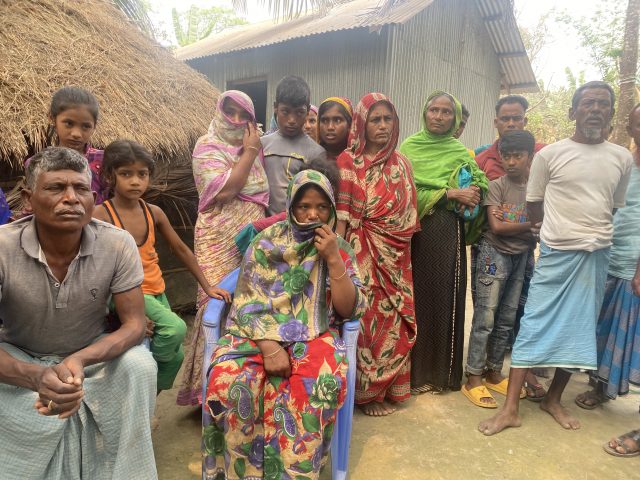
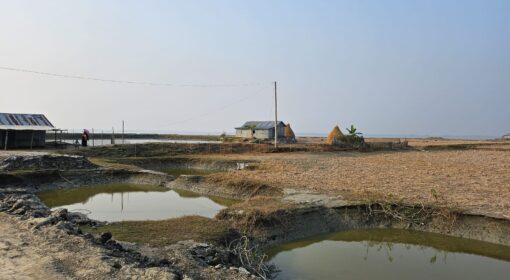
One area that has been at the brunt of coastal erosion in the last fifteen years is Char Bamni in Noakhali Division. A stretch of land 2 kilometers wide and more than 10 kilometers wide has been lost, with the braiding river chipping away at the coastline and occasional typhoons accelerating the process of erosion in bounds and leaps.
This coastal erosion means people are losing their land and moving away. Those with resources often manage to find some new land or even go to the newly emerging land. Those who are poor do not have such resources and must find some public space to rebuild their lives and those of their children or older parents. There are not many options for this, but it is common to settle on flood embankments.
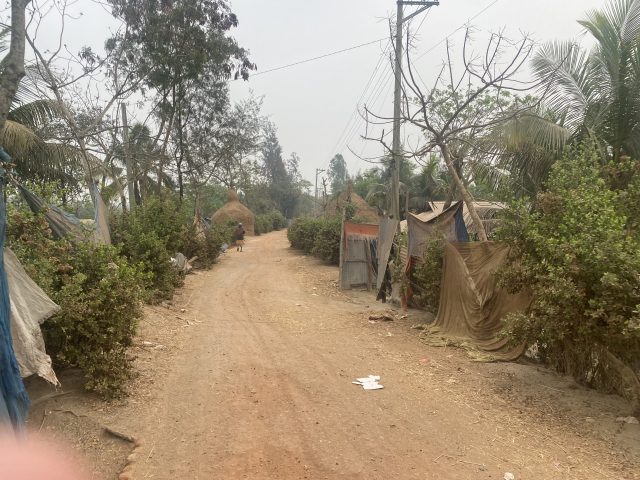
Visiting the roadside community of Char Mitti: Almost everyone here lost land during sea floods and coastal erosion, and were left with no choice but to move away. Most people in the Char Mitti community, in fact, have been forced to move multiple times. Such is the story of Fakir Ahmed and Nurun Nahar. Three times in the last ten years, they had to give up their dwellings and move away. The last time was harrowing. They woke up in the night by mikes urging them to go to the cyclone shelter. When they came to their house the next morning, all was gone but the frame of their house and the thatched roof. They took that with them and moved to the embankment in Char Mitti, where the guard allowed them to stay together with other river erosion victims.
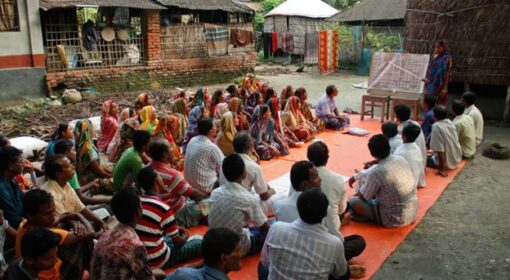
Over the years, they built up a new home. In Char Mitti, they are in a community with much solidarity. In their case, neighbors helped in marrying off their six daughters and helped to arrange the cost of the dowry involved. They own no land, and income comes from labour. Even so, a minimal wealth has been gained in the last years: a house of corrugated iron, goats, chickens, fuel efficient stove. They regret that they could not send their children to school and that they have gone hungry so many times. The story of Fakir and Nurun is the story of the others, too, in Char Mitti. Some cannot even remember how many times they moved.
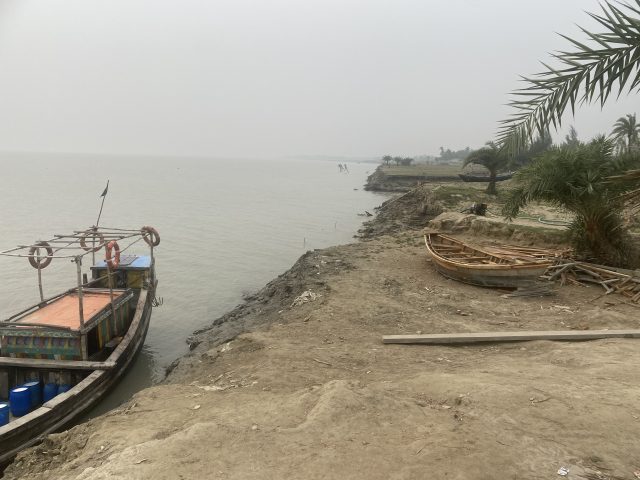
At the same time, there is strength and resilience. Basic wealth was created: a tin-roof house, goats, chickens, a fuel-efficient stove, a latrine, and some mechanized farm equipment. What is remarkable is that is strength, no weakness. No one in their group is begging. They describe their ‘secret’ as ‘just working hard’.
Loss and gain. Victim, victor.
From: How the other half lives