How a Remote Bangladesh Char Community Made Government Respond
By Shaira Rahman ( Friendship NGO) and Mst Jannatul Naim (GOPA MetaMeta)
This blog is part of a dossier on locally-led adaptation, featuring insights and lessons from the Reversing the Flow (RtF) program. RtF empowers communities in Bangladesh, Burkina Faso, Ethiopia, Kenya, and Sudan to build climate resilience through direct funding and a community-driven, landscape approach.
In the riverine chars of northern Bangladesh, life is shaped by uncertainty. Floods, river erosion, and isolation from the mainland make access to services difficult. For these char families, livestock are savings, income, and emergency security. When disease spreads, livelihoods are immediately at risk. For years, veterinary support rarely reached remote char areas. During outbreaks, animals often died because vaccination and treatment services did not arrive in time. But in Char Bagua, this pattern has begun to change.
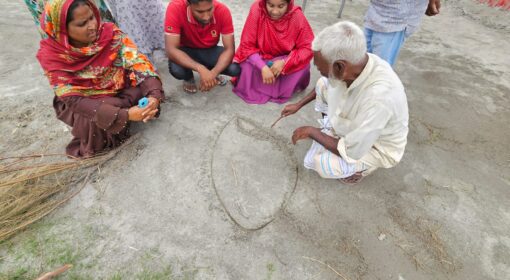
Over the last two years, the community has been part of the RtF programme, facilitated through the local NGO Friendship. A key outcome has been the formation of a Community Implementing Committee (CIC) created to identify priorities, organize action, and play a role as a systemic partner to change the landscape and to make decisions and act together.
In August 2025, an anthrax outbreak spread across northern Bangladesh. The government launched a mass cattle vaccination campaign across the Rangpur division (northern part of Bangladesh). In the past, Char Bagua might have been left behind due to its remote location.
This time was different.
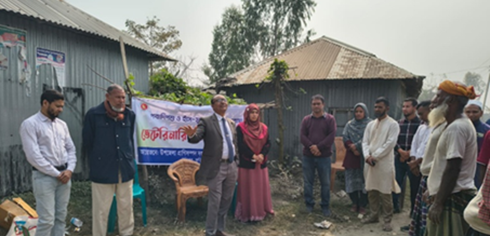
The community raised concerns about vaccinating their cattle and supporting veterinary treatment. In the CIC meeting, they decided that protecting livestock was a top priority. CIC members contacted the local Department of Livestock Services (DLS) and formally requested a veterinary camp in the char. NGO Friendship supported the connection, but the planning, follow-up, and organization were led by the community itself.
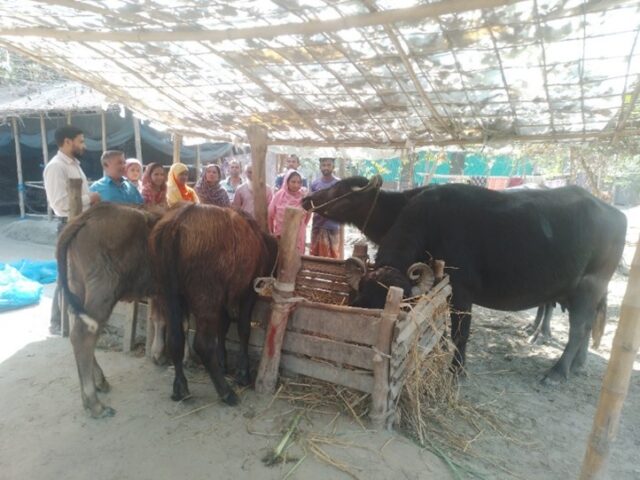
As a result, a government veterinary team travelled to Char Bagua and organized a free livestock vaccination and treatment campaign. The outreach covered 45 cattle vaccinated, 38 cattle treated, and 72 goats treated: a total of 155 animals supported. For the first time, the char community received the government livestock health response.
What Changed Because of RtF?
The most important change was not only the vaccination numbers — it was the strengthened local institution (CIC) behind them:
- The community now has an organized and trusted decision-making body.
- Government offices recognize and respond to the CIC.
- Community members act collectively rather than individually.
- Local priorities guide action
RtF’s locally led adaptation approach places communities in the driving seat. Instead of being passive beneficiaries, Char Bagua residents identified the risk, made the decision, negotiated with the government, and ensured implementation.
The experience shows that vulnerability is not only about geography, but also about voice and access. When communities are organized, even remote and climate-exposed areas can secure support. The CIC has strengthened unity and advocacy capacity. Community members now understand that they can influence decisions affecting their livelihoods.
And change is spreading.
Through other RtF-supported community initiatives, such as market plinth raising, new economic opportunities have emerged. One example: private investment in small veterinary medicine shops in the char. This expands access to primary livestock care even during emergencies.
Char Bagua’s story shows that communities are united, organized, and trusted to lead, and real change becomes possible.