By Farah Kamaleddine, Femke van Woesik, Frank van Steenbergen, Long Hoang, Geert van Boekel, David Mornout
Reflections from GFFA 2026 on Food, Water, and Local Climate Action
Water is widely recognized as the foundation of food production. No water, no harvest. In other words, “Water. Harvests. Our Future”, as phrased in the 18th Global Forum for Food and Agriculture (GFFA). Yet what is far less emphasized is the reverse relationship: how our agriculture and food systems actively shape the fate of our water.
The way we farm, manage soils, and design landscapes determines whether water infiltrates, evaporates productively, recycles locally, or is lost as runoff, pollution, and heat. In this sense, our food today is also our water tomorrow.
Recent climate records remind us of the urgency. The past three years ranked among the warmest on record, with global temperatures rising around 1.5°C above pre-industrial levels according to the Copernicus Climate Change Service’s (C3S) annual temperature data. Alongside rising temperatures and unpredictable precipitation patterns, impacts of deteriorated soils and forests, over-exploited aquifers, and intensifying rapidly. In addition to CO₂ emissions, land and water management decisions matter in managing climate impacts.
A significant part of the story lies in how we manage water and land at the local level. And unlike global emissions trajectories, this is where immediate, tangible action is possible.
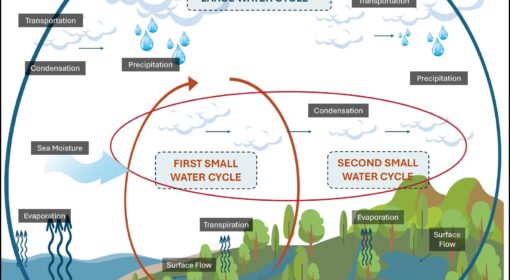
This is where the concept of the ‘small water cycle’ becomes critical. Beyond rivers, reservoirs, and clouds formed over oceans, the small water cycle describes the continuous recycling of water through soils, vegetation, evaporation, and local precipitation. Healthy soils and plant cover allow rainfall to infiltrate, recharge groundwater, evaporate through plants, cool the landscape, and ultimately contribute to localized rainfall. You can read more about the small water cycle here.
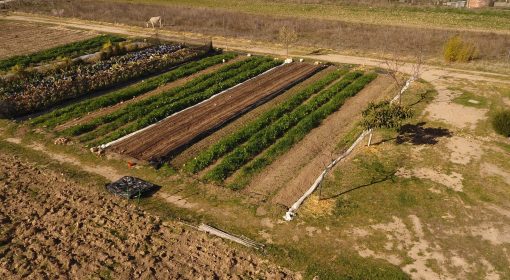
Contrary to the assumption that only massive-scale restoration can affect rainfall, small, strategic field-scale interventions, such as increasing soil health, planting trees, harvesting rainfall, etc., can, on the one hand, induce rainfall, and sustain water in the system on the other hand. These effects are particularly strong and beneficial when they accumulate across landscapes. Experiments by Millán (2014) in Spain demonstrated how soil moisture, groundwater, and even fog contribute to localized rainfall patterns. Similarly, initiatives like these have shown that conventional climate models often overlook the influence of localized evapotranspiration loops created by restored patches of land.
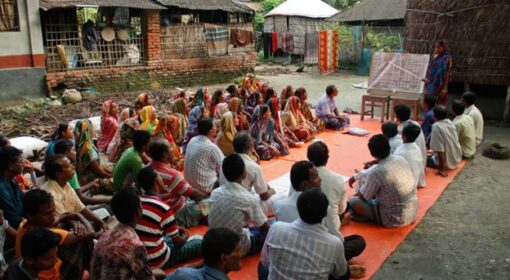
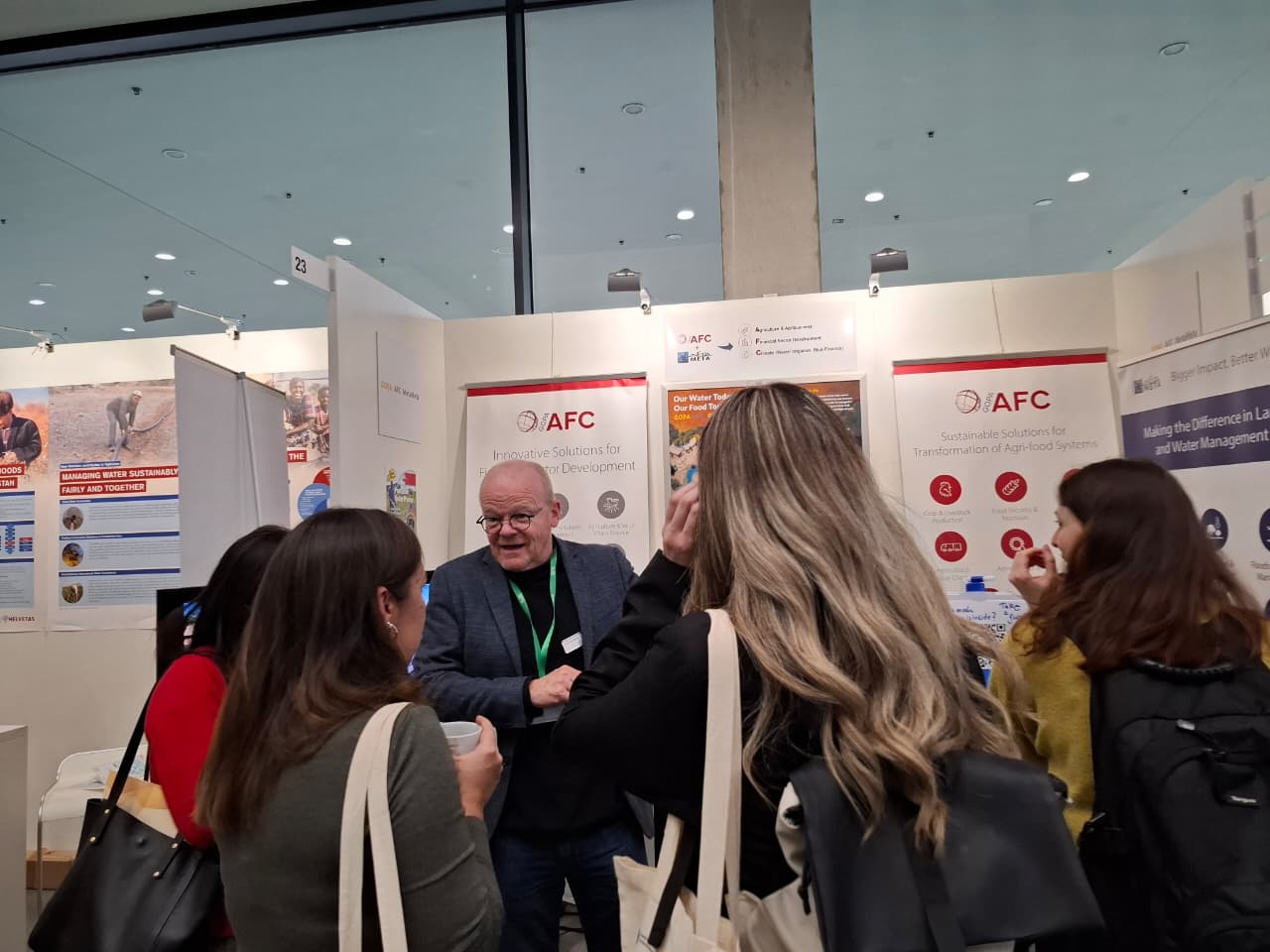
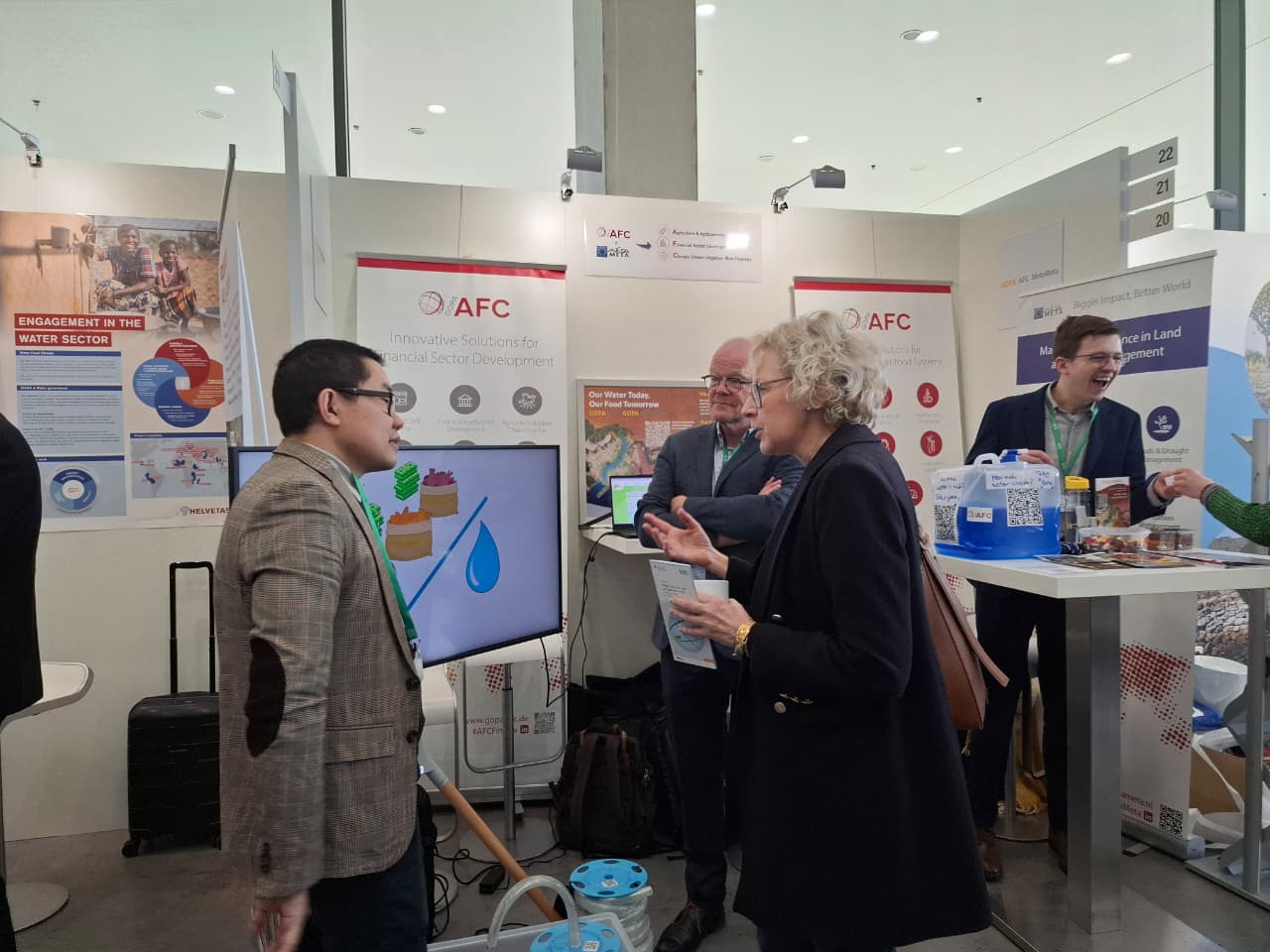
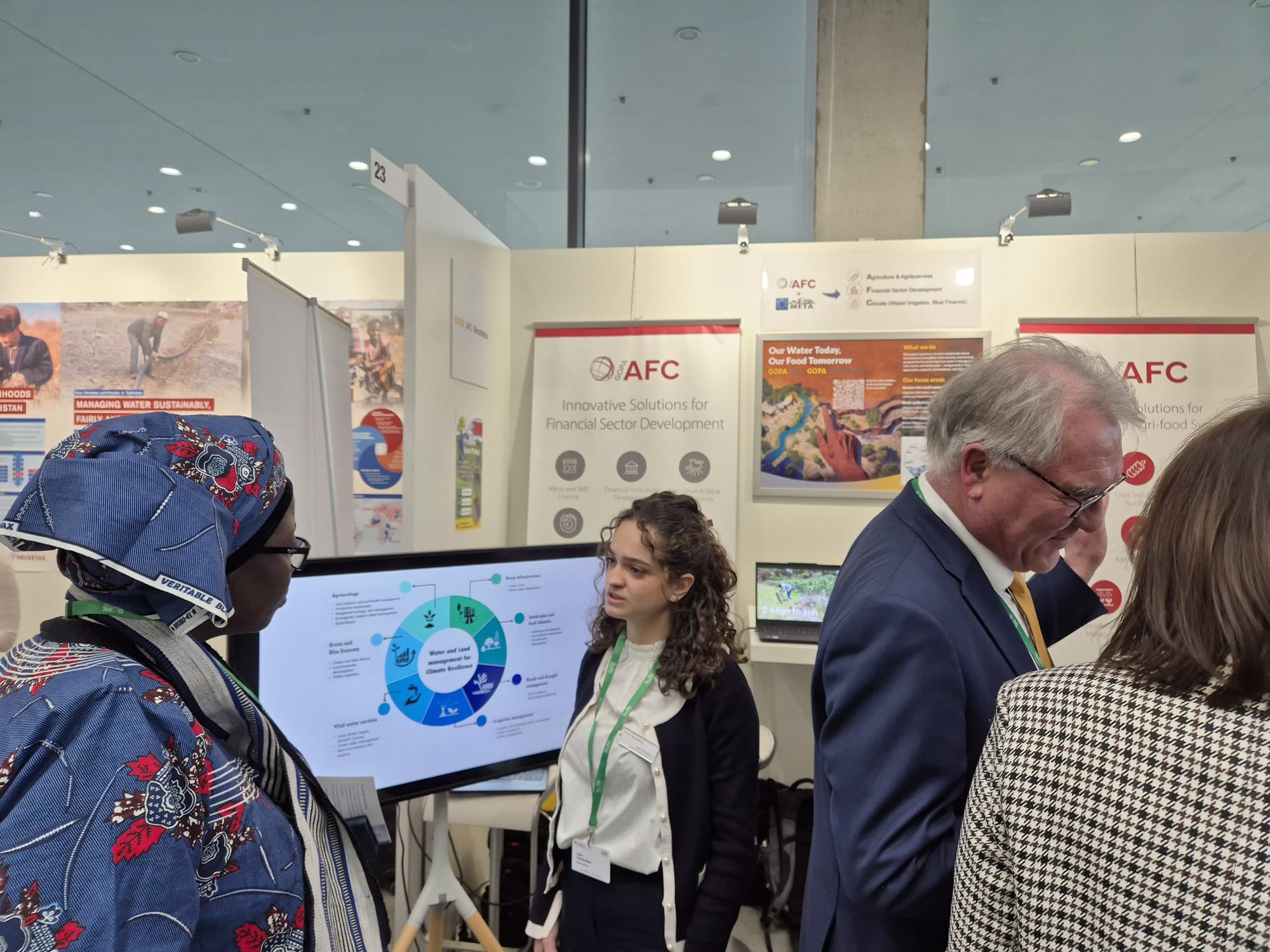
This perspective resonated strongly during the Global Forum for Food and Agriculture (GFFA) 2026, where water was the center of all dialogues. The forum provided an opportunity to introduce the concept of the small water cycle into broader discussions on water and food systems. It was equally encouraging to engage with other organizations working on similar themes, including Boston Consulting Group and NABU, who recently reviewed the state of Germany’s small water cycle. The exchange also highlighted a wide range of initiatives rooted in agroecology and focused on restoring soil and water, such as KCOA (the Knowledge Center for Organic Agriculture and Agroecology in Africa) and PrAEctiCe project.
As emphasized by H.E. Retno L.P. Marsudi, UN Secretary General Water Envoy:
“We need to move from fragmentation to integration. We cannot treat water, agriculture, food and biodiversity in isolation.”
Restoring the small water cycle is not merely about reducing water abstraction. It requires a holistic and integrated approach: improving soil structure, building soil organic matter, boosting infiltration, reducing nutrient leaching, and making context-specific land-use decisions across agro-climatic zones. This is the sphere of action, where positive change can happen if we realize and commit to managing the small water cycle with small but important local actions.
Water security and food security are not in a linear relationship, but a reinforcing feedback loop. So perhaps not only Water Today, Our Food Tomorrow, but also just as importantly, Our Food Today, Our Water Tomorrow.
More information on GOPA MetaMeta’s and GOPA AFC’s participation in the GFFA, including case studies and resources, is available in the knowledge repository at this link.