By tiipaalga, APIL, supported by Aida Zare, and Femke van Woesik
This blog is part of a dossier on locally-led adaptation, featuring insights and lessons from the Reversing the Flow (RtF) program. RtF empowers communities in Bangladesh, Burkina Faso, Ethiopia, Kenya, and Sudan to build climate resilience through direct funding and a community-driven, landscape approach.
Locally-led adaptation is often described as flexible and learning-oriented, as captured in the sixth LLA principle on adaptive management. Yet this flexibility does not appear on its own. It requires programmes to prioritize reflective monitoring (the kind that helps people pause, reassess, and adjust) rather than relying on routine reporting.
The experience of the local NGOs APIL and tiipaalga in Burkina Faso shows how reflective monitoring and learning can strengthen community leadership, support timely course corrections, and safeguard social cohesion.
Starting with listening, not logframes
Tiipaalga’s work in the Ziga watershed begins with a participatory baseline that communities can understand and use. The team applies a set tools:
- Land maps to show fields, water sources, infrastructure and degraded areas
- Historical profiles to recall major climate events over the last 20 years and how people coped
- Venn diagrams to identify all actors present in the village and discuss potential synergies
- Problem and solution analysis where communities name their own challenges and propose responses, then prioritize them
These tools are not designed to deliver data for a report. Rather, they set up a shared picture of reality that belongs to the community. When villages later form management committees and advisory councils of elders, they have a concrete, locally generated base to work from.
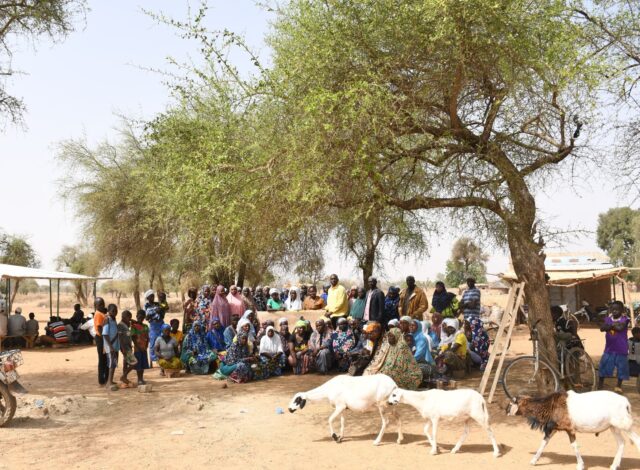
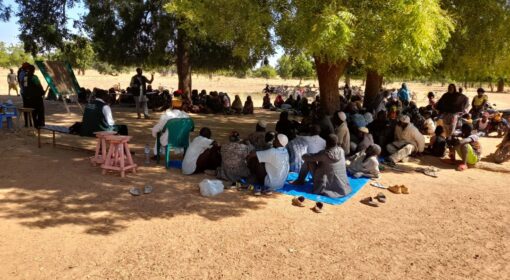
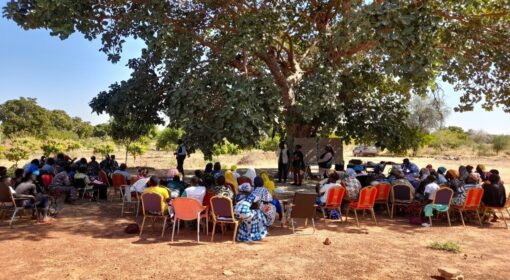
APIL followed another route that is equally rooted in reflection. It started from existing communal development plans, then organized village assemblies and focus groups where men, women and youth could confirm, refine or change previously listed needs. The result is not only a priority list but also a shared sense of direction.
Learning that leads to strategic recalibration
Both hubs initially planned to work in far more villages. After reflecting on their progress, learning from other NGOs, and discussing their experience, they made a deliberate choice to narrow their scope and moved down the number of villages. This adjustment reflects the core element of reflective monitoring. Instead of defending their original plans, the hubs used what they learned to strengthen feasibility, depth, and quality of support.
Tracking change in ways people can relate to
Both hubs are designing monitoring approaches that communities can connect with and use. Tiipaalga plans to revisit the original land maps after implementation to visually compare the situation before and after the programme. This makes changes in water access, land restoration or infrastructure tangible. The team will also document success stories in which villagers describe what changed for them and how the process affected social relations, livelihoods and resilience.
APIL is considering very concrete ways of following change over time. One idea is to identify specific individuals, for example a woman involved in the project, and document her situation at the start, then again after three years. This type of longitudinal story, combined with village-level observations, will help refine indicators so they reflect what communities consider real progress.
Both hubs understand that numbers alone are not enough. They combine simple quantitative information with stories, maps, and testimonies, so that evidence can feed back into local decisions.
During one of the exchange meetings, a community member described what they see as the value of the RtF approach:
“Many projects are implemented but do not last. They implement actions that do not interest everyone. This project seeks consensus and the priorities of the communities. This motivates the communities.”
Why reflective monitoring matters for LLA
The Burkina Faso experience points to several lessons:
- Monitoring should help communities steer, not just report upward.
- Learning needs space, time and repeated conversations, not just a midterm review.
- Indicators work best when they grow out of local perceptions of change, not from pre-designed templates.
- Strategic adjustments based on learning after projects have started, such as reducing the number of villages, are signs of strength, not weakness, in locally-led programmes.
In RtF, reflective monitoring and learning are becoming part of everyday practice: from participatory baselines to village assemblies, from land maps to testimonies, from steering committees to accountability workshops. That is how LLA stays grounded in reality: by turning information into better choices for and by the communities themselves.
What this means for donors
For reflective monitoring and learning to work, donors must actively allow it. This means providing flexible funding that accepts adjustment after programmes have started, valuing learning and course correction alongside delivery, and resisting the pressure for rigid indicators and early certainty. When donors create space for reflection, dialogue, and adaptation over time, they help shift monitoring from compliance to collective sense-making, which is essential if locally-led programmes are to remain responsive, legitimate, and rooted in community priorities rather than fixed plans.