Ashfaque Soomro and Frank van Steenbergen
Rodent management has been a neglected topic in the agriculture sector in Sindh, Pakistan. People, farmers, authorities, and other development actors usually discuss impacts of climate change, water, productivity, and soil management, but the management of rodents is largely ignored, in spite of the considerable damage.
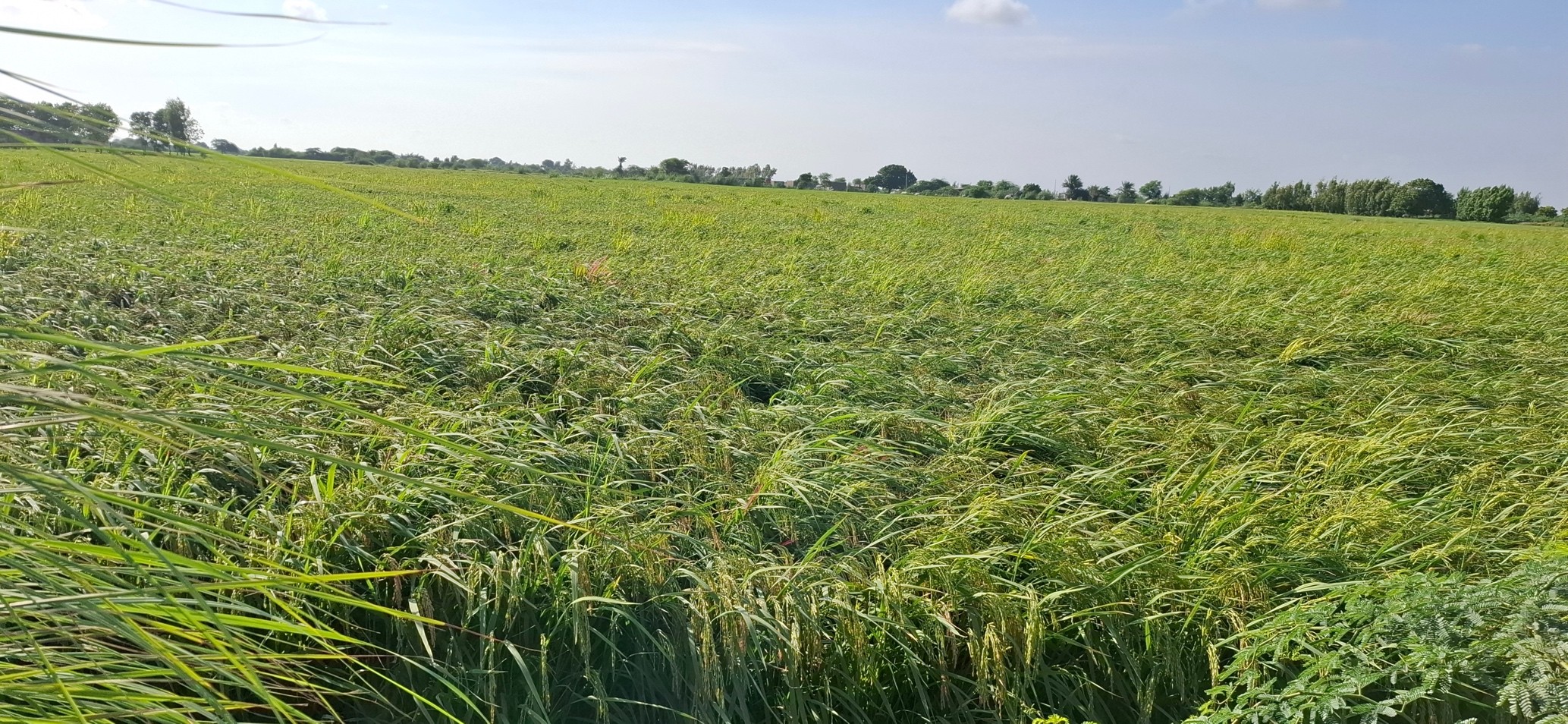
Farmers say that field rodents attack standing crops, consume newly sown seeds, damage irrigation bunds, contaminate and eat stored grain, and reduce both crop quality and yields. Rice, wheat, sugarcane, sunflower, maize, and vegetable crops are particularly vulnerable, causing significant financial losses for farming families. They deteriorate the quality of wheat with their faeces, urine, and hair. Poultry also suffers – rodents take away the feed and transmit diseases to the chicken. Besides, rodents are also dangerous for human health. One research reveal that rats multiply quickly. From one pair of rats, 1250 rats can be born in one year. They can transmit 60 types of diseases, mainly through urine, faeces, saliva, contaminated food/water, or bites.
There are four kinds of field rats common in Sindh’s farmlands[1].
- The Indian Rat or Bandicoot Rat (Bandicota bengalensis): found in lower Sindh. It is relatively big and weighs about 400 grams. It is dark grey with thick hair. Its burrow can go one and a half meters deep. The Bandicoot Rat damages rice, maize and sugarcane crops. It is rarely found in buildings, in contrast to India, where it is a major urban pest.
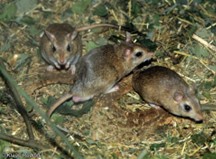
- The second type is the soft-furred field rat (Millardia meltada): a rat which is found in the humid irrigated areas of Sindh. It remains concealed in big mounds of mud after the wheat and rice. It is smaller than the bandicoot rat, blind and of grey colour with soft skin and a white abdomen. Its diet is different from others as it also consumes seeds, worms and insects. It is a serious threat to wheat, rice, and sugarcane crops. Even after harvesting of the crop, it keep itself feeding on the sugarcane stumps.
- The third kind is the short-tailed rat (Nesokia indica): found throughout the country where soil is damp and hard-packed. Its presence is indicated by heaps of loose soil along watercourse bunds. During rice and wheat harvest, it feeds on the surface and damages the crop. It also causes breaches in canals and distributaries. It remains most of the time in the soil but comes out for food.
- The fourth, sandy soil rat lives in sandy areas and has long black hair on its tail. It damages groundnuts, wheat, and pulses.
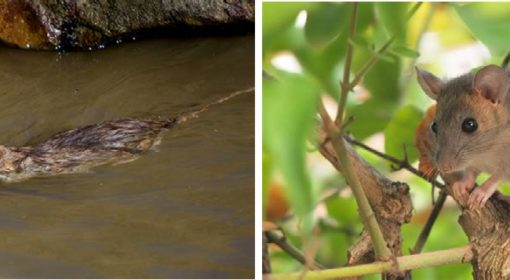
Rodents are also present in warehouses and godowns. The rodents here are the usual suspects that affect grain stores all over the world: the black rat (Rattus rattus), the brown rat (Rattus norvegicus) and house mouse (Mus musculus). The black rat is most present: it thrives on grain and seeds, but also causes heavy damage to coconut plantations, nesting in the crowns of the trees. It also gnaws the insulation off electric wires or damages plastic pipes.
Progressive farmers such as the Vice President of Sindh Chamber of Agriculture, Mr. Nabi Bux Sathio, acknowledging the serious issue of rodent pests in the agriculture sector, said that rodents damage crops from the maturing fruiting stages up to the harvesting stage of all crops. Rodents also damage crops while in storage. He said that though commercial farm services have increased, the rodent issue at the same time has not been tackled, but rather further aggravated. Climate change and heavy dust thunderstorms have changed the environment. Organic waste flows in irrigation channels, and the proliferation of certain weeds has caused rapid breeding of rodents. A rice mill owner, Mr. Aslam Soomro, from Darro town of Sujawal district, shared that rodents cause significant damage to the rice bags in his mills, resulting in product losses and financial losses for millers. In this area, rodents are common everywhere in fields, houses, stores, and shops, as it is a rich canal-irrigated food belt and people store rice.
Similarly, rodents are a major issue in Sindh’s drylands. Faqeer Sultan, a grower from Tharparkar, said that rodent pests are a serious issue in Tharparkar’s agriculture and food storage, but there is hardly an effective measure to control them. One issue is that people of Tharparkar and other desert areas of Umerkot do not kill the rodents, as they believe they are part of the overall ecosystem. The idea is that rodents loosen up the soil and mix different layers, increasing fertility. Yet at the same time, the consensus is that this benefit is far outweighed by the huge damage rodents cause to the crops.
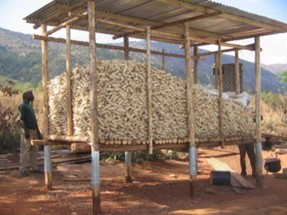
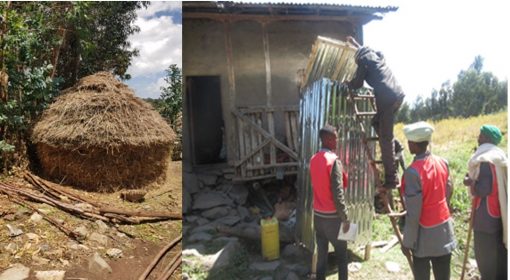
Generally, rodents damage newly grown seed and saplings or thin roots of every crop in humid or cool weather. Farmers protect grain bins, made of mud, with a thicker mud layer at the bottom, so rodents are constrained from entering the bin, but this solution does not always work, and stocks of millet, mung beans, and sesame usually kept in the bins are still consumed by the rats.
There is no recent systematic estimate of rodent damage in Sindh. The only verified but also old source puts the damage at 7% for sugarcane and 15% for coconut palms (Mahdi and Khan, 2003[2]). Numbers for other crops are missing but may be expected to be in the order of 5-15% too.
There have been some methods to control the rodents in Pakistan. Common is the old method of trapping rodents, yet the impact at best is very topical and goes no way to control rapid rodent population growth. Another method is applying synthetic rodenticides – some of these work acutely, others, like fumigants, take longer to have the desired effect. These highly toxic rodenticides can be harmful to human health and animal health. Scientists of the Vertebrate Pest Control Institute of PARC have developed a rat bait known as PARC Rat Bait. Tasty ingredients are added to it, which attract the rat. The field infested with rats should be baited right after sowing of the crop. Baiting should be stopped two weeks before the harvesting of the crop. However, it is commercially not available in the market, and many farmers are not aware of it.
Ecologically-based Rodent Management (EBRM) – the rodent pendant of Integrated Pest Management (IPM) – is in most cases the most effective answer. It tries to keep the rodent population in check by limiting access to food, water and shelter, in particular before the cropping season when the rodent population is still small. It depends on an understanding of local rodent behaviour and combined synchronized and community-led efforts. Rather than relying solely on chemical rodenticides, the EBRM repertoire emphasizes burrow monitoring, use of natural enemies, synchronized cropping, preventing access to food, removing shelters, large-scale early-season trapping (using trap barriers), creating open spaces, biological controls and precise timing of interventions.
But first, for controlling the rodent menace, it is important to start to unhide it. Identification of specific rodent species, their behaviour and the type and extent of damage they cause is the starting point to alert action and start an effective campaign. An ecological-based approach combining surveillance, habitat management, and biological control is the best way forward to reduce the substantive losses, protect agricultural productivity, avoid damage to field infrastructure, save food grain stocks, and not cause ecological risk.
[1] Source: The menace of farm rats. Dawn. November 6, 2006.
[2] Rajab Ali, S. Fatima Mahdi and M. Farhanullah Khan, 2003. Estimation of Rodent Damage on Coconut Plantations and Sugarcane in Sindh. Pakistan Journal of Biological Sciences, 6: 1051-1053.