Dr Samina Memon
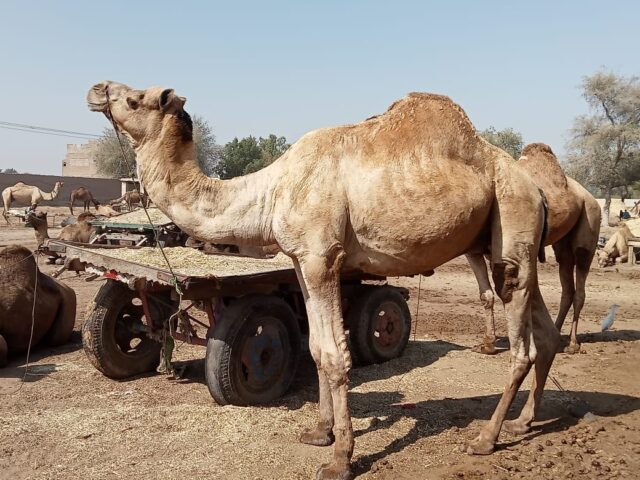
Climate change is rapidly reshaping Pakistan’s livestock landscape. Rising temperatures, frequent droughts, shrinking grazing lands, coastal salinity, and fast urban expansion are putting enormous pressure on traditional animal production systems. In this challenging scenario, Pakistan’s indigenous Kharai camel of coastal Sindh stands out as a powerful example of natural adaptation, resilience, and sustainable living.
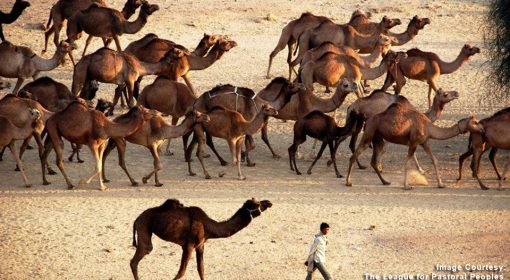
Raised for centuries by the Fakirani Jat and Rabari communities, the Kharai camel has evolved in harmony with the coastal ecosystem. These pastoral communities migrate seasonally between mangrove islands and inland grazing areas, preserving not only the breed but also a rich body of traditional ecological knowledge. Today, the population is estimated at 8,000–10,000 animals, and is steadily declining due to habitat loss, reduced grazing lands, changing salinity patterns, illegal export, and uncontrolled cross-breeding.
Despite these threats, the Kharai camel remains one of the most climate-resilient livestock breeds in the region. It can tolerate extreme heat and humidity, survive on poor-quality forage, efficiently utilize water, and shows natural resistance to many local diseases. Its reproductive performance remains stable even under harsh environmental stress, making it highly valuable in a warming climate.
What makes the Kharai camel truly unique on a global scale is its exceptional swimming ability. It is the only camel breed in the world known to swim in open seawater, often covering distances of up to 3 kilometers to reach mangrove islands for grazing. Its long legs function like paddles, semi-webbed feet help movement in muddy delta terrain, and a strong yet lightweight body ensures buoyancy. Powerful lungs support prolonged swimming, while its thick skin protects against insects common in wetland environments.
The breed is also well adapted to coastal conditions. Kharai camels can drink saline or brackish water, regulate body temperature in humid climates, and digest halophytic (salt-tolerant) plants that other livestock cannot utilize. These adaptations make the Kharai camel an important subject for research in climate resilience and coastal livestock systems.
Beyond its biological value, the Kharai camel holds deep cultural and economic significance. It is embedded in Sindhi folklore, oral traditions, festivals, and community rituals. A distinctive and visually striking tradition involves decorative camel skin designs, especially at picnic points, festivals, and tourist destinations. Using natural dyes extracted from special local plants, herders create eco-friendly colors and patterns on the camel’s skin without harming the animal. This practice reflects indigenous artistry, strengthens cultural identity, and plays a growing role in eco-tourism, offering additional income opportunities for coastal communities.
Efforts to conserve the Kharai camel are gradually expanding. These include official recognition of the breed, community-based conservation programs, genetic profiling, controlled breeding initiatives, and training programs for herders. Universities, NGOs, and government departments are documenting traditional practices and promoting sustainable herd management. Experts emphasize that conserving grazing corridors and safeguarding indigenous knowledge are just as important as scientific interventions.
However, serious challenges remain. Illegal export, particularly across borders, reduces the breeding base. Cross-breeding with non-native camels, such as Rodbari, threatens genetic purity. At the same time, modernization and socio-economic pressures are leading to the gradual loss of traditional herding knowledge passed down through generations.
With sustained conservation, policy support, and community involvement, the Kharai camel has immense future potential. It can contribute to climate-smart livestock development, scientific research on adaptation, sustainable pastoral livelihoods, and eco-tourism growth. More importantly, it can serve as a global model for conserving indigenous livestock breeds in climate-vulnerable regions.
Protecting the Kharai camel is not merely about saving an animal breed. It is about preserving cultural heritage, supporting coastal communities, and embracing nature-based solutions for a sustainable and resilient future.