Rethinking Delay in Bangladesh’s Community-Led Climate Adaptation
By Mst Jannatul Naim (GOPA MetaMeta) and Shaira Rahman (Friendship NGO)
This blog is part of a dossier on locally-led adaptation, featuring insights and lessons from the Reversing the Flow (RtF) program. RtF empowers communities in Bangladesh, Burkina Faso, Ethiopia, Kenya, and Sudan to build climate resilience through direct funding and a community-driven, landscape approach.
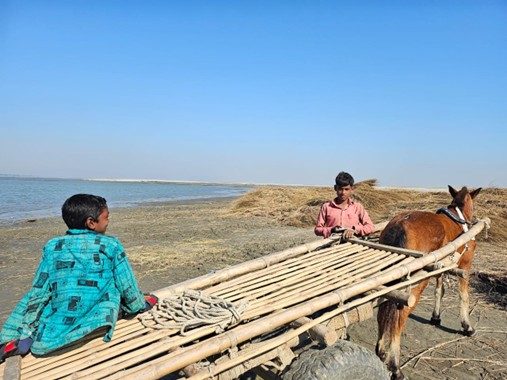
In many development projects, a delayed implementation of an activity is immediately seen as a problem. It raises questions, creates pressure, and often triggers a familiar response: “push harder and deliver faster.” But in the northern chars of Bangladesh, communities living with floods, erosion, and sudden weather shifts know that time is not a straight line here. The river does not follow a logframe. The seasons do not respect reporting deadlines. And a plan that looks perfect on paper can become unsafe or impossible within a fixed timeline.
That is why under the RtF program, the principle of flexible programming and learning matters so much in practice. RtF recognizes that adaptation is not a fixed task. It is a living, evolving process shaped by uncertainty, power dynamics, and climate reality.
Project “delay” is local wisdom in action, not a failure
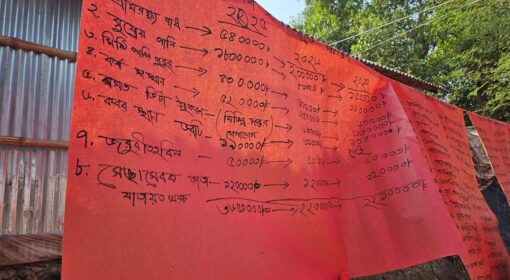
In northern char areas in Bangladesh, communities often explain that implementation “delays” happen because they work according to a seasonal calendar that they have designed themselves. The dry period, the only safe window to repair roads, raise plinths, strengthen flood shelters, or place bamboo bundles in rivers to redirect currents using indigenous knowledge, may last only a short time. If early monsoon arrives, if a flash flood hits, or if erosion suddenly cuts the worksite, communities need to pause their efforts to protect themselves.
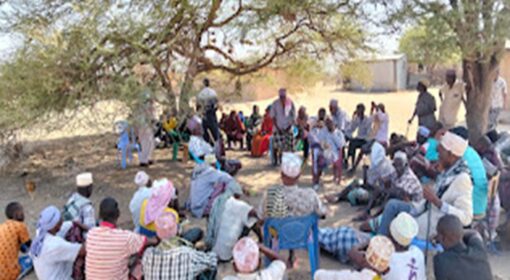
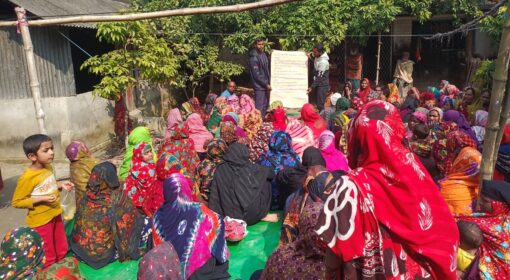
There are other reasons, too, and they are deeply linked to what “locally led” means. When communities are leading, implementation depends on trust-building, collective decisions, and negotiation within the community. Sometimes they address elite capture risks before moving forward, so benefits remain fair. Sometimes technical gaps require time to coordinate with the hub or other stakeholders. Sometimes land access and local approvals take longer because communities do not have the same power to “clear the way” that external actors or government agencies often have.
This is part of shifting power and building legitimate local institutions. Taking time when needed may prevent larger failures or costly rework down the line, ultimately making projects more durable and communities more resilient.
RtF’s flexibility changes what “delay” means. Instead of forcing communities to chase rigid timelines, RtF creates space to slow down, adjust, and do the work well, especially when conditions change. The goal is to strengthen local ownership and increase long-term resilience, not quick outputs. This connects directly to RtF’s emphasis on reflexive monitoring – a participatory process that helps communities reflect on progress, learn from challenges, and course-correct rather than “finish fast and regret later.” Over two years, char communities have started to embody this shift: a pause becomes an opportunity to rethink design, resolve land disputes, ensure fairer benefits, and ultimately reduce the risk of infrastructure failure that top-down, short-term fixes so often produce.
In the chars, the most honest adaptation timelines are the ones that fit the river, fit the seasons, and fit the community’s collective decision-making. With clear justification and downward accountability inside the community, it can be a sign of maturity: proof that communities are not performing for a donor calendar but investing in outcomes that last.
Shaira Rahman from the local NGO Friendship reflects:
“In most projects I’ve worked on, everything follows a strict logframe and tight timeline. Project success depends on delivering activities on time. If there is a delay, it is usually treated as a problem – sometimes even as failure. There is little space to explain the local reality. But in RtF, it is different. Here, delays are not automatically a challenge. It can be an opportunity. When communities take more time, it is often to adjust to floods, redesign for safety, or ensure fairness and inclusion. As a project concern, I feel comfortable explaining why the community is late. There is space to justify it, and accountability remains within the community. RtF also allows us to treat mistakes as learning. We adapt and move forward. In my professional experience, this kind of flexibility and trust is rare – but it is what makes locally led adaptation truly sustainable.”