By Guta Eshetu, Femke Van Woesik, Girma Senbeta
Agriculture remains the backbone of Ethiopia’s economy, supporting food security, rural livelihoods, and national economic growth. With a population exceeding 130 million and increasing pressure on natural resources, irrigation has become one of the country’s most strategic assets. Yet the challenge facing Ethiopia is not simply expanding access to irrigation; it is ensuring that existing water resources are managed efficiently, equitably, and sustainably.
While Ethiopia possesses significant irrigation potential, much of the opportunity lies not in constructing new schemes, but in improving the performance of those already in place. Modernization, digital innovation, improved governance, and capacity development can substantially increase agricultural productivity without expanding irrigation coverage.
Ethiopia’s immense Irrigation Potential
Ethiopia is endowed with substantial irrigation resources, with an estimated 2.4 million hectares currently developed for irrigation and significant additional potential for future growth. Irrigated agriculture plays an increasingly important role in commercial crop production, particularly in major river basins such as the Awash.
However, many existing irrigation schemes operate below their intended capacity. Infrastructure deterioration, weak management systems, unreliable data, and inadequate operation and maintenance reduce both water-use efficiency and agricultural productivity. As the population grows, climate variability and competing water demands intensify, making it a national priority to improve the performance of existing systems.
Current Trends in Irrigation Water Utilization
Ethiopia’s irrigation sector is characterized by growing demand for water, increasing climate pressures, and heavy dependence on major river basins. Agriculture accounts for most of the water consumption in many basins, making efficient allocation and utilization essential for long-term sustainability.
Recent assessments indicate that actual water abstraction often falls well below allocated volumes, not because of water scarcity, but due to operational and infrastructure constraints such as pump failures, power interruptions, poorly maintained canals, and weak management systems. In some schemes, less than half of the allocated water is effectively utilized.
These findings highlight an important reality: Ethiopia’s irrigation challenge is largely one of management and productivity rather than resource availability.
Key Challenges Limiting Irrigation Performance
Several persistent barriers continue to constrain irrigation efficiency and agricultural output:
- Aging Infrastructure: Many irrigation schemes experience significant water losses through seepage, poorly maintained canals, inadequate drainage systems, waterlogging, and increasing salinity risks. These issues reduce both water efficiency and crop productivity. For instance, the following reservoir, which belongs to Africa Juice Company, is full of weeds and losing water due to high evapotranspiration. If this reservoir is maintained, the volume of water useful for crop production will be improved, and the conflict of interest between local communities and the company would be resolved.
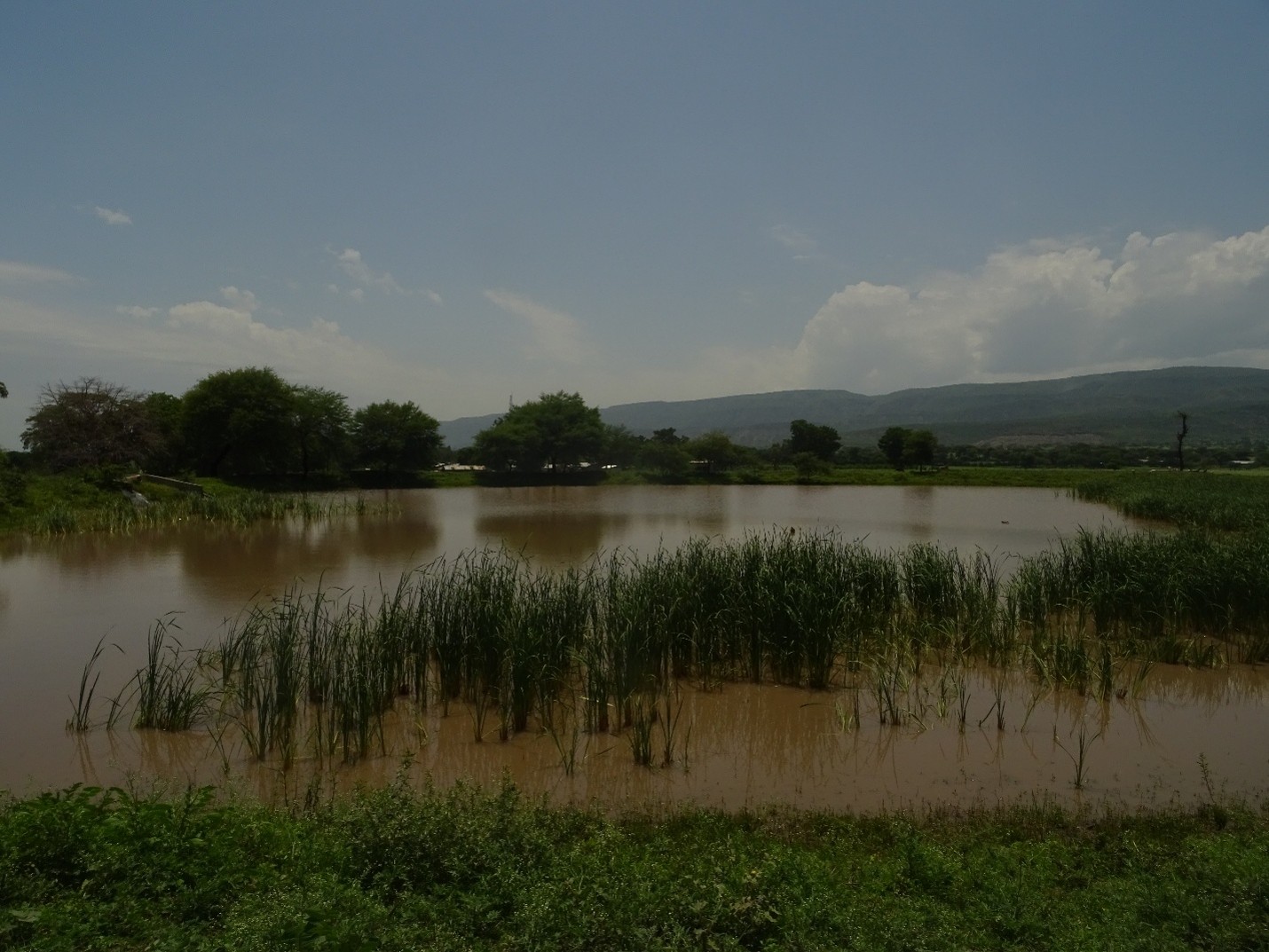
Wererso Irrigation scheme of Africa Juice company’s Reservoir (GOPA MetaMeta, 2021) - Weak Governance and Institutional Capacity: Water User Associations and other local management institutions often face capacity limitations. Inadequate enforcement of water charges and unclear accountability mechanisms reduce incentives for efficient water use and restrict funding for maintenance.
- Limited Data and Monitoring Systems: Many schemes lack reliable water measurement systems, real-time monitoring tools, and decision-support mechanisms. Without accurate information, water allocation decisions are often based on estimates rather than actual demand.
- Poor Operation and Maintenance: Deferred maintenance, sediment accumulation in canals, unreliable pumping systems, and delayed repairs contribute to underperformance across both small- and large-scale schemes. The following picture can represent a poorly managed irrigation canal that needs maintenance to unlock its full potential. For example, the Tibila irrigation scheme users in the upper stream are getting an excess volume of irrigation water and wasting it through over-irrigating and poor maintenance. However, these communities positioned at the lower stream are losing their crops because of water stress.
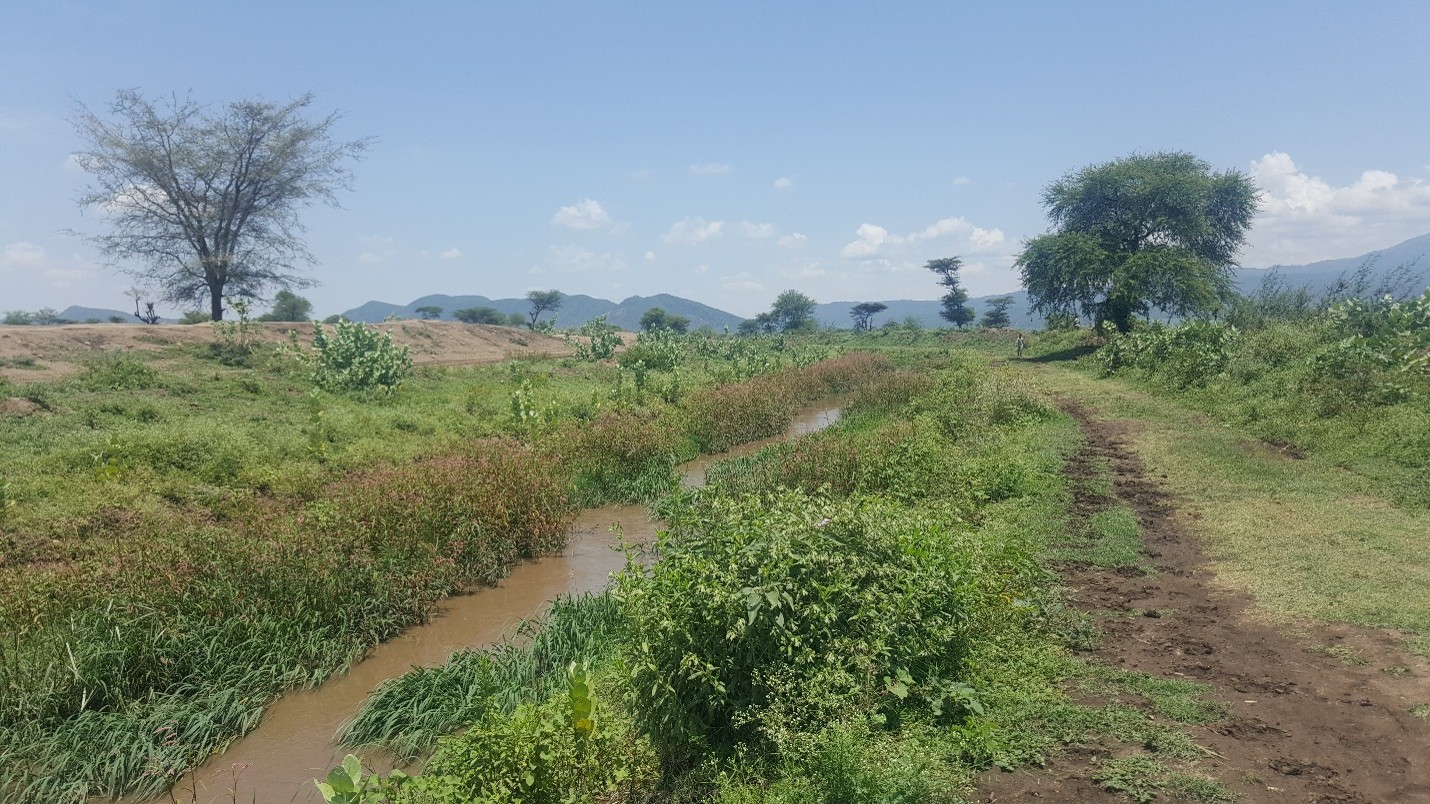

Tibila Irrigation canal filled with Silt and weeds (GOPA MetaMeta, 2023) - Soil Health Constraints: Declining soil fertility, nutrient depletion, and inefficient agronomic practices reduce water productivity, limiting the benefits that irrigation investments can deliver.
The Shift Toward Modernization and Smart Water Management
Recent initiatives and the current situation in Ethiopia demonstrate that substantial gains can be achieved through modernization rather than expansion.
- Digital Transformation of Irrigation Management
Digital tools are changing how irrigation systems are managed. Recent projects in Ethiopia have introduced digital registration and licensing systems for water users, remote sensing platforms such as WaPOR and IrriWatch, real-time hydrological and meteorological monitoring, and digital water accounting and performance dashboards. Together, these tools improve transparency, accountability, and decision-making. They make data-driven water allocation possible, improve compliance, and help match water deliveries with actual crop requirements, which also reduces conflicts over water resources.
- Strengthening Water Governance
Effective irrigation management requires strong institutions. Capacity-building efforts have strengthened Irrigation Water User Associations through training, licensing support, and improved governance structures. The introduction of digital water-use monitoring and pricing mechanisms linked to actual consumption creates incentives for efficient water management, while also generating more sustainable financing for system maintenance and rehabilitation. - Asset Management and Preventive Maintenance
Rather than waiting for infrastructure to fail, modern asset management approaches use GIS-based assessments and performance indicators to prioritize rehabilitation investments. This enables scarce resources to be directed toward the most critical interventions and improves long-term system reliability.
- Building Climate-Resilient Irrigation Systems
Climate change is increasing the frequency of droughts, floods, and rainfall variability across Ethiopia. Irrigation therefore plays a growing role in reducing agricultural vulnerability and strengthening resilience. Climate-smart approaches, including weather-based irrigation scheduling, soil moisture monitoring, conservation agriculture, composting and soil health improvement, rainwater harvesting, and the cultivation of drought-tolerant crop varieties, improve both water-use efficiency and agricultural productivity while helping farmers adapt to changing conditions.
Lessons from Global and National Experience
Global experience in irrigation modernization and water productivity improvement shows that the most successful systems combine technology, sound governance, reliable data, sustainable financing, and strong user participation. No single element is sufficient on its own; the gains come from applying them together.
Experience from Ethiopia reinforces this. The primary challenge is not absolute water scarcity but inefficient use of available resources, and significant productivity gains can be achieved without expanding irrigated land. Data-driven planning and management form the basis for sustainable water allocation, while strong institutions and well-functioning Water User Associations determine whether improvements last. Across contexts, rehabilitation and modernization often deliver greater returns than new construction.
A Strategic Opportunity for National Transformation
Ethiopia’s irrigation strategy is evolving from a focus on expansion toward a broader vision of productivity, sustainability, and resilience. The emerging emphasis on integrated irrigation development, digital innovation, climate resilience, and improved governance aligns with the goals of a more coordinated National Irrigation Program.
The critical question is no longer, “How much new land can be irrigated?” but rather, “How much more can be produced with the water and infrastructure already available?”
By scaling successful approaches, strengthening institutions, and investing in modernization, Ethiopia can significantly increase agricultural output while using water more efficiently and sustainably.
To conclude, Ethiopia stands at a pivotal moment in the development of its irrigation sector. The country possesses the resources, experience, and technological tools needed to transform irrigation from a system focused on expansion into one centered on productivity and sustainability. The pathway forward is clear: modernize existing schemes, strengthen governance, embrace digital innovation, and build climate-resilient systems that serve farmers, communities, and future generations. With strategic investments and coordinated action, Ethiopia can unlock the full potential of its irrigation, ensuring that every drop of water contributes to food security, economic prosperity, and sustainable development.