By IMPACT, supported by Theo Kioko
This blog is part of a dossier on locally-led adaptation, featuring insights and lessons from the Reversing the Flow (RtF) program. RtF empowers communities in Bangladesh, Burkina Faso, Ethiopia, Kenya, and Sudan to build climate resilience through direct funding and a community-driven, landscape approach.
In the semi-arid landscape of Laikipia North, within the greater Doldol area of Mukogodo East, the Naatum Village Savings and Lending Association (VSLA), a group of 35 women, is working on economic security, social cohesion, and collective confidence.
What is a VSLA?
A VSLA is a self-managed group where members save regularly, lend each other from their pooled savings, and earn interest that stays within the group. Naatum VSLA, registered under social services since 2010, began with just a handful of women determined to gain greater control over their finances. Today, its 35 members span generations, each woman inducted through a transparent process of registration and orientation before making weekly contributions. This lays a foundation of trust and accountability that underpins the group’s success.
Governance, Culture, and Collective Decision-Making
The Naatum VSLA operates under agreed-upon bylaws that guide savings, lending, leadership, and discipline. Every Saturday, members gather to contribute savings, discuss group matters, and share challenges. Decisions are made by consensus, with open discussion and persuasion ensuring every voice is heard. This approach has helped the group avoid conflict and maintain strong internal trust.
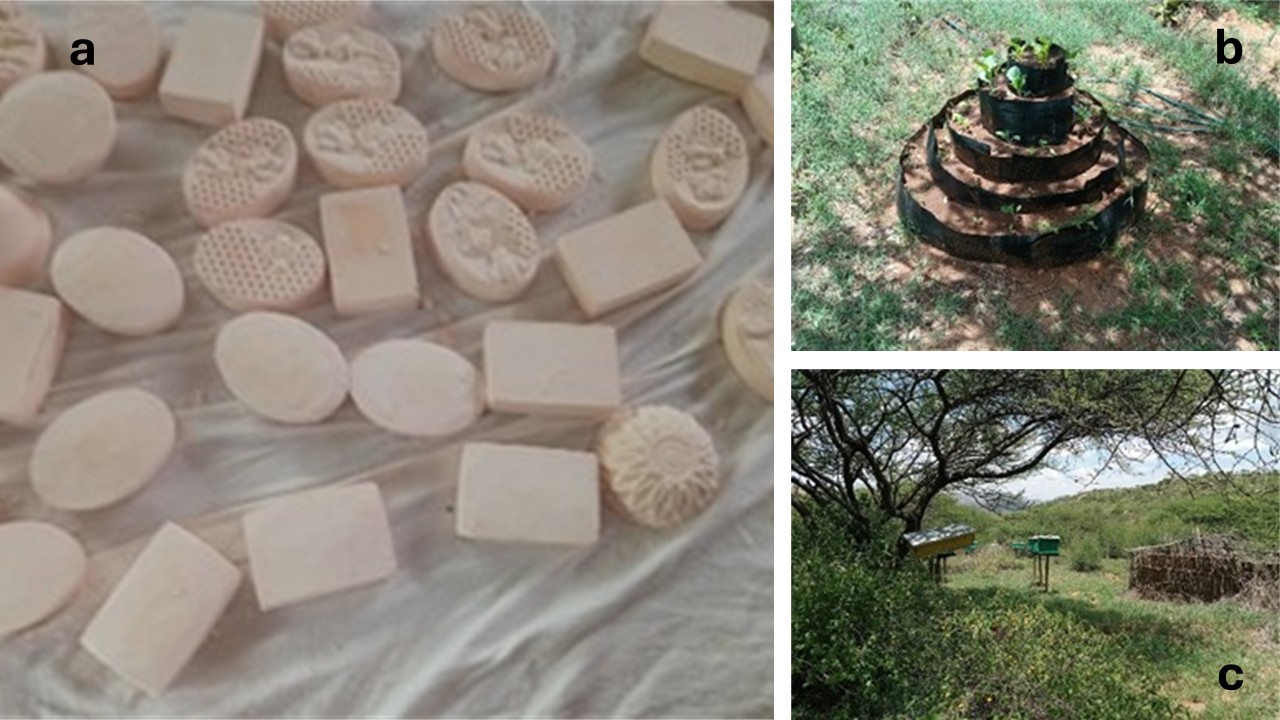
The group’s activities go beyond savings and loans. They have diversified into aloe farming for soap making (supplying local hotels), managing more than 40 beehives, operating a greenhouse for vegetables, and owning rental units and tents for hire. Income from these ventures supports both individual members and the group fund, expanding their safety net and opportunities.
Savings are collected weekly, and members can borrow up to three times their savings, with loans repaid in three months at a 10% interest rate. The concept of “shares” was initially difficult for members to grasp, so the group replaced it with “goats”, a familiar and valued asset in Maasai culture. This simple shift made the idea of growing savings and investment intuitive, strengthening participation and financial literacy.
Loans require no collateral. Lending is based on trust, mutual responsibility, and shared accountability. The group uses a lockbox system for savings: the key holder and box holder live in different parts of the community, reducing risk and temptation. The secretary records contributions in individual passbooks, kept safely in the lockbox to prevent loss or forgetfulness. The treasurer separately manages income from other ventures. Transparency is ensured through clear record-keeping and open discussion. All members are aware of savings levels, loans, and repayments. Leadership transitions every three years, but all members receive training in record keeping and proposal writing, ensuring continuity and shared knowledge.
Loan defaults are rare and usually linked to drought, when members may not have healthy goats to sell and repay loans. When this happens, the group discusses the situation collectively and extends repayment periods, avoiding punitive measures and reflecting their understanding of shared risk and collective resilience.
The VSLA cycle runs for one year. At the end, members share out their savings and dividends based on their contributions, a moment of reward and reset that makes tangible the results of their discipline and collective effort.
For many women, participation has been life-changing. Members have used savings and loans to purchase goats, household items, and pay school fees. As a registered and organized group, Naatum has attracted support from NGOs and government programs, receiving beehives, a greenhouse, a Restore grant (supporting solar power and water piping), and steady soap orders from the Parish.
Challenges and Lessons Learned
Not every investment has thrived. The group invested in ten camping tents to rent to foreign visitors linked to an NGO project, but when the project ended, the visitors stopped coming, and the tents sat unused, tying up valuable funds. The group recognizes they did not fully assess the long-term demand and are now seeking new markets for the tents, as well as exposure visits to learn from other women’s groups about scaling and managing investments.
Critical Reflection: Locally Rooted or Project Shaped?
The Naatum VSLA, like many across Kenya, is a blend. Its roots can be traced to “merry-go-round” savings groups: informal, rotating credit schemes whose origins are hard to pinpoint but which are now widespread.
Between 2013-2017, the office of the then Vice President’s wife (Mrs. Rachel Ruto) promoted “table banking” and VSLAs nationally, often providing “boosts” of capital to organized women’s groups. This formalization and support helped some groups grow large and well-organized, though in rural areas, financial constraints have limited such growth.
Naatum’s structure, transparency, and registration are influenced by these national models and success stories. The group’s ability to attract NGO and government support is directly linked to its adoption of this recognizable, formal structure.
Would women have organized savings and lending in this way without external promotion?
It is unlikely. The spread of VSLAs across Kenya owes much to political leadership, media, and the visibility of successful groups. The process has been shaped by external influence, but local adaptation (like equating shares to goats) has made it meaningful and effective in the Naatum context.
The group’s consensus-based decision-making, trust-based lending, and cultural adaptation of financial concepts are deeply rooted in local practice. However, the formal structure, registration, and record keeping are adopted elements that help attract support and connect to wider networks.
Are there risks that women’s empowerment becomes contained within project structures rather than reshaping wider systems?
While the VSLA model has empowered many women, there is a risk that empowerment is confined within the boundaries of project-recognized structures, rather than transforming broader community governance. The challenge is to ensure that skills, confidence, and collective action spill over into wider spheres of influence.
Climate Adaptation: Beyond Household Coping
The group’s diversification into farming, beekeeping, livestock, and rental income gives them flexibility to shift focus depending on drought or other shocks. For example, if weather forecasts predict low rainfall, members collectively decide not to buy more goats, protecting their capital.
Climate risk is discussed explicitly, using weather information from the radio and other sources to guide decision-making. Members call into radio programs to discuss issues and receive guidance, making adaptation a collective, informed process.
While the group receives training in financial management and some aspects of climate risk, there are gaps in connecting their activities to broader landscape restoration. For example, understanding the ecological role of bees beyond honey, or how restoration enhances community resilience, is still emerging. Partners like IMPACT are working to build these interlinkages over time.
Members discuss grazing plans and livestock movement, recognizing that growing goat ownership increases household resilience but may also add pressure to grazing areas. Loans help households invest, but the group is beginning to reflect on how their investments impact the wider landscape and the need for integrated management.
Looking Ahead: A Platform for Collective Growth
Naatum VSLA is more than a savings group. It is a platform for learning, mutual support, and long-term empowerment. By grounding financial practices in local culture, prioritizing trust and shared knowledge, and adapting to climate realities, the group has built a strong foundation for resilience and dignity.