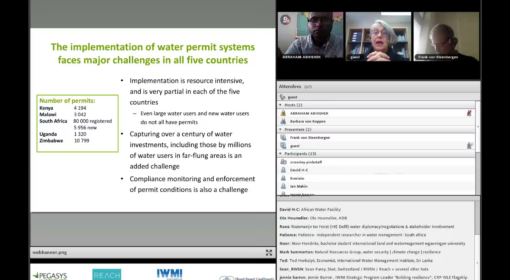
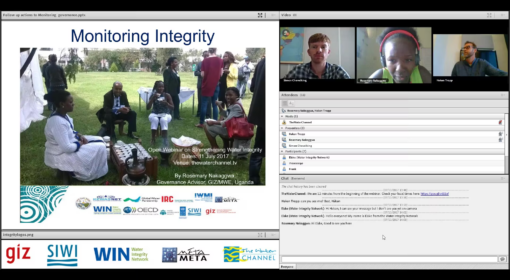
Across Africa, water permit systems are used as a tool to regulate and control water use. And yet, the implementation of these systems is not without challenges: they are resource-intensive and require regular updating, compliance monitoring, and enforcement. In addition, their historical legacy and the way that they have been structured under contemporary legislation means that the water uses by rural and peri-urban small-scale water users governed under customary law have largely been rendered illegal without a permit.
A recent study on an exchange of experiences by water authorities and researchers in Malawi, Kenya, South Africa, Uganda, Zimbabwe, and elsewhere, identified both common challenges and some good practices in relation to how these systems can serve the water needs of poor rural communities. Other studies in arid/semi-arid regions have documented water allocation systems that have helped communities share and manage seasonal flows in ephemeral rivers, yet also highlighted the scope for improvement.
This Webinar (June 15, 2017) discussed the current status of water permit systems in 5 African countries (Kenya, Malawi, South Africa, Uganda, and Zimbabwe) and the lessons learned from permit system implementation in these countries. It will also discuss codification and optimization of traditional water allocation, as a possible complement to water permits.
More info: thewaterchannel.tv/webinars/488-webinar-making-water-permits-work-for-the-poor-in-africa
Produced by: TheWaterChannel
Year: 2017
Language: English
Region: Africa