Maritza Maribel Criollo Merino and Frank van Steenbergen
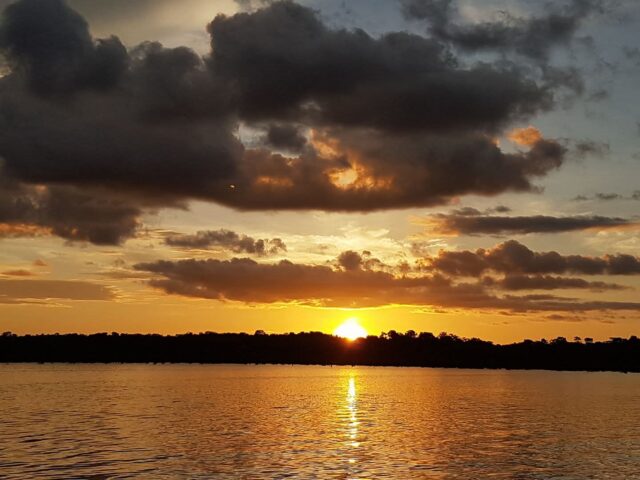
Postcard from Cuyabeno Lagoon, the largest of 14 lagoons in the area of the Sinao people. Over the past decades several of the once rich and abundant water bodies in the Ecuador Amazon have dried up. While rainfall patterns may have changed, it may not be the only explanation.
The Cuyabeno Lagoon is a slow flowing arm of the river Sëoquëya, deriving its name from the many leaves it carries along in the rain forest. It is a magical stretch of water, of at least seven meters deep that was teeming with wildlife, such as yellow ducks. The lagoon was reverred. Whoever entered the water body did so in silence, carefully peddling in a canoe, so as not to disturb the tranquility and the spirit of the lagoon. If people would make a noise, it is said that a fog would appear. This is the area of the Siona, an indigenous people, that take care of 138,000 ha of reserve land.
Then this changed. Cuyabeno Lagoon was discovered by high-end ecological tourists They came with motorboats, approximately 3000 travellers a year. Animals got disturbed, some even trapped in the engines of the motorboats. The tour operators – some with a base far away from the area – developed their own lodges, disturbing the fresh water balance with the overflow from the septic tanks. Pollution started to come from other sources as well – the waste disposal from oil extraction (Andes Petro and Petro Ecuador) in the catchment. Also there was the onslaught of forest clearing for roads, soy fields and meat industry pastures. This did much harm in many ways, and disturbed the local water cycles by interrupting the conveyance and recycling of moisture in the region.
So according the Sinao people, the spirit of the Cuyabeno Lagoon – Ocomo, the queen of water – decided to take its water away to a safe place . She summoned the anaconda, the snake protector of all wildlife, to bring all the other animals from Cuyabeno, and settle in a quiet place.
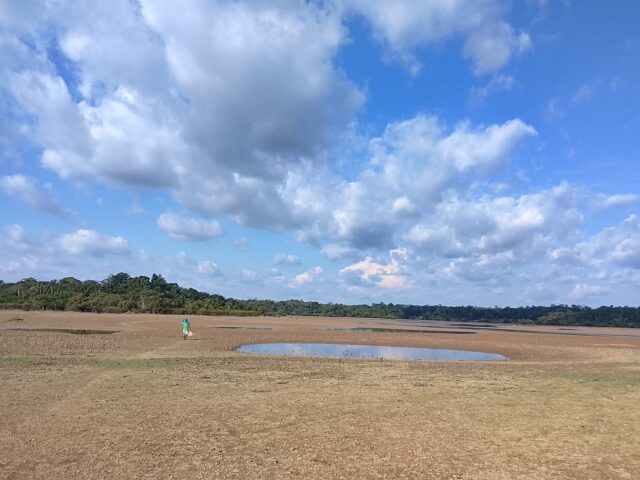
With the spirit gone and all animals elsewhere, the decline of Cuyabeno Lagoon set in. The first sign was that the trees that surrounded the water body increasingly encroached the lagoon. Then the season of rain changed. From July onward to January used to be the dry season, in which land was cleaned for cultivation. But it kept raining in August and beyond – making it difficult to plant crops and for instance for the Charapa turtles to lay eggs in the dry sand. Then when the lagoon was supposed to be brimming with water and wildlife, it was empty and barren.
To cap the dramatic turn of events, hail also came to the Cuyabeno Lagoon, in 2023, something never seen before, hailstones in the rain forest.
So there is a multilayered kind of scarcity: no water, no wildlife, no spirit. Cuyabeno Lagoon has been described as a bellwether, and it now rings constant alarm. The delicate balance is broken, the water cycle gone off track, droughts are more frequent and more severe, timing is out of order, the respect and serenity gone.