By Mekdelawit Deribe
July 2018
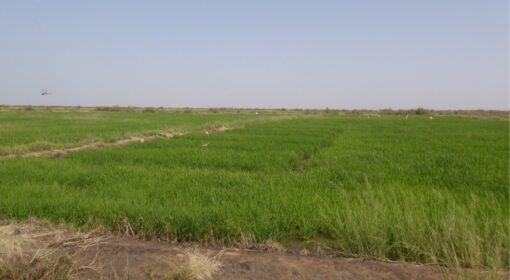
Globally, around 1 billion hectares of land are salt-affected, meaning it has too much salt to grow crops. In addition, 2000 hectares of land become salinized every day. In Pakistan alone, 6.2 million hectares of land are affected by salt. This reduces crop yield, results in crop loss, and diminishes the value of land. 250 million people worldwide have to struggle with living and farming on salt-affected land. Any measure to combat the salinization of land will hence contribute towards increasing water productivity in terms of yield and social benefits.
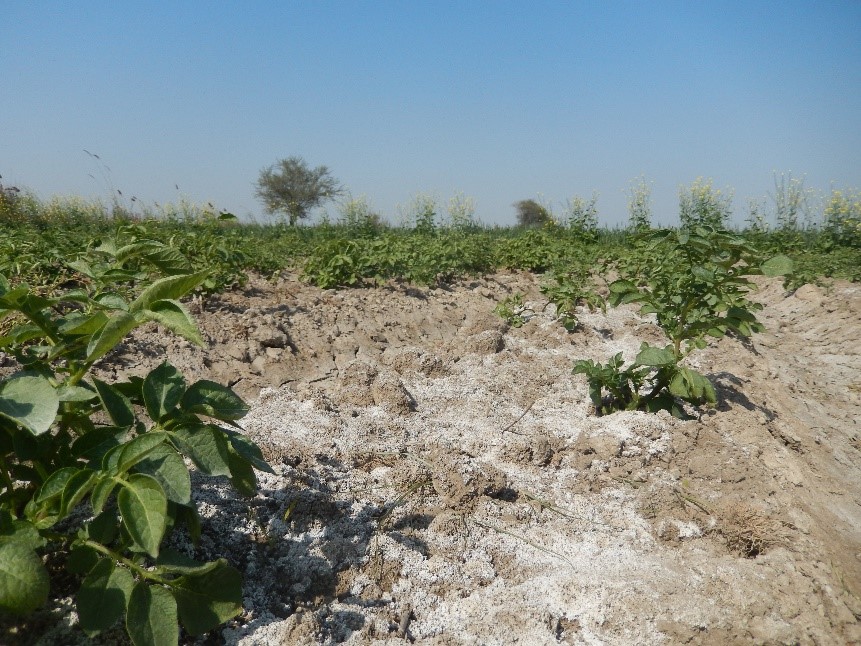
Measures such as using salt-tolerant crops, effective drainage, as well as effective irrigation methods which combine using brackish water with sweet water help to reduce the effect of salinity. One such measure involving a salt-tolerant potato variety helped change the story of farmers on saline lands in Pakistan.
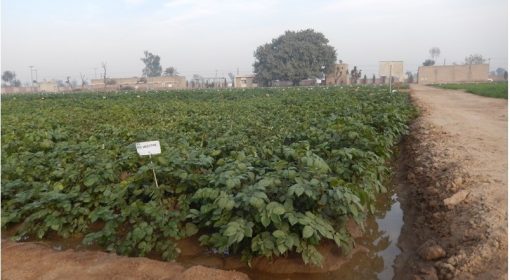
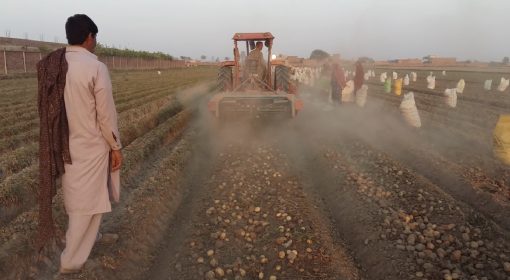
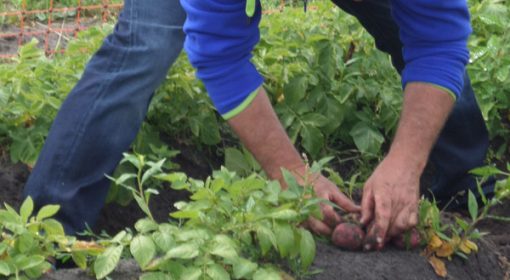
A farmer in the Sanghar region in Sindh province in Pakistan simply could not grow crops as salinity levels on his land had built up. He tried several salt-tolerant potato varieties, and during harvest season, the farmer began to see results. The seeds had produced 15 tons of potatoes per hectare on incredibly saline lands where he had never grown potatoes, and with a limited amount of water. In fact, his yield was three-quarters of the average yield of potatoes on non-saline soils (20 tons/ha). The results surpassed his wildest expectations. He even reported the harvest of a single tuber weighing an astonishing 760 grams. Other farmers have currently planted over 15 hectares of land with salt-tolerant potato varieties in 15 different locations in Punjab and Sindh provinces. More than 2100 people, including more than 1000 women, are working and directly benefiting from these salt-tolerant potatoes.
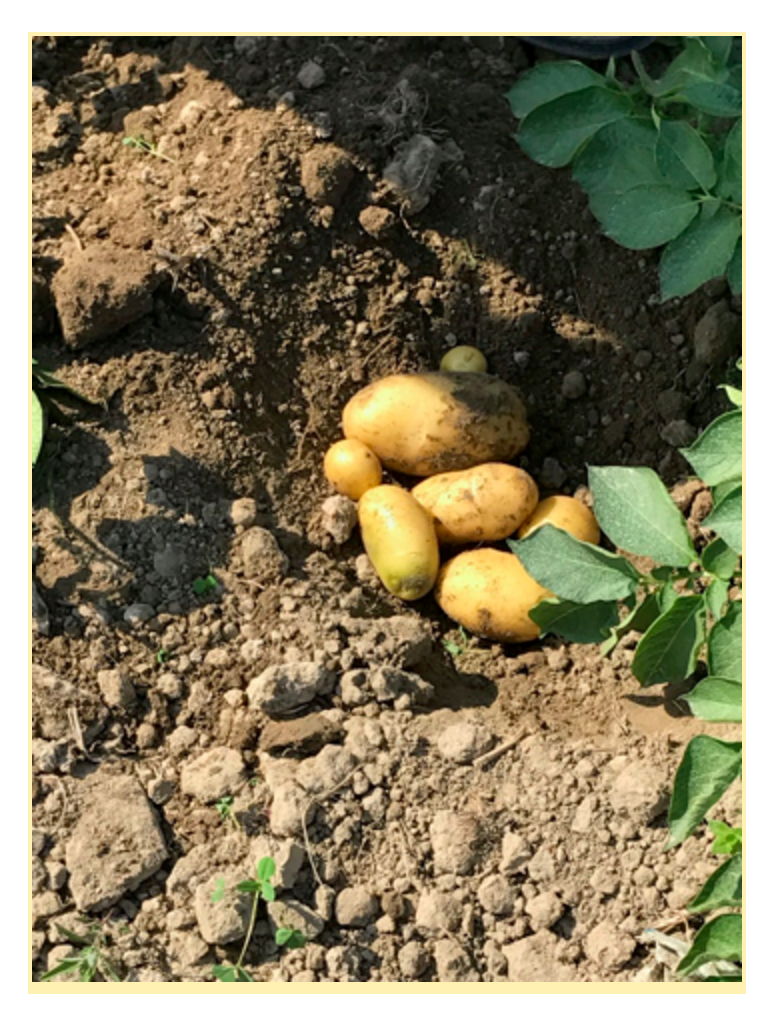
Farmers saved more than 65 million litres of water. They adopted an effective and replicable system of alternating and combining surface and groundwater for irrigation. Farmers produced 131 metric tons of potatoes, a 5 percent increase in yield compared to Pakistan’s national average. Best-performing varieties increased yield by 55 percent. In 4 of the 15 locations, the potato yield doubled. Such practices help farmers grow enough crops to provide for their families, increase their profits, and build good lives on their own lands.