Written by Desinawati Bong, Salma Enan, and Ellie Yu
In a small village, namely Wrati in Pasuruan Regency, East Java Province, Indonesia, the sound of the river flow mixes with the cheerful laughter of women. For them, the river and irrigation channel behind their yards are more than just water channels. They are also a source of water for their domestic activities. It’s there that they save money amid life’s uncertainties as farm labourers who depend on the harvest season.
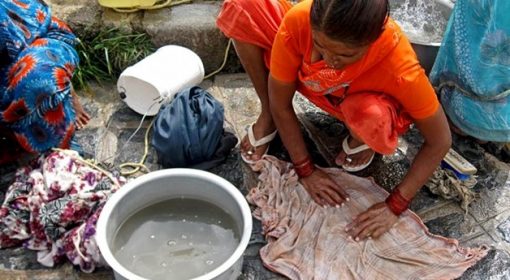
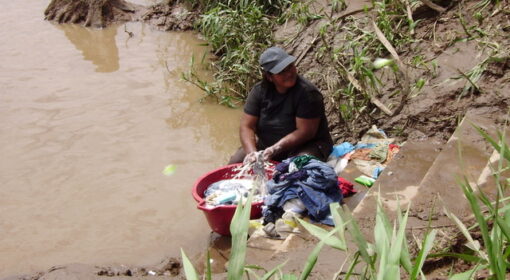
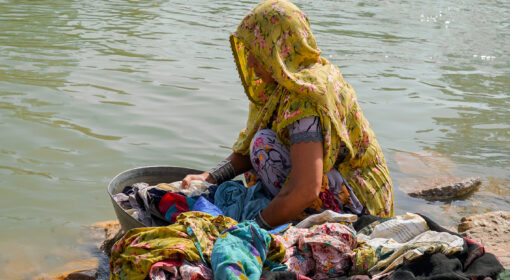
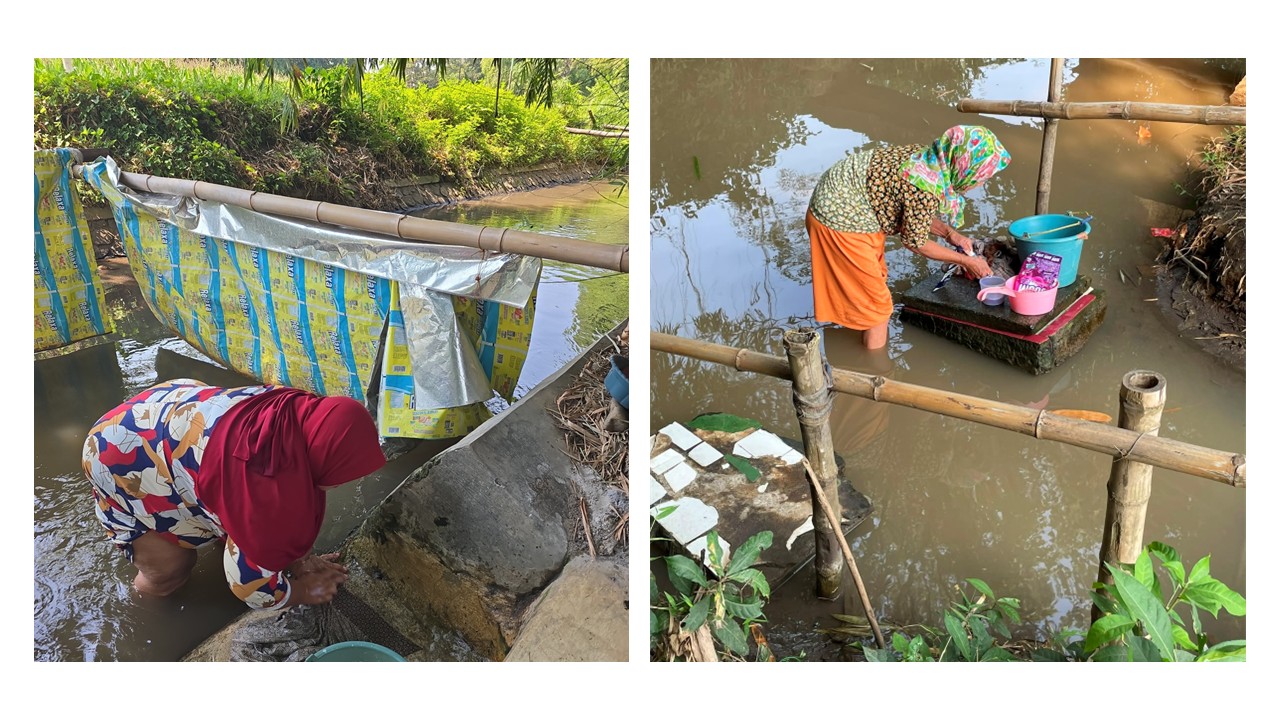
For them, doing laundry is a daily task, sometimes even twice a day. Despite how tiring it can be, they show no signs of resistance. These women embrace the activity with a positive attitude since it is part of their daily routine. Interaction with other residents brings happiness for these women and makes this work somehow feel easier. The river provides a speed for their laundry that their intermittent household connection can’t match. Interestingly, each neighbourhood unit even has its own laundry spot, complete with its own grinding stone. Although the water sometimes reaches waist-deep, the current is never strong enough to deter these women.
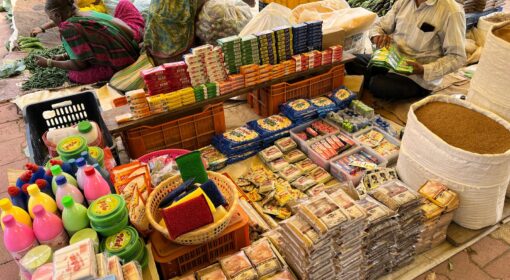
These women typically spend 30 minutes to an hour on laundry, depending on the number of clothes. The laundry process consists of 5 steps: sorting, soaking, scrubbing, rinsing, and drying. Even though they often do laundry in the river or irrigation channel, sometimes they rinse the clothes again at home using cleaner water. They use simple tools, such as brushes and buckets. Most of them do not use wooden scrub boards. Women who do laundry in the river have built platforms out of stone and cement that serve as rolling boards. Meanwhile, those who do laundry in irrigation canals use the canal walls as a washing platform. Almost all women also use powdered or liquid detergent, where they prefer single-use sachets due to their affordability.
(Photo credit: GOPA MetaMeta)
Things get a lot harder when the rainy season hits, as these women mentioned. Not only does it take a long time to dry clothes in the damp weather, but the river itself becomes unusable. As the water levels rise and the river turns brown with mud, everyone is forced back to their home taps. Moving the laundry back home keeps the clothes clean, but it leaves them stuck paying way more for tap water than they usually would.
An interesting observation in the field is the community’s habit of washing prayer clothes and how they do it. In Indonesia, religion is a very important aspect for the community, and this is no exception in Wrati Village. To maintain the sanctity of worship, the women in this village choose to wash their prayer dresses at home with clean running water, sometimes adding fragrance or fabric softener. Similar special treatment is also applied when washing their children’s and grandchildren’s school uniforms.
This unique phenomenon indicates that these women are aware of the difference in the quality of the water they use. Clothes that have “more value” and are sacred are washed in clean water at home, while everyday clothes are washed in the river. This reality raises a major question: is the choice to continue washing daily clothes in the river a forced economic necessity, or are there other socio-cultural factors that have not yet been uncovered?
The story above is a snippet from a study on laundry practices and their implications for water quality. This research aimed to analyse manual laundry practices in Indonesia by identifying water sources, quantifying water use, and documenting detergent use and wastewater generation to assess their environmental implications. This study also explored the potential opportunities for behavioural and technical interventions. For a deeper look at the findings and insights from the study, explore the presentation or read the full report.