Desinawati Bong, Salma Enan, Clara Nieuwenhuyse, Frank van Steenbergen
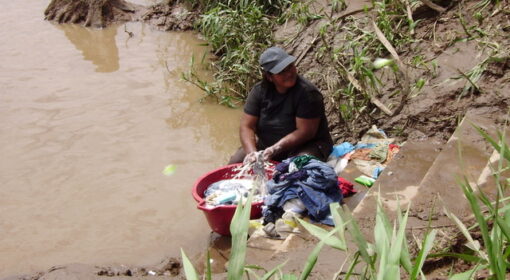
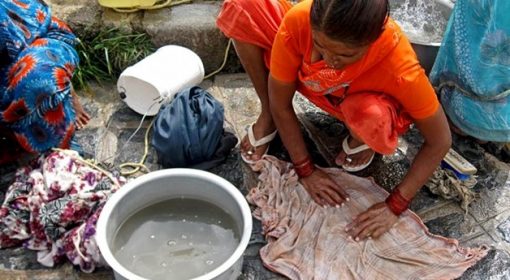
The practice of doing laundry in the rivers and canals still happens in Wrati Village, Pasuruan Regency, Indonesia – like in many parts of the world. Here in Wrati, a small river stream called Curah Weragan (part of the Welang Watershed) and the irrigation channel (part of the Selowengko Irrigation Area) are used as water sources for women in the neighbourhoods of Wrati Village. Even though these water bodies have low water quality, for instance indicated by turbid water, women still prefer to do laundry there rather than use their household connection, which offers cleaner water but comes at a price.
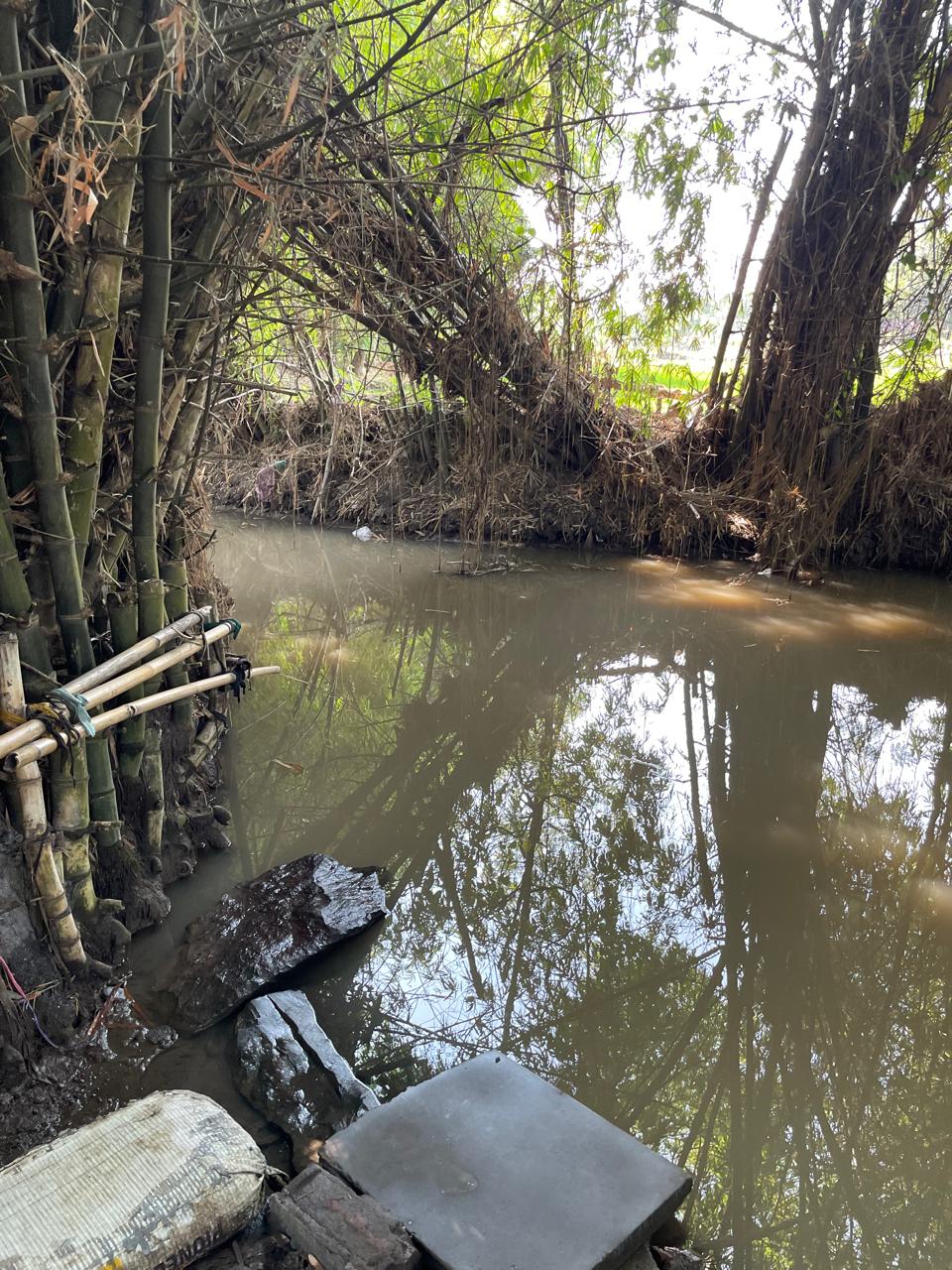
Figure 1 Curah Weragan River as Laundry water source for women in Wrati Village (Photo credit: GOPA MetaMeta)
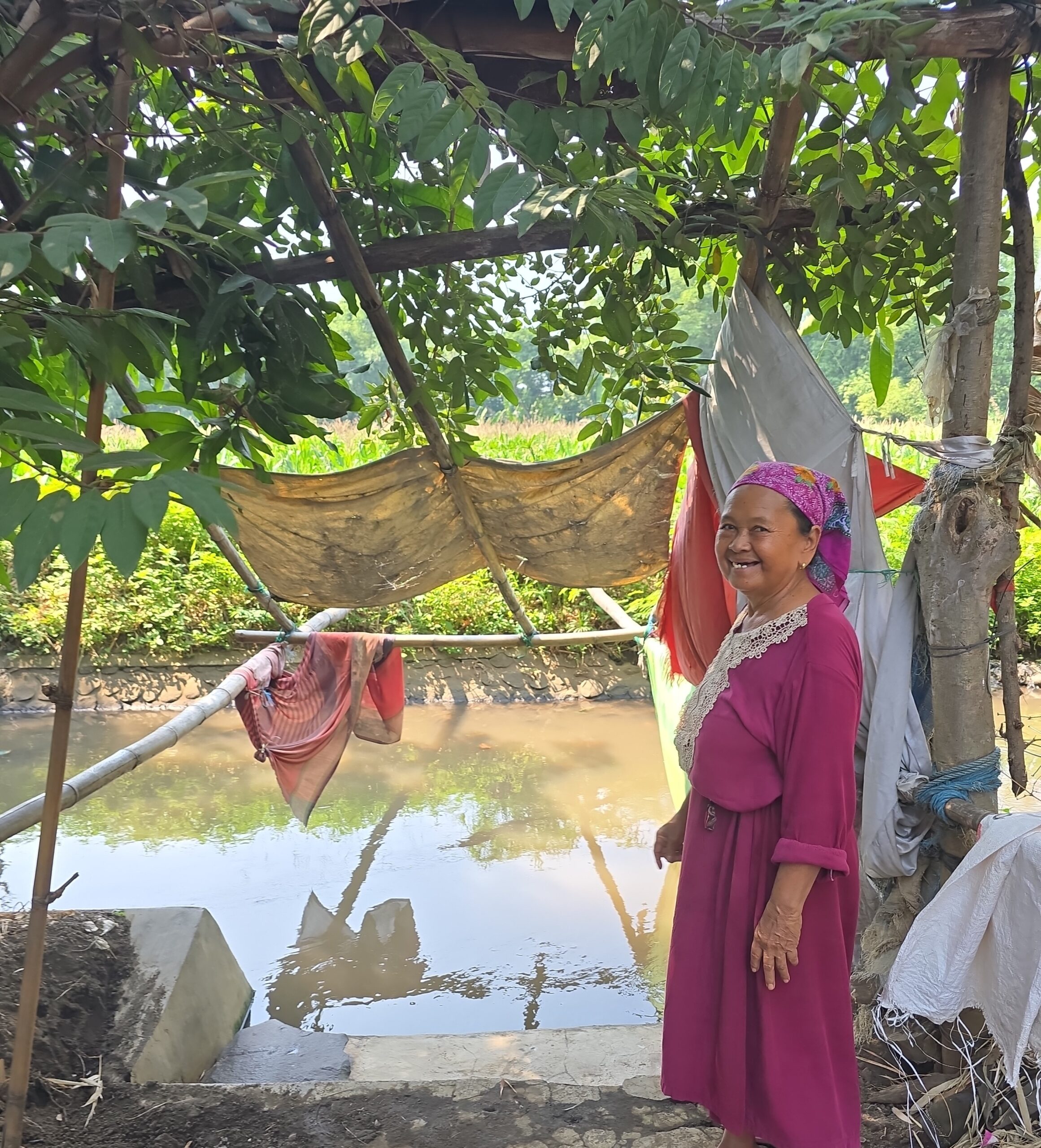
Have you ever wondered how much detergent is washed into the water every day? And what impact does it have on the environment? Research, undertaken as part of the Laundry Transformative Initiative project, sought to gain deeper insight into how laundry practices impact water quality in Wrati.
Household laundry consumes water, detergent, and energy, and generates wastewater that is often overlooked. This issue is especially pronounced in countries lacking proper wastewater treatment facilities. Laundry wastewater accounts for about 30–60% of all domestic wastewater (Widyarani et al., 2022). Discharging this wastewater directly into the environment without treatment can harm aquatic ecosystems, mainly due to detergent components. Detergents contain key elements like surfactants (anionic and cationic), builders, fillers, and additives (Landeck et al., 2020). In Wrati, detergent contained 4-20% surfactant by total weight. The estimated detergent release to water bodies from everyday laundry in Wrati Village is ± 1.2 kg/day. Linear Alkylbenzene Sulfonate (LAS) – the main surfactant – can potentially deteriorate water quality. Here is the potential impact.
| Water quality | Forming foam that blocks oxygen transfer, lowering dissolved oxygen (DO) and increasing organic matter |
| Fish | Exposure to LAS may adversely affect fish through liver damage and reduced oxygen consumption efficiency; these effects can trigger physiological stress, respiratory impairment, and behavioural changes, such as decreased swimming activity |
| Invertebrates and emergence of insects | Populations decline |
| Algae | Biodiversity decreases |
| Sediment | Sorption to suspended solids that can influence bioavailability |
Source: Mousavi & Khodadoost, 2019; Belanger et al., 2002; Rejeki et al., 2008
Higher concentrations of LAS also affect soil health. The impacts include removing humus from the soil, reducing hydraulic conductivity, and increasing soil salinity and alkalinity, particularly in sandy and alluvial soils. These conditions can damage the soil structure (Hardie et al., 2021).
Moreover, in several Southeast Asian countries, such as Indonesia, the use of phosphate in laundry powder detergent is still allowed. The maximum phosphate concentration is 5% of the fraction mass (BSN, 2017). In Europe, the policy is more restricted; the maximum is 0.5 grams per wash (European Parliament and Council, 2012). Higher phosphate concentrations in water bodies can cause eutrophication, which can lead to excessive algae growth (Mousavi & Khodadoost, 2019).
Interestingly, laundry wastewater does not only have negative impacts. At certain concentrations, it can benefit plant growth. For example, it can improve biomass and leaf area in tomato gardens due to nutrients like phosphorus, iron, zinc, and sodium (Misra et al., 2010). Another example is that spinach (Celosia argentea) grew better with laundry wastewater, showing that crop responses to wastewater vary by species and by physiological and morphological traits. These differences stem from salinity tolerance and nutrients specific to each crop (Abegunrin et al., 2016). Although some research suggests potential benefits, a cautious approach and further studies are still needed to ensure safety before field application.
Low water quality poses health risks to women.
The decline in water quality from laundry wastewater not only affects the environment but also may affect women’s health. Is it risky? Women wash their clothes in the river and so are constantly exposed to poor water quality. Indonesia’s baseline findings show that 13% of respondents in Wrati Village reported experiencing skin irritation, such as rashes, during and after washing. It is at this time that women are most exposed to polluted water bodies. Then there is the additional effect of contact with detergents. Detergents can alter skin pH and harm the acid mantle of the stratum corneum. The level of irritation varies with factors such as surfactant type (Landeck et al., 2020).
The question also is: to what extent are these laundry practices truly achieving their goal? As women in Wrati Village wash their clothes using low-quality river water and without changes, this condition may become a vicious cycle: the water becomes more polluted, washing results are less hygienic, and residents’ health is at stake.
What can be done?
Improving laundry practices isn’t just about ‘the act of washing’. Laundry water and wastewater management is part of local water management – necessary to prevent continued environmental degradation and a decline in human health and quality of life. Laundry water and wastewater management is not only about the treatment process, but also about considering the sewage system from the source (laundry location) to the disposal of treated wastewater (water bodies). In Wrati, the setting is a rural area without adequate domestic wastewater management; implementing a communal system is more effective compared to individual treatment. Two types of treatment processes may be considered:
- Constructed wetlands
The treatment system includes a bed layered with gravel and sand, with wetland plants on top. Different macrophytes can be used, such as Phragmites australis (common reed), Eichhornia crassipes (Water Hyacinth), and Typha latifolia (broadleaf cattail). The system can remove organic load, suspended solids, and moderate pathogens. Substrate type, macrophytes used, and hydraulic load are key factors in determining treatment effectiveness. Additionally, the treated water can be used for non-potable reuse in agriculture (Hassan et al., 2021; Agaton & Giulia, 2024). The percentage removal of Chemical Oxygen Demand (COD) using E. crassipes was about 92.37 ± 4.24%, and phosphate was 99.06 ± 0.56%. In addition, Phragmites australis achieved LAS removal up to 98% (Vásquez et al., 2024; Thomas et al., 2017).
- Slow sand filter
This system consists of beds of sand or granular material (e.g., river sand, silica, gravel, ceramic) that allow water to flow by gravity. Pollutant removal occurs through physical and biological processes. The top layer, called schmutzdecke, plays a role in bacteriological purification. Factors that determine treatment effectiveness include hydraulic loading rate and feeding mode (Verma et al., 2017; Agrawal et al., 2021; Freitas et al., 2023). Removal efficiency was up to 89% for Total Suspended Solids (TSS), 79% for turbidity, and ±93% for surfactant parameters (Fitriani et al., 2023; Chaabane et al., 2022).
This reminds us that laundry is an important part of our daily practices. It cannot be ignored and needs our attention. Transforming laundry practices requires systemic changes not only in the laundry process itself, but also in wastewater management. The solution must be context-specific and gradual, combining technology, education, and financial schemes to support long-term changes.
The story above is a snippet from a study on the impact of laundry practices on the environment and health-related issues, and what innovations can be implemented to mitigate the impact. This research aimed to analyse manual laundry practices in Indonesia by identifying water sources, quantifying water use, and documenting detergent use and wastewater generation to assess their environmental implications. This study also explored the potential opportunities for behavioural and technical interventions. For more details on the study results, please visit the following link.
For a deeper look at the findings and insights from the study, explore the presentation or read the full report.
References
Abegunrin, T., Awe, G., Idowu, D., & Adejumobi, M. (2016). Impact of wastewater irrigation on soil physico-chemical properties, growth and water use pattern of two indigenous vegetables in southwest Nigeria. CATENA, 139, 167–178. https://doi.org/10.1016/j.catena.2015.12.014
Agaton, C. B., & Guila, P. M. C. (2024). Success Factors and Challenges: Implications of Real Options Valuation of Constructed Wetlands as Nature-Based Solutions for Wastewater Treatment. Resources, 13(1), 11. https://doi.org/10.3390/resources13010011
Agrawal, A., Sharma, N., & Sharma, P. (2021). Designing an economical slow sand filter for households to improve water quality parameters. Materials Today: Proceedings, 43, 1582–1586. https://doi.org/10.1016/j.matpr.2020.09.450
Belanger, S., Bowling, J., Lee, D., LeBlanc, E., Kerr, K., McAvoy, D., Christman, S., & Davidson, D. (2002). Integration of aquatic fate and ecological responses to linear alkyl benzene sulfonate (LAS) in model stream ecosystems. Ecotoxicology and Environmental Safety, 52(2), 150–171. https://doi.org/10.1006/eesa.2002.2179
Chaabane, S., Riahi, K., Anibi, S., & Thayer, B. B. (2022). Investigation of mechanisms of an upflow-downflow siliceous sand filtration system for surfactants bathroom grey water treatment. Water Science and Technology, 86(12), 3181–3194. https://doi.org/10.2166/wst.2022.398
European Parliament and of the Council. (2012). REGULATION (EU) No 259/2012 OF THE EUROPEAN PARLIAMENT AND OF THE COUNCIL of 14 March 2012 amending Regulation (EC) No 648/2004 as regards the use of phosphates and other phosphorus compounds in consumer laundry detergents and consumer automatic dishwasher detergents. In eur-lex.europa.eu (No 259/2012). Retrieved August 24, 2026, from https://eur-lex.europa.eu/LexUriServ/LexUriServ.do?uri=OJ:L:2012:094:0016:0021:en:PDF
Fitriani, N., Wahyudianto, F., Salsabila, N. F., Radin Mohamed, R., & Kurniawan, S. (2023). Performance of Modified Slow Sand Filter to Reduce Turbidity, Total Suspended Solids, and Iron in River Water as Water Treatment in Disaster Areas. Journal of Ecological Engineering, 24(1), 1–18. https://doi.org/10.12911/22998993/156009
Freitas, B. L. S., Terin, U. C., & Sabogal-Paz, L. P. (2023). Household slow sand filters in intermittent and continuous flow for a long-term surface water treatment: Efficiencies assessment and operational challenges. Journal of Environmental Chemical Engineering, 11(3), 110090. https://doi.org/10.1016/j.jece.2023.110090
Hardie, A. G., Madubela, N., Clarke, C. E., & Lategan, E. L. (2021). Impact of powdered and liquid laundry detergent greywater on soil degradation. Journal of Hydrology, 595, 126059. https://doi.org/10.1016/j.jhydrol.2021.126059
Hassan, I., Chowdhury, S. R., Prihartato, P. K., & Razzak, S. A. (2021). Wastewater Treatment Using Constructed Wetland: Current Trends and Future Potential. Processes, 9(11), 1917. https://doi.org/10.3390/pr9111917
Landeck, L., Baden, L. A., & John, S. M. (2020). Detergents. In S. M. John, J. D. Johansen, T. Rustemeyer, P. Elsner, & H. I. Maibach (Eds), Kanerva’s Occupational Dermatology (pp. 1131–1143). Springer International Publishing. https://doi.org/10.1007/978-3-319-68617-2_75
Misra, R. K., Patel, J. H., & Baxi, V. R. (2010). Reuse potential of laundry greywater for irrigation based on growth, water and nutrient use of tomato. Journal of Hydrology, 386(1–4), 95–102. https://doi.org/10.1016/j.jhydrol.2010.03.010
Mousavi, S. A., & Khodadoost, F. (2019). Effects of detergents on natural ecosystems and wastewater treatment processes: A review. Environmental Science and Pollution Research, 26(26), 26439–26448. https://doi.org/10.1007/s11356-019-05802-x
National Standardization Agency of Indonesia [BSN]. (2017a). Detergen serbuk [Powder detergent] (SNI4594:2017)
Rejeki, Sri and Desrina, D and Mulyana, Andi Rahmat. (2008). Chronic Affects of Detergent Surfactant (Linear Alkylbenzene Sulfonate / LAS) on the Growth and Survival Rate of Sea Bass (Lates calcalifer Bloch) Larvae. Journal of Coastal Development. ISSN 1410-5217
Verma, S., Daverey, A., & Sharma, A. (2017). Slow sand filtration for water and wastewater treatment – a review. Environmental Technology Reviews, 6(1), 47–58. https://doi.org/10.1080/21622515.2016.1278278
Widyarani, Wulan, D. R., Hamidah, U., Komarulzaman, A., Rosmalina, R. T., & Sintawardani, N. (2022). Domestic wastewater in Indonesia: generation, characteristics and treatment. Environmental Science and Pollution Research, 29(22), 32397–32414. https://doi.org/10.1007/s11356-022-19057-6