By Dr. Samina Memon
Nestled along the fertile riverbanks of Sindh lies a living testament to pastoral dedication and genetic purity: the purebred Kamori goat of Makhdoom Farm. For well over a century, passing down through generations of forefathers, this farm has preserved a single, unadulterated lineage. This is not just a livestock breed; it is a masterpiece of natural design, steeped in local folklore, and sustained by an extraordinary ecosystem.
Grace and Beauty
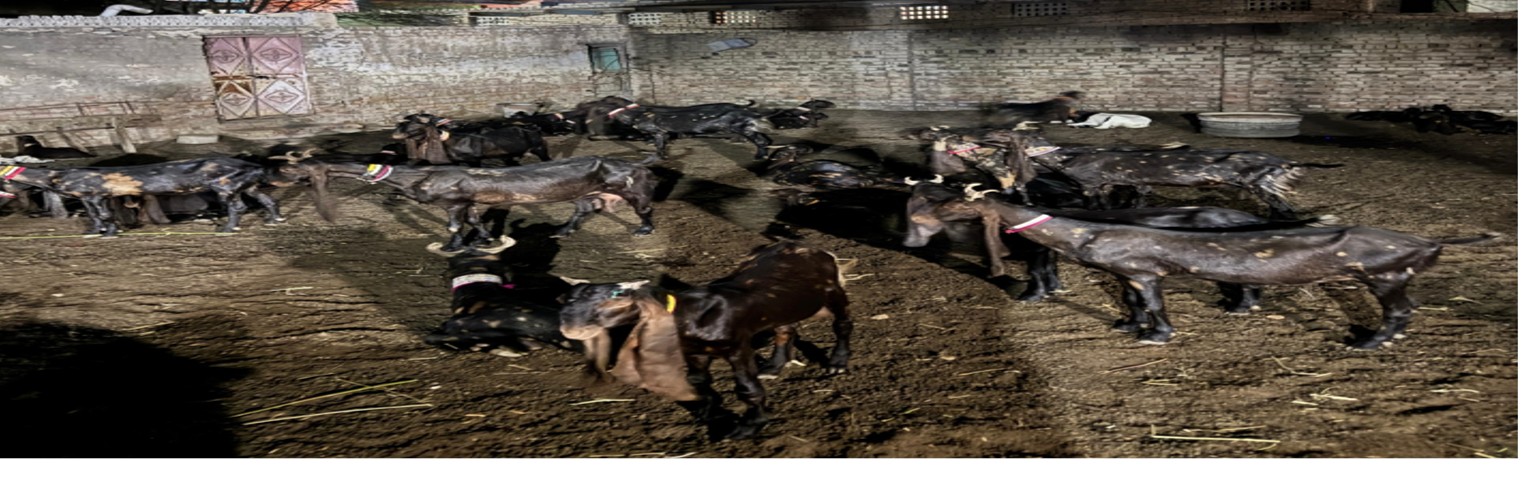
The purebred Kamori is a striking animal. Characterized by its incredible height and elegant features, it is morphologically unparalleled. Its coat—a beautiful, glossy fusion of dark brown and deep black—serves as a canvas for the vibrant culture of Sindh.
Within this pure lineage, distinct sub-types or “casts” emerge, categorized by the sharpness of their features and the patterns of their coats. In the local Sindhi language, these variations are celebrated through vivid imagery:
- Loongi: Adorned with distinct, beautifully colored spots.
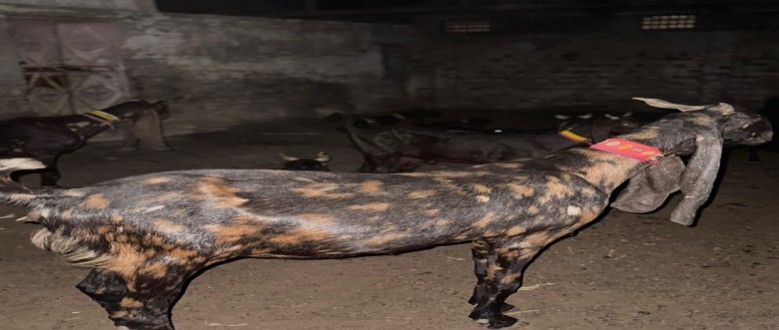
- Ajrak: Patterns that mirror the intricate, sacred designs of the traditional Sindhi block-printed Ajrak

- Pari, Sorth and Dal: Local identifiers of timeless beauty and regional identity.
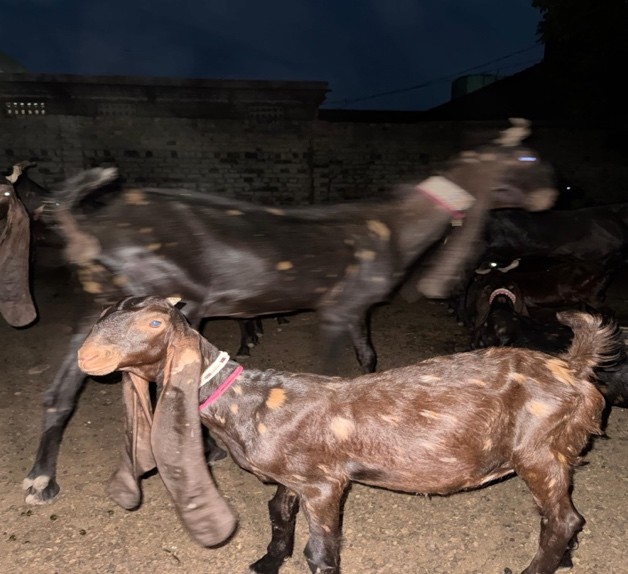
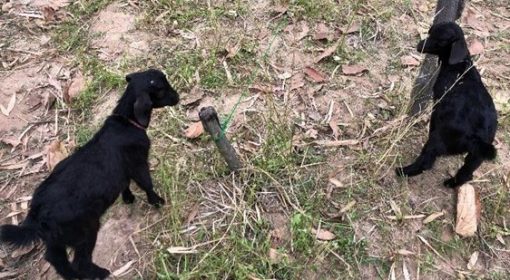
The profile of a pure Kamori female is distinct, featuring a highly feminine, sharp face reminiscent of a peacock. Their striking intelligence has earned them a unique nickname among local herders: they are called “college goats,” implying a sharp, inherited wisdom passed down from their ancestors.
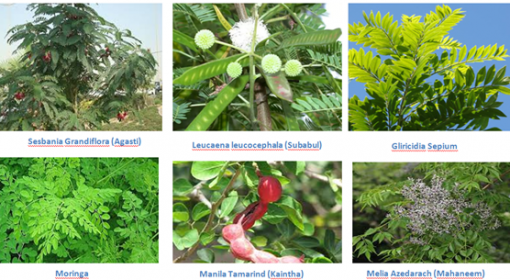
The Sacred Green Leaf: The Legend of the Kamori Grass
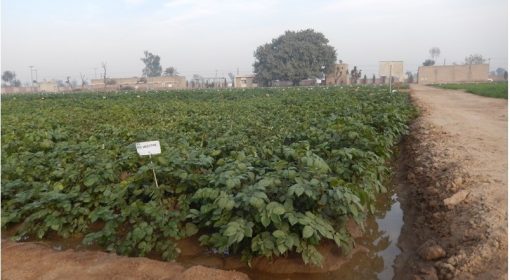
The very name Kamori is intimately tied to the riverbanks, where a special, highly nutritious wild grass grows. Locally associated with the Kammoun or green-leafed vegetation, this plant holds an almost mythical sway over the breed.
According to local heritage, if a Kamori goat is deprived of this specific riverbank grass for years—whether it be four, six, or even just one year—it will survive on alternative feed. However, the moment it is reintroduced to the Kamoru grass, the goat will eat with a fierce, unmistakable aggressiveness and intense joy. It is a biological craving, an instinctual return to its primal roots.
Mystical Origins: The Folklore of the Darwesh
The history of the Makhdoom Farm herd has been carried Seena-ba-Seena (from heart to heart/mouth to mouth) through generations of oral storytelling. While undocumented in formal scientific journals, the local hikayat (fable) adds a spiritual mystique to the breed’s striking appearance:
Legend speaks of a cruel livestock owner who refused to pay his chokidar (watchman). The master threatened the watchman, saying that if his goats changed color or physical appearance in any way, it would be the last day of his job.
Distraught and helpless, the watchman encountered a wandering Darwesh (a holy mystic) and shared his plight. The Darwesh smiled, took his own traditional chader (shawl), and gently draped it over the goats. Miraculously, when the shawl was lifted, the goats’ solid coats had transformed, breaking into beautiful, vibrant spots.
Furious at the transformation, the cruel master terminated the watchman’s employment but told him to take the spotted kids with him. When the worried watchman asked how he would feed them, the Darwesh struck a Kaamun tree with his staff. By the command of Allah, pure milk began to flow from the branch to nourish the kids.
Production, Management, and the Reality of the Range
Beyond the rich folklore lies the hard science of managing a high-producing, purebred herd under natural conditions. The production metrics of the Makhdoom Farm herd present a compelling look at indigenous livestock management.
Dietary Habits & Milk Yield
A mature Kamori goat possesses a hearty appetite, capable of consuming up to 1 mun (approximately 40 kg) of green forage a day. Locally, they are also fed Palra (pods), consuming about 5 to 7 kg. Their grazing rhythm is distinct: they eat lighter during the heat of the day and sleep early, but graze heavily and aggressively during the cooler evening hours.
The herd boasts an impressive milk yield, averaging 2 to 2.5 kg of milk per day.
Reproduction and Longevity
The purebred Kamori exhibits remarkable longevity, living and reproducing up to an age of 10 to 12 years.
- Birth Rate: They give birth once a year, showing incredible prolificacy by producing 5 to 10 children over their productive lifetime.
- Weight: Mature females average 40 to 45 kg, while the overall average weight of the breed ranges between 50 to 60 kg.
- Breeding Ratio: To maintain genetic vigor, the farm utilizes a strict breeding ratio of approximately two high-quality bucks for every 45 to 50 goats (an average of 12 to 25 females per buck).
Housing and Environmental Challenges
The Makhdoom herd thrives in an open-range environment rather than being confined to intensive cages. For a herd of 50 goats, a paddock of approximately 3,000 square feet is utilized. Adhering to a natural lifestyle, the setup is half-covered and half-open, allowing the goats to remain completely uncaged and free to move as they please, which drastically improves their natural production traits compared to strictly confined animals.
+——————————————————————-+
| 3,000 sq. ft. Total Area |
| |
| +——————————-+—————————–+ |
| | | | |
| | HALF-COVERED AREA | HALF-OPEN AREA | |
| | (Sheltered from Sun) | (Always Open, No Cages) | |
| | | | |
| +——————————-+—————————–+ |
+——————————————————————-+
However, keeping this pure breed thriving comes with significant seasonal challenges:
- The Ideal Season: The scorching summer is the most suitable season for the Kamori, matching their native desert and riverine resilience.
- The Winter Vulnerability: Winter poses a severe threat. The breed struggles significantly against cold stress. Out of 40 kids born, often only 15 survive the harsh winter months, marking a high mortality rate that requires careful, protective veterinary management.
Conclusion
The Kamori goats of Makhdoom Farm are more than just agricultural assets; they are a living heritage of Sindh. By balancing the poetic folklore of the Darwesh with the rigorous demands of open-range pastoral management, this century-old lineage stands as a beacon of indigenous breed conservation. Protecting them means preserving the very history, color, and soul of the Indus riverbanks.