A Community Effort to Restore Land
By Gaddissa, Girma, Guta, Nardos and Redeat
In Tora Sedebo, a rural kebele, one of the STREAM* Project intervention areas in Southern Ethiopia’s Damot Woyde woreda of Wolaita zone, the land tells a story of loss. Where community members once farmed as young people, there are now gullies, deep scars carved by years of flooding and erosion that turned productive fields into unusable ground.
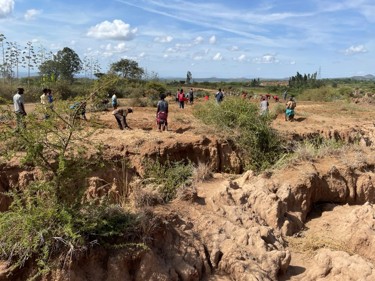
“I remember cultivating this land when I was young,” one community member recalled during a visit from the STREAM Project team in June 2026. Standing on the eroded slope, the sadness in that memory was hard to miss. But so was something else: a growing sense that things are starting to turn around.
A Landscape in Recovery
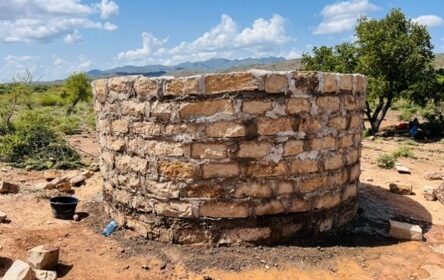
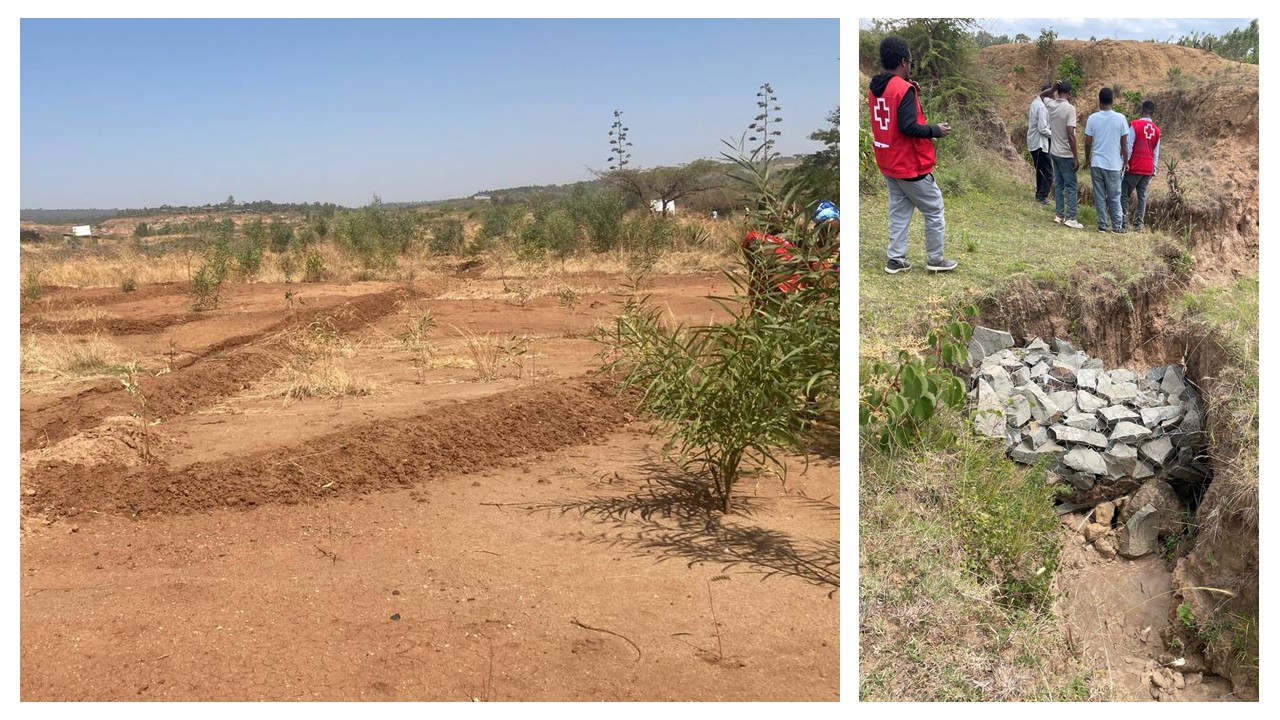
Tora Sedebo is one of two sites alongside Shakisho Shone in Damot Gale woreda where the STREAM Project, implemented by the Ethiopian Red Cross Society and the Netherlands Red Cross with technical partners including Acacia Water and GOPA MetaMeta, is working with communities to restore degraded watersheds. The approach centers on Nature-based Solutions: check dams, contour bunds, half-moon and eyebrow basin structures, area closures, and tree planting, all designed to slow water down, hold soil in place, and let the land heal.
What began as a small demonstration plot in Tora Sedebo has since grown into a much larger restoration site, extending further downstream with new planting pits prepared ahead of the rainy season. The change is visible, and so is its effect.
“The restoration result will come,” a community member explained, “because the water that washes away the soil will be stopped here. Therefore, there will be a result.”
It is a simple statement, but it captures exactly what these interventions are designed to do. And there’s already evidence it’s working: community members reported that after a period of unusually heavy rainfall, the newly built check dams visibly reduced the runoff that had been stripping soil from the land, a small but telling sign that the structures are functioning as intended, even before the main rains arrive.
Why Now and Why Not Earlier?
One question came up repeatedly: why hadn’t this restoration work happened years earlier, before the damage was done? Community members pointed to a simple answer: awareness. In earlier generations, even as they watched their land deteriorate, there was limited understanding of what could be done about it. It was only through increased awareness and support from the Red Cross Society and the local agricultural office that the current restoration effort became possible.
A technical advisor working alongside the community offered a way of thinking about the stakes: the amount of land available is fixed, while the number of people who depend on it keeps growing. When land is lost to erosion or stripped of nutrients by flooding, it isn’t just an environmental problem; it’s a threat to how communities will feed themselves in the years ahead. One community member put it plainly: protecting the land is about food security, for this generation and the next.
Signs of Progress, and Work Still Ahead
Across both Tora Sedebo and Shakisho Shone, physical and biological measures of progress have been encouraging when measured against a baseline assessment from nine months earlier. Seedling nurseries are thriving, and communities have prepared extensive planting pits ahead of the rain.
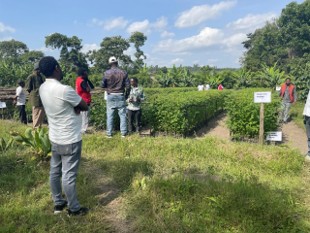
But restoration is rarely a straight line. Residents have fenced off the rehabilitation area and even drafted their own bylaws to keep cattle out and protect young trees. One clear win: with grazing kept away, grass has flourished on the protected land the community can now harvest for its own use.
More Than Trees and Terraces
Many participants in the project’s Cash-for-Work program, who previously had to migrate elsewhere in search of manual labor, are now staying in their home communities because restoration work is available locally. Families are staying together. Household heads aren’t leaving to find income elsewhere.
That is the quieter story behind the check dams and the half-moon basins: restoring the land is also, in a very direct way, restoring the ability of families to stay rooted in the place they call home.
The work in Tora Sedebo and Shakisho Shone is far from finished. Full recovery of landscapes shaped by years of erosion will take sustained effort, resources, and, as community members themselves emphasized, a continued sense that this land, and this work, belongs to them. But nine months in, the water that once stole the soil is, in places, finally retained.
* The Strengthening Resilience through ecosystem-based adaptation and Management (STREAM) Project is implemented by the Ethiopian Red Cross Society in partnership with the Netherlands Red Cross, Acacia Water, GOPA MetaMeta and WWF Netherlands, working with communities in selected woredas in Wolaita Sodo Zone, Ethiopia to restore degraded watersheds through Nature-based Solutions.