Salma Enan, Sukru Esin, Frank van Steenbergen, David Mornout
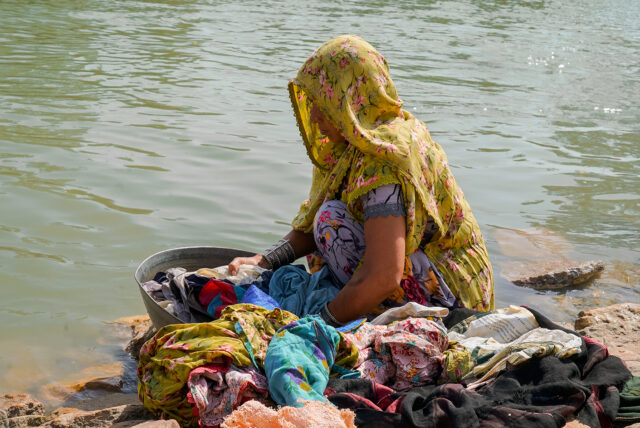
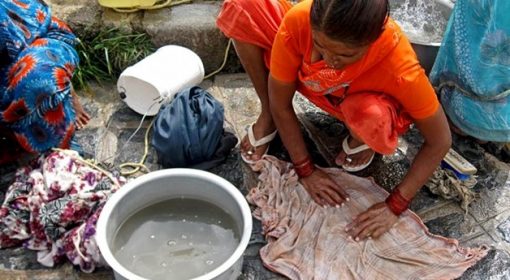
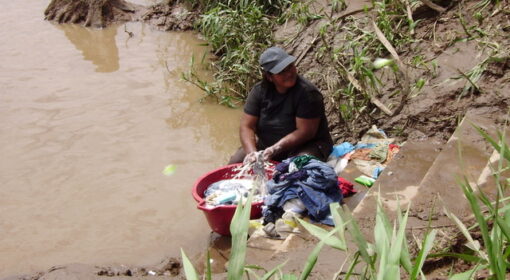
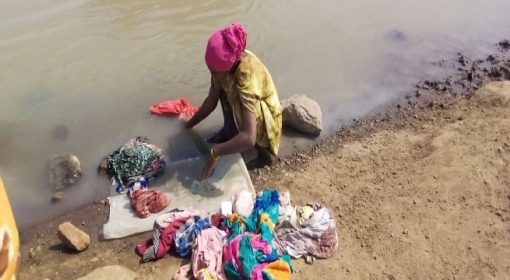
In a small village nestled in the rural hills of Nepal, Sita starts her day at dawn. As the sun rises, she gathers her family’s clothes and walks to the nearby river, where she spends hours washing by hand. For Sita, laundry is a physically demanding task that requires not only strength but also time, time that could be spent on other essential activities. Her options are limited; she uses basic soap, which gets the job done but leaves her hands raw. The river, though convenient, is often polluted, making her wonder if the clothes are truly clean when she’s done.
Across the globe, in a modern apartment in the Netherlands, Maaike is getting ready for her day as well. Laundry for her is a simple chore, managed with the push of a button on her high-efficiency washing machine. She has a plethora of options: eco-friendly detergents that promise to clean her clothes while protecting the environment, the choice of washing in hot or cold water, and even a quick cycle if she’s short on time. For Maaike, laundry is more about choice and convenience than effort.
The Discrepancy in Laundry Innovations
While Maaike enjoys a range of options, Sita’s laundry routine has remained largely unchanged for generations. This stark contrast highlights a troubling trend: laundry innovations are overwhelmingly targeted at those who already have access to advanced technology rather than those who might benefit the most from improved tools and techniques.
This discrepancy can be better understood through the lens of the “Bottom of the Pyramid” (BoP) concept, which refers to the largest but poorest socio-economic group, often overlooked by businesses focusing on higher-income markets. These are the billions of people living on less than a few dollars a day, who make up a significant portion of the global population. While they represent a massive potential market, the BoP has historically been neglected by mainstream businesses, which tend to focus on consumers with greater purchasing power.
The Bottom of the Pyramid: A Missed Opportunity?
The concept of the Bottom of the Pyramid was popularized by C.K. Prahalad in the early 2000s. He argued that businesses could find both profit and purpose by developing affordable products tailored to the needs of the world’s poorest populations. However, this idea, while initially promising, has waned in recent years as companies continue to chase after high-margin markets rather than addressing the basic needs of the BoP.
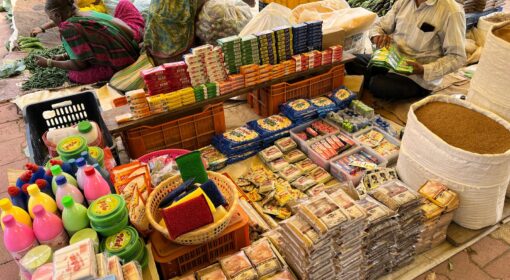
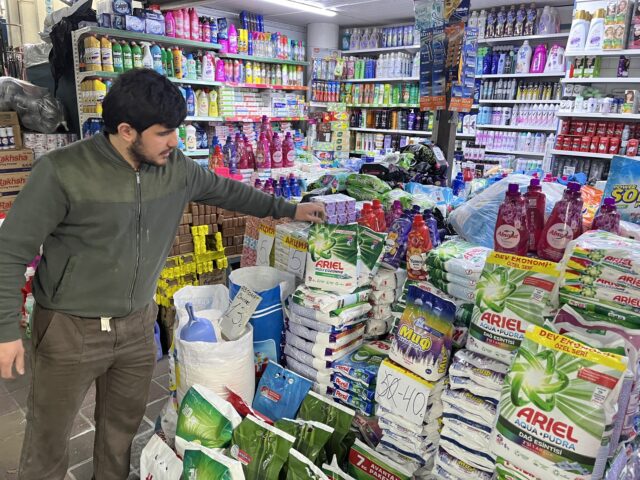
The laundry sector is a prime example of this trend. In 2023, the global laundry detergent market was valued at an impressive USD 185.28 billion and is projected to grow at a compound annual growth rate of 5.5% from 2024 to 2030 (source: Global Information ). Despite this, the bulk of these sales are concentrated in high-income countries. In developed markets, detergent manufacturers have made significant advancements, for instance by catering to eco-conscious consumers with premium products. These products often feature sustainable packaging and formulations designed to appeal to those who are willing to pay a premium for environmental benefits. However, this focus on high-end markets overlooks the billions of people like Sita, who require affordable, effective detergents that can work in harsh conditions, such as cold water or with tough fabrics, without compromising their health or the environment.
Innovations for a Niche Market: A Matter of Image?
The issue extends beyond economics. Innovations like eco-friendly and sustainable products are not just about meeting consumer needs; they are also about branding. Companies often market these products as part of a lifestyle choice that resonates with socially conscious consumers. However, this approach can narrow their focus, overlooking the real and pressing needs of those without access to even the most basic laundry facilities. For instance, only 2 billion people today have access to washing machines, while the remaining 5 billion, mostly women, spend many hours every day bearing the heavy burden of fetching water, heating it, and washing clothes by hand (source: UN Habitat). This laborious process highlights the disconnect between the innovations targeting high-end markets and the practical necessities of those struggling with basic daily tasks.
The focus on niche markets and premium pricing excludes the BoP, reinforcing a cycle where innovation and investment remain concentrated in wealthier demographics. Yet, the potential for growth and impact within the BoP is immense. Developing affordable, effective laundry solutions for the BoP could not only improve quality of life for billions but also open up new markets for businesses willing to invest in this direction.
The Role of Marketing and Media
Marketing and media strategies play a pivotal role in determining which products reach consumers and how they are perceived. In affluent markets, consumers are constantly exposed to advertisements for the latest eco-friendly or luxurious laundry products. These innovations often cater to those who can afford premium prices, leaving a vast population at the BoP with little to no access to effective, affordable laundry solutions. The current focus of marketing efforts primarily amplifies the needs of the high-income segment, perpetuating a cycle where the needs of billions at the BoP are neglected. By broadening the narrative, companies have the opportunity to create impactful campaigns that not only cater to the wealthy but also address the basic needs of those who are often overlooked.
Understanding the Global Need
The challenge of addressing the BoP is not merely about innovation; it’s about ensuring that existing solutions are made accessible and affordable to those who need them most. For the billions who wash clothes by hand using inadequate tools, the issue isn’t the absence of better options, but rather their inaccessibility. The business world has traditionally focused on high-margin markets, leading to a gap in both knowledge and empathy for those at the BoP. Yet, this segment represents a significant market with specific needs that require tailored approaches, not just in product design but also in distribution and affordability. Understanding this global need is crucial for companies that aim to expand their impact and serve a broader population.
Bridging the Gap: A Call to Action
Addressing the needs of the BoP requires a shift in both business strategy and consumer mindset. Instead of solely focusing on high-end innovations, there is a need to adapt and scale solutions that already exist, and make them accessible to the underserved. This involves rethinking distribution strategies, reducing costs, and ensuring that effective products reach those who need them most.
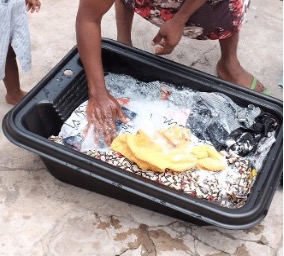
Encouraging examples are already emerging. Innovations such as the Solar Soaker or The Divya Washing Machine demonstrate how laundry can be made less physically demanding without relying on electricity or piped water. Social enterprises like The Washing Machine Project are pioneering affordable, human-powered machines designed specifically for low-income and off-grid households. Likewise, SolaSoka showcases how simple, solar-based interventions can support sustainable washing practices. Beyond technology, microfinance schemes and community-based financing models can play a critical role, enabling families to afford improved laundry solutions and ensuring that innovation does not remain out of reach.
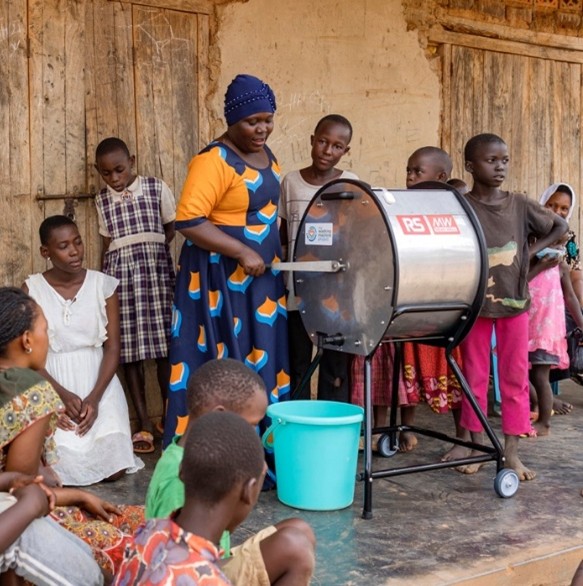
Consumers, investors, and policymakers all have a role to play in supporting these initiatives and demanding products that address real-world challenges faced by the BoP. By broadening the focus beyond high-margin markets, the impact of such a shift could be transformative, making laundry easier, safer, and more sustainable for millions worldwide.
Conclusion
The laundry industry is at a crossroads where the potential for innovation must be balanced with the need to serve the broader global population. By focusing not only on those who can pay more but also on those who need these solutions the most, businesses can tap into an underserved market while making a meaningful difference in the world.
The question remains: why do companies continue to neglect the laundry needs of low-income and off-grid populations, despite the enormous burden and the potential of this market? Until we address this, innovation will remain incomplete. It is time to rethink our approach and ensure that no one is excluded from the benefits of progress.
Sources:
https://thewaterchannel.tv/thewaterblog/making-life-lighter-on-improving-laundry/https://www.strategy-business.com/article/The-New-Fortune-at-the-Bottom-of-the-Pyramid The Washing Machine Project Meet the Solar Soaker – SolaSoka.com