By APIL, supported by Aida Zare, and Femke van Woesik
This blog is part of a dossier on locally-led adaptation, featuring insights and lessons from the Reversing the Flow (RtF) program. RtF empowers communities in Bangladesh, Burkina Faso, Ethiopia, Kenya, and Sudan to build climate resilience through direct funding and a community-driven, landscape approach.
When donor-funded projects are designed, the work of formulating needs, structuring objectives, and producing technical documents almost always falls to organisations. Communities are consulted, sometimes extensively, but the act of translating those consultations into a project document happens elsewhere, in offices, by professionals, in languages communities may not speak.
Within the RtF programme, APIL was able to take a different approach. In Nakamtenga, the communities themselves draft their projects, drawing on their own know-how. This process revealed and built capacities that years of conventional programming had left untouched.
The initial planning exercise in Nakamtenga focused on borehole drilling, a market garden, and agricultural equipment, three priorities directly prirotized by the community.
Project documentation
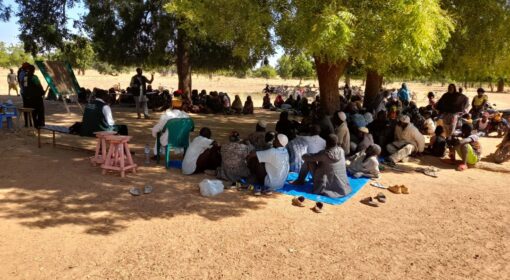
Since the beginning of RTF program, APIL chose to work with the existing Village Development Committee (CVD in French) rather than creating a new one. Following the prioritization activities, communities were required to submit project documents to APIL for funding. The responsibility entrusted to the CVD office marked a first collective experience. Despite doubts about their ability to produce technical documents, this step constituted an essential learning experience: transforming needs expressed orally into written and structured projects. Indeed, in Nakamtenga, the communities emphasized this: ‘even if we have knowledge, we need to put it into a document, but not everyone has the ability to write, and we need someone to do that’.
To meet this challenge, the communities mobilized Sawadogo Pategdeba Ivone and Soubéiga Chantal, literate in Moore (local language) through local programs and members of the Yamwékré cooperative[1]. They supported the CVD office by translating community discussions into project documents.
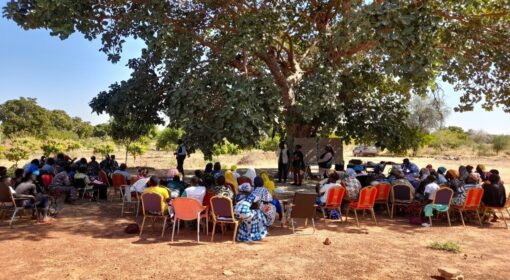
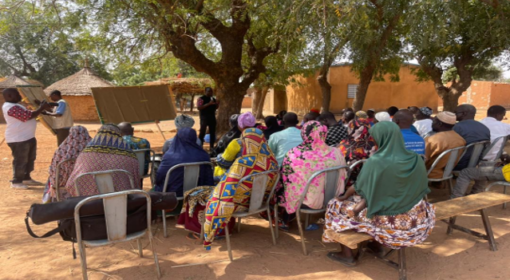
The process relied on meetings between committee members and various segments of the village that led to debates which have not been transcribed in the project documents. The CVD committee emphasizes that the written project documents summarize structural information such as objectives and expected results, the provisional budget, and the anticipated benefits for the community. It doesn’t reflect the richness of the consultations and discussions held. As one participant put it: ‘the documents do not transcribe all our exchanges in detail. We talked about the environment, even though it is not mentioned in the document’.
Indeed, regarding the market gardening project, discussions took place concerning sustainable farming techniques, as well as the land required for its implementation and the selection of beneficiaries. Drawing on past sensitization sessions and their own experiences, they agreed to use sustainable agricultural techniques within the market gardening area to improve product quality and protect the environment.
The community pointed out that produce grown using chemical inputs has a shorter shelf life: “when chemicals are used, tomatoes and onions spoil quickly, and we lose a lot during storage. Naturally grown tomatoes and onions have more flavor and can be stored longer”. Finally, the community highlighted the health impacts: ‘we believe that the onset of illnesses such as high blood pressure, cancer, or chronic stomach aches is linked to the repeated use of chemicals’. Thus, agroecology will be promoted as a practice within market gardening areas through the use of compost and the planting of fruit trees, the sale of whose fruit can generate supplementary income. “It was an unbudgeted initiative as it is considered a community contribution: ‘We’re not asking for funding for this; it’s our contribution ”.
Furthermore, for land mobilization required for the market garden development, the CVD committee initiated consultations with traditional authorities. The village chief agreed to allocate one hectare for women free of charge, enabling the project to be included in the action plan. The chief emphasizes the central role of women in local development by saying: “What they produce will directly benefit households and, by extension, the entire village, either through the consumption of the products or through their sale. They are a true pillar of the household, and their work provides invaluable support to men”.
There was also a specific meeting with women regarding the criteria for allocating plots once the market garden is developed, given the limited resources and surface. They decided that the allocation of plots would be handled through a collaborative process. The participants noted that everyone in the village knows each other and priority would be given to women who lack income-generating activities during the dry season, with the possibility of organizing exploitation on a rotational basis
There is also debate regarding the number of boreholes. Although the community initially wanted six (one for each neighborhood), discussions ultimately led to a single solar-powered borehole. This solution, which was more sustainable, quicker to fund, and better suited to the grant awarded.
Difficulty and learning of the process
In Nakamtenga, the main difficulties mentioned concerned the development of a realistic budget. One participant said that : ‘we had to spend a lot of time calling and traveling to find out how much things cost’. These processes require time and financial resources, which are not always easy to secure. The numerous forums for discussion also presented a constraint in terms of availability. One woman confided: “The meetings are important, but they take up a lot of time, and we also have to manage our daily activities”.
Furthermore, the initial lack of experience with the process raised concerns. Some expressed their doubts: ‘we didn’t know if we were capable of writing a quality project’, while another added: ‘we were afraid that our work would not be accepted and that the funding would be lost’.
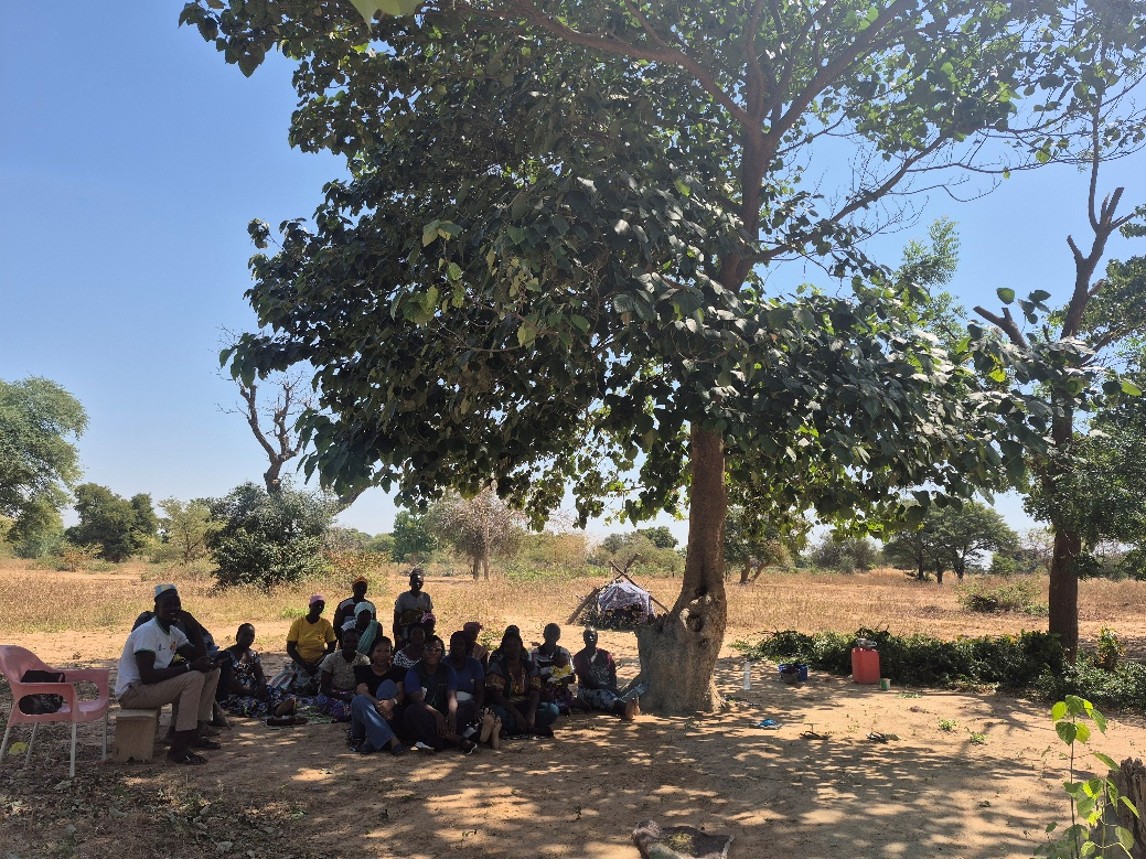
Beyond these obstacles, this experience was highly instructive. CVD members strengthened their technical skills, as they are now able to detail the sub-activities of drilling borehole or market gardening and and gather price quotes to establish a realistic budget. The written work in Mooré, led by two women from the village, marked a practical and symbolic turning point, giving tangible value to years of literacy training. This linguistic freedom made it possible to faithfully transcribe local aspirations without the filter of a language, thus validating internal educational capital: ‘we weren’t forced to use a language. We were able to write in our own language, and that was accepted. What matters is that it comes from us and reflects our efforts and needs. We’ve been learning local language for years, and now we see the value of it’.
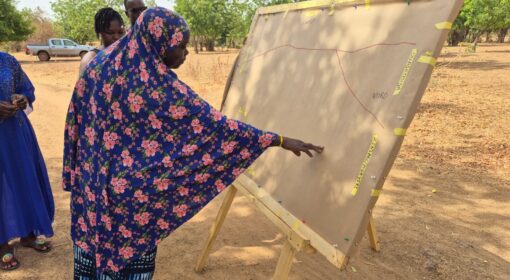
The women who wrote the project documents highlighted the fact that the process placed them in a leadership position. They also strengthened their capacity to synthesize information by translating community consultations and discussions into a concise document that reflects local expectations: “we were able to transform the discussions into written documents”.
The experience also reinforces the sense of ownership and cohesion. The discussions highlighted the link between the design effort and the future sustainability of the structures: “we are the ones who wrote it, so when the project is implemented, we will be proud and we will take care of the works”. This feeling of ownership ensures that the infrastructure will not only be used, but also carefully maintained, as it directly reflects collective efforts.
This exercise is not limited to the production of project documents as tangible results. Above all, it has highlighted the communities’ inherent capacities, while strengthening their ability to design, structure, and advocate for their own initiatives. This process has valued their knowledge, practices, and priorities, thereby reinforcing their autonomy and their central role in shaping their own development.
[1] Specialized in the processing of non-timber forest products