By Molu Tepo, Ibrahim Kabelo, Hosea Kandagor, Sahara Ahmed, Diramu Galgalo (MID-P)
This blog is part of a dossier on locally-led adaptation, featuring insights and lessons from the Reversing the Flow (RtF) program. RtF empowers communities in Bangladesh, Burkina Faso, Ethiopia, Kenya, and Sudan to build climate resilience through direct funding and a community-driven, landscape approach.
Locally-Led Development is a term that appears frequently in project proposals and donor strategies. Its meaning, however, becomes far less straightforward when organisations attempt to practise it in their day-to-day work. The Kenyan local NGO MID-P has been reflecting on what locally-led development looks like in practice and what this means for their own direction as an organisation.
A central question in this reflection is what we mean by “local” and who gets to define it.
What does “local” really mean and who decides?
In Kenya, “local” is often shaped by governance structures. Under the Financing Locally Led Climate Action (FLLOCA) program, local means the County level. Some County Governments have Village as the lowest level of devolution, while Isiolo County local means at Ward level.
At the same time, “local” is also used to refer to organisations like MID-P and other local NGOs that implement projects. It can equally mean communities themselves and the institutions through which they organise, whether formal or informal. These include self-help groups, youth and women’s groups, community land management committees, community water management committees, and temporary committees formed to respond to floods or other shocks.
Within RtF, “local” is defined explicitly as the community. Decision making is intended to sit with communities themselves, organised through structures they identify and legitimise.
In practice, what counts as “local” is rarely universal. It is often defined through government legislation or programme design, as seen in initiatives such as FLLOCA and RtF. This raises important questions for locally-led development. If “local” is predefined from outside, how much space remains for communities and local organisations to shape what leadership, ownership, and decision-making mean in their own contexts?
Where does power sit and where could it sit?
As MID-P reflects on its own experience, power is still closely linked to resources. “In our ongoing work, power lies with the person who provides the resources, be it the Government or donors or implementing partners.”
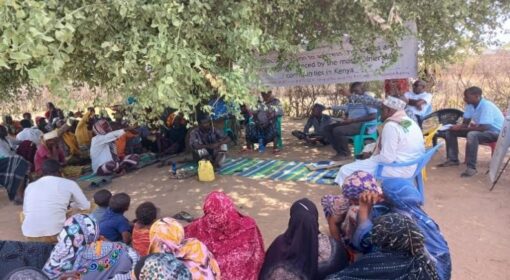
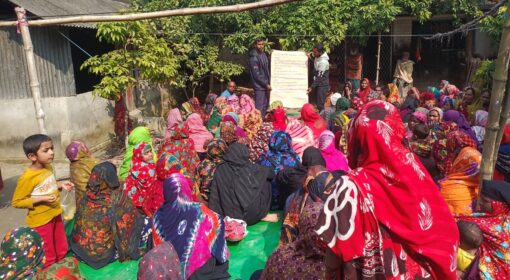
Under the RtF program, there is an explicit intention for power to shift to the community. Through a series of participatory and inclusive community conversations using the Baraza approach, communities established two decision making structures, one at landscape level and one at cluster level.
At the same time, MID-P has observed that this shift is not always felt by the communities themselves: “In our conversations we have observed that the community does not see this as a reality. They seem to doubt that they have the power. It will take time for this to deepen, and MID-P has to be deliberate in letting go of the power that communities perceive us to hold.”
Addressing structural inequalities
MID-P recognises that structural inequalities are deeply rooted: “These inequalities are deep seated. However, this is evolving, and it will take time.”
Locally-led development, in this sense, is not a switch that can be flipped, but a gradual process that requires consistency, patience, and conscious choices about how power is shared.
How open and accessible are our systems?
MID-P describes its own systems as open and accessible to some extent, while recognising the need for further improvement. Communities are engaged at multiple stages of projects, including planning, proposal development, implementation, monitoring, learning, and evaluation. Complaints, reporting, and feedback mechanisms are in place, but require ongoing attention to ensure they are meaningful and trusted.
Strengthening capacity or substituting for it?
MID-P’s experience with communities shows that people have a strong understanding of their own context, history, and landscape. Communities are able to articulate a vision and priorities for the future they want to achieve. At the same time, there remains a tendency to look upwards for direction, even towards local organisations like MID-P: “We have consistently conveyed that communities are the drivers, and MID-P is only a custodian of financial resources and a partner walking behind them, or at best alongside them.”
Letting this message truly settle takes time, repetition, and consistent practice.
Whose knowledge drives the work?
MID-P emphasises respect for traditions, while being clear that these should not undermine the rights of others. Communities place strong value on Community Own Resource Persons, and MID-P recognises and works with local leadership such as titled elders, herbalists, and traditional birth attendants.
Can we adapt when priorities shift?
MID-P aims to adapt when local priorities change, but recognises the limits of this flexibility: “When local priorities shift, we shift as well, with a caveat. This depends on the interest of the donor who provides the resource.”
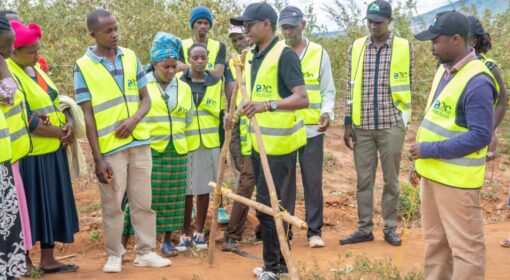
Within RtF, community identified priorities included poverty reduction through restocking of vulnerable households affected by severe drought, river flow restoration for flood management, and registration of community land. At the same time, MID-P operates within a broader policy environment: “As an NGO, we are expected to support the implementation of government policy, and every five years government priorities change.”
Navigating these layers remains an ongoing challenge in locally-led work.
Who are we accountable to?
MID-P identifies accountability to multiple actors, including the communities they work with, national and county government, donors or implementing partners, other stakeholders such as the media, and the MID-P Board of Directors.
True accountability flowing downward as well as upward would look like “a marketplace where each person has a voice, holding one another responsible for their actions or inactions. Information flows vertically and horizontally, and everyone feels part of the process… People embracing honesty, shared realistic goals, and actions that align with who they are.”
Building stronger networks and collaborating across sectors, levels, initiatives
MID-P recognises both formal and informal networks, including those rooted in lineage, marriage, friendship, and place of residence. Many of these networks already exist within communities and could be strengthened further.
There are also opportunities to strengthen Sector Working Groups and Technical Working Groups at county level, and to enhance the participation of local actors in national level sector and technical working groups.
A thriving future will not be shaped in air-conditioned boardrooms. It is formed in village barazas, under acacia trees, and through the everyday decisions of people who live and work in these landscapes. Locally-led development is not a slogan. It is a slow and deliberate shift in power, trust, and responsibility.
The call from MID-P’s reflection is simple and demanding at the same time. Reverse the flow. Direct funding where possible. Trust community wisdom. Walk alongside, and step back when communities lead. When communities genuinely lead, resilience is not only built, it lasts.