By Abraham Mehari and Joseph Ashong
This real-life story series is part of the Strengthening Inclusive Partnerships for Smallholders in Rain-Fed Areas (SIPRA) project in Sudan, featuring insights and impacts from the Challenge Fund and agribusiness investments. SIPRA operates in seven states in Sudan to strengthen food security, livelihoods, and local economies. It facilitates agribusiness partnerships among smallholder farmers, SMEs, women, youth, the private sector, and local actors to build scalable, sustainable livelihoods.
In Sudan, sorghum is a staple crop, deeply embedded in daily diets and rural livelihoods. It is processed into flour for traditional foods, making access to grinding services essential for every household. Yet in many villages, this simple step can become a major burden.
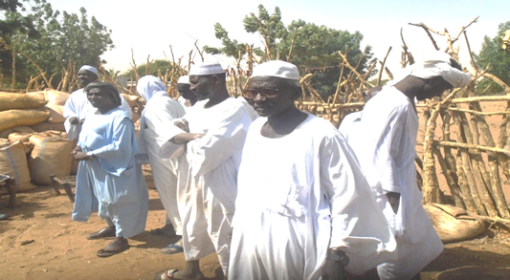
In Ashrafa Village, in White Nile State, families once had to travel long distances just to grind their sorghum. Through the SIPRA project, funded by the Netherlands Ministry of Foreign Affairs, farmers were able to benefit from a livelihood-transforming opportunity.
Challenges before SIPRA
Before the intervention, the nearest grinding mill was 30 kilometers away. For farmers and households in Ashrafa village, this meant more than just inconvenience; it came with high costs and lost time.
Each trip required transport fees (5000 SDG per 3.5 Kg) and service charges (1000 SDG) that added up quickly, making basic food processing expensive. A single journey could take up to six hours, limiting productivity and placing additional strain on already vulnerable households.
At the same time, opportunities to turn sorghum into a source of income were largely untapped. Without local processing, the value chain remained incomplete.
A local solution with immediate impact
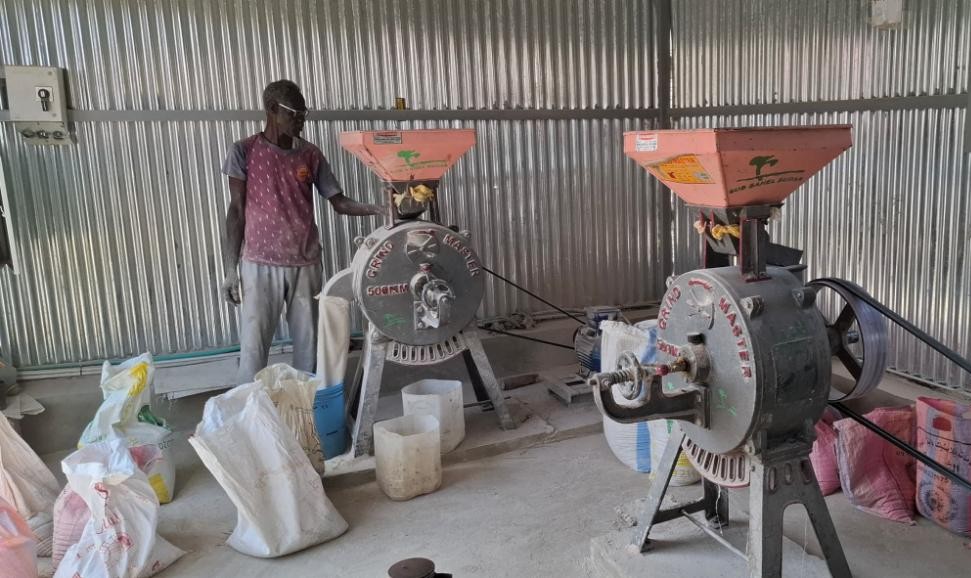
With support through a small grant (€16,711) and around 10% local contribution, the Atadamon Producer Association (PA) received two grinding machines powered by a dual energy system, along with a dedicated shelter to operate them.
But the real shift came from building local capacity. Three members of the association were trained to manage operations, maintenance, and financial aspects, ensuring that the initiative would be both functional and sustainable.
For the first time, sorghum processing became available within the community.
Lower costs, higher opportunities
The impact was immediate and practical. Grinding costs dropped significantly, by half for PA members and noticeably for others in the community, with a revenue increase of 11% for PA members. What once required long travel and high expenses could now be done locally, quickly, and affordably.
In just three months, around 20 tons of sorghum were processed. The facility also created new jobs (~10) in areas such as operation support, cleaning, and weighing, offering income opportunities for local community members.
Beyond direct benefits, something else began to shift: young people started selling processed flour locally, tapping into new market opportunities and expanding the reach of the value chain.
Strengthening the local economy
The SIPRA intervention extends beyond just solving a logistical problem. It reshaped how the local system works.
By bringing processing closer to producers and consumers, the community has:
- Reduced reliance on distant and costly services
- Created new income streams and employment opportunities
- Strengthened local markets and economic circulation
- Added value to an essential crop within the community itself
It is a simple yet powerful model, showing how localized solutions can unlock broader development outcomes.
A voice from the community
“Before, we travelled 30 kilometers for grinding, spending money and losing time. Now, the grinding unit provides affordable services, and the daily income supports our association.”
— Head, Atadamon Producer Association